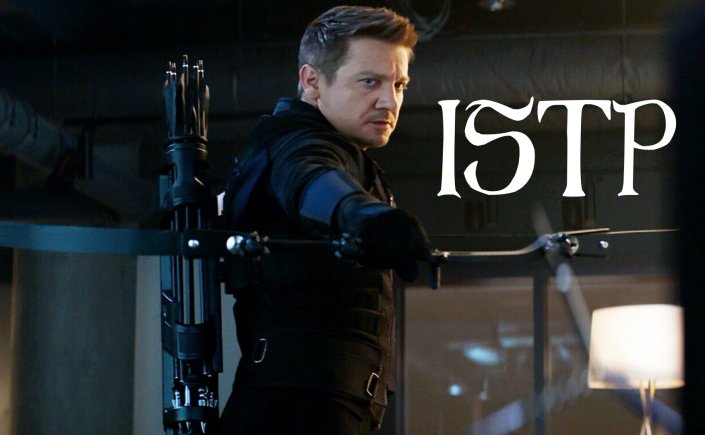
Jay Walker: ISTP

Guest Post by Lewis Sanderson, INFJ

Ninjago: Masters of Spinjitzu

Dominant Introverted Thinking (Ti): His logic comes from what he thinks inside, and the decisions and facts he comes up with are usually the kind that look good on paper but fail to work in practice. Jay is not naïve either, and is quite sceptical of Nadakhan’s motives when he first appears. He knows not to trust people, as a rule, and loves to find out that he was right. Jay doesn’t let other people tell him what to think, and has a very set mind that is always buzzing with ideas. Despite the fact that he is almost always talking, he rarely voices his actual thoughts and prefers to break apart and mock things that others have said.

Continue reading
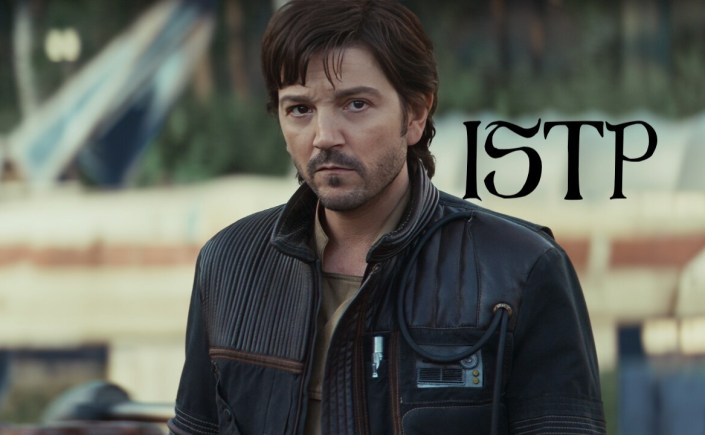
Cassian Andor: ISTP

Official typing by Arvid Walton

Andor (Star Wars Universe)

Dominant Introverted Thinking (Ti): Cassian frequently disagrees with the standard logic of others. As a result, he gains a reputation for disobeying orders that don’t make sense to him. Despite consistently working for the rebellion, he doesn’t bother jumping through the “official” hoops that they request of him (such as rules for clearing a ship to leave Yavin). Similarly, he chooses not to kill Jyn’s father because the situation doesn’t make sense to him or his instincts (TiSe). He is naturally analytical, able to evaluate problems and critique them on the fly (TiSe combo) in order to escape danger. Nonetheless, Cassian is a quiet person who keeps most of his logical processes inside.

Subscribe to get access

Read more of this content when you subscribe today.

Gurney Halleck: ISTP

Guest Post by Andrew, ENTJ

Dune, Frank Herbert

Dominant Introverted Thinking (Ti): Gurney likes to silently analyze his situation and his environment, whether there’s a lot or a little going on around him. He prefers to teach Paul how to fight with practice alone, nearly eschewing spoken instructions altogether (Ti-Se). Gurney’s decision-making process is almost entirely based on logic, especially deductive logic, and only by using reason can anyone convince him of anything. After the death of Duke Leto and the disappearances of Jessica and Paul, Gurney is not above going outside the law to continue opposing the House Harkonnen.

Continue reading

Stephan – Pokémon: ISTP

Guest Post by Andrew, ENTJ

Pokémon Anime Franchise

Dominant Introverted Thinking (Ti): Although Stephan can be an impatient trainer, he will take a second to think over his situation before he acts. He will quickly and silently analyze each battle he is in, and then unleash his full fury on his opponents. Outside of battle, he will thoroughly examine his weaknesses and those of his Pokémon and will come up with unique ways to counter them. He figures things out alone, with no need for studying or having a mentor. Stephan can be a little too honest when criticizing people, and will sometimes step on their toes by accident. His name has an unusual pronunciation (it’s pronounced ste-FAHN, not STEF-en or Steven), and he always takes a moment to correct the people (i.e. practically everybody) who get his name wrong.

Continue reading

Iris – Pokémon: ISTP

Guest Post by Andrew, ENTJ

Pokémon Anime Franchise

Dominant Introverted Thinking (Ti): Iris hates rules and boundaries, especially the stifling ones she experienced at school. She is always brutally honest, even when her honesty is neither needed nor appreciated, especially when it comes to Pokemon battles. Iris has a disdain for book learning (indeed, she often gets textbook facts wrong) and apathy for being taught by others, preferring instead to figure things out on her own. She prefers a logical approach to problem-solving and doesn’t generally respect people who make emotional decisions. When Iris first meets Ash, she doesn’t know or care about his many past accomplishments; his battle style makes little sense to her and he gets caught up in his emotions, earning him permanent “little kid” status in her book.

Continue reading

Viktor Krum: ISTP

Guest Post by Andrew, ENTJ

Harry Potter, J. K. Rowling

Viktor Krum ISTP | Harry Potter #MBTI #ISTP

Introverted Thinking (Ti): Viktor speaks little and chooses his words carefully.  Although he is widely beloved across the wizarding world, he is largely indifferent to, say, the favoritism he receives from his headmaster, or the constant swooning of fangirls.  His method of rescuing Hermione in the second Triwizard task is not so straightforward, but it does have some theoretical sense.  When Viktor suspects a more-than-friendly relationship between Harry and Hermione, he questions Harry in private in order to inform himself; in doing this, he not only puts more stock in words than empirical evidence, but he also shows obliviousness to the social implications of talking to Harry under these circumstances (because he is from a Dark Arts-oriented school, Durmstrang).  As a Seeker in Quidditch matches, Viktor largely operates alone, leaving teamwork to the other players. Continue reading

Jill Pole: ISTP

Guest Post by E. J., INTJ

The Chronicles of Narnia, C.S. Lewis

Dominant Ti: Unlike her Te-using friend Eustace, Jill operates based on an interior sense of logic that is not necessarily based on empirical evidence. As a result, she is the only Friend of Narnia who is willing to believe that other worlds exist before she enters one. Jill generally prefers taking a rational approach to life, and she can be disdainful of people who lose control of themselves. When she is faced with a difficult situation, one of her first reactions is usually to focus on remaining cool and calm. She sometimes misses the larger significance of events, which annoys Eustace (especially on the occasions when she interrupts his reasoning process to emphasize details that he considers unimportant). Jill is not a controlling person. She can, however, be very critical of other people when they are behaving irrationally or (in her mind) wasting time. As a result, she and Eustace often argue. She does not verbalize all of her thoughts and is irritated when Eustace ruins her declaration of loyalty to Tirian by pointing out that they cannot return home anyway. Continue reading

Se-users: Do you talk with your Hands?

ComradeJocasta asked: Is it possible that upper-Se users might be more likely to gesture a lot when they speak?

I haven’t actually found much research on this topic. However, I’ve given it a bit of thought, and I’d like to hear everyone else’s thoughts as well.

My ESFP sibling definitely is NOT a hand talker. However, he does have a strong need for touch and physical contact with people he’s comfortable around. Same goes for my ISFP roommate.

Out of anyone in my family or friend group, I’m actually the one who talks most via my hands. However, I don’t necessarily attribute this to my Se function so much as to the fact that I’m relatively fluent in Sign Language. Before I learned Sign Language, I didn’t gesture at all when I spoke, but now talking and gesturing practically go hand in hand for me (wow, that was a terrible pun).

It’s the same with any language. As soon as you’re fluent in more than one language, and especially if you know more than two, it’s hard to force yourself not to blend the elements of each. At the same time, you also keep many elements very separate as well (for instance, I swear a lot more in German than I do in English).

Upper Se-users. Now is your time to talk! I’m interested to hear whether you talk with your hands.

Tris Prior: ISTP

Guest post by Occam’s Chainsaw, INTJ

Divergent, Veronica Roth

Tris Prior ISTP| Divergent #MBTI #ISTP

Ti: Tris analyses the situation before leaping to action. She primarily uses common sense, and it shows—especially in the way how she’s constantly scolding herself whenever her ‘irrational’ feelings overwhelm her, and she would never let herself to be led around by them, not under any circumstances. She suppresses her emotions because of her craving for staying true to her own logical system at all times. Tris doesn’t have a tendency to organize her thoughts outside herself—neither verbally nor visually—because she struggles through complex problems in silence, within her head. She always thinks of something, then acts on it without telling anyone about it, for example when without a word she went to climb the Ferris wheel. Tris also spends a great deal of time analysing herself for better understanding of herself, and to determine what her intentions were when doing some of her acts, for instance when she went back to the net and recalled the moment when she jumped off the rooftop—she analysed the scenario and came to the conclusion that she hadn’t done it to be like the Dauntless, but because she had already been like them and wanted to show herself to them, while simultaneously acknowledging a part of herself that Abnegation demanded that she hides. Continue reading

Natasha Romanov (Black Widow): ISTP

Guest post by Kerissa, INFJ

The Marvel Universe

Natasha Rominov (Black Widow) ISTP | The Avengers #MBTI #ISTP

Ti: Doesn’t have any drive to be in charge or monitor progress unless it directly relates to what she’s doing. She’s perfectly willing to work under someone, such as Fury or Steve Rogers. She doesn’t willingly express her feelings until they’re drawn out of her, as shown in Winter Soldier. She makes decisions based on logic rather than feelings: in Avengers, when Hawkeye was roaming around the helicarrier brainwashed, she agrees to track him down and take him out because she was able to, despite her reluctance to fight her friend and the fact she was visibly shaken from her encounter with the Hulk. Continue reading

Are xSTPs the best types?

Uhw asked: If you are a Intj, you should know the meaning of life, which is enjoy the life (considering that the life of a human being is 80 years and he takes nothing beyond).

So, you agree that istp and estp are the best types of the world?

You do recall that I am studying philosophy at university level, right?

Your syllogism is sound, but invalid. Let me explain by taking it apart for you.

  1. If I am an INTJ, I will know that the meaning of life is to enjoy life
  2. I am an INTJ

Therefore I can conclude that xSTPs are the best MBTI types

First of all, we have not established between us that the meaning of life is to enjoy life, so your first premise is called into question. Secondly, you have none of your premises suggest that xSTPs enjoy life more than say xSFPs, so you cannot conclude based on either premise that xSTPs are the “best” (you have also not defined “best”).

That considered, I believe the meaning of life is much more complicated than you might suggest and has more to do with morality than to do with enjoyment.