Character-Driven vs Plot-Driven Stories – An INTJ’s Take

INeverForgetPromises asked: if you were reading a literary work, what would hook you more, a plot-driven story or a character-driven story? Do you prefer complex plots with subplots in them or a simple plot with something deep underneath (take hills like white elephants for example)?

Im sorry if I’m asking too many questions, its just that I want to pick at your brain a little bit. Plus, you kinda remind me of my INTJ best friend :)

I personally prefer character-driven stories. However, any well-done character-driven story is subsequently going to have an excellent plot. It may not follow a typical arc, but as long as the characters behave realistically, the plot is also going to move forward in a realistic way.

If you look at any piece of Shakespeare’s work, you’ll realise that every last bit of it is character driven. His plots are fantastic, but they are always driven by the motivations of his characters.

The Ender’s Game Series is another good example of a character-driven storyline in which there is no absence of complex plots and subplots. I could think of a million other examples, but I’ll leave it at that.

Any story that has an interesting and well-developed character who is facing a very real conflict will necessarily end up also having an amazing plot.

Now, I enjoy a story with an intricate plot, but if the characters are boring the story becomes empty. I get bored reading Dan Brown because his writing features incredibly complicated plots with hardly any character development.

Lucien Carr: ISFP

 Kill Your Darlings

Lucien Carr ISFP | Kill Your Darlings #MBTI #ISFP

Introverted Feeling (Fi):  Lucien Carr was a rebellious, anti-establishment youth who detested commonality and tradition. Oft times, he was rebellious just for the sake of being differing from the norm, but also to make a statement against living a life that wasn’t your own. “Lu” Carr, as he was known, had a profound influence on everyone with whom he associated, among them, Allan Ginsberg, whom he taught all manner of crass vocabulary. Continue reading

Do INTJs like INFPs?

Sofia V.N. asked: Hi I am and INFP and there is this really interesting INTJ named Katie at my school and my close friend Shannon is now really good friends with her. I really want to hang out with Shannon again but she is always with Katie (Now I don’t want to be misconstrued she can be friends with who ever she wants) but I never know what to saw  to Katie because she always has this very menacing face and I can’t compose and sentence that she will be interested in. I would just like to know what I should talk to her about and what conversational topic she would be interested in. Also if INTJS like us INFPS.

Sorry that this was more me seeking advice then me asking a question.

Sofia V.N.

Since I don’t know Katie, I have no idea what topics of conversation she would be interested in regardless of whether she’s an INTJ or not. MBTI type does not dictate a person’s hobbies or interests. It merely influences how their thought process works.

Do all INTJs like all INFPs? No.

Do some INTJs dislike INFPs? Yes.

Do some INTJs love INFPs? Yes.

There are plenty of INFPs that I enjoy being around, and there are also a fair number that I can’t stand. In my experiences, it really depends on the relative maturity of each of the people in question.

Dr. Lisa Cuddy: ESTJ

House MD

Arthur Goring ENTP | An Ideal Husband MBTI

Te: Cuddy is an organizer who likes to be in charge, thus the never ending power struggle between herself and House. She prioritizes her time and is a bit of a workaholic, though certainly not to the point of House. That said, she’s also pro at delegating. Before committing to any medicinal procedure, she asks House for evidence. Her primary focus is on getting things done and shows care by doing things for people. She keeps House at the hospital primarily for his usefulness (that’s the only reason she doesn’t fire him). She’s also fairly unaffected by House’s sexist remarks. Continue reading

Is it possible to have 2 Personalities?

Izzat asked: Based on your research, Is it possible to have 2 personality types?

Are you familiar with Dissociative Identity Disorder (DID)? How about…Multiple Personality Disorder? The answer is yes, but not under normal circumstances.

Unless you have gone through massive levels of trauma– the answer to your question is no.

Continue reading

Sir Robert Chiltern: ENFJ

An Ideal Husband, Oscar Wilde

An Ideal Husband MBTI

Fe: Sir Robert is an exceptional communicator, and adapts his behavior to circumstance. He knows how to figure out what he wants and changes his language and behavior to fit the needs of others. He exaggerates his flattery when he has to and tones it down when others don’t need it. He’s not very stubborn, and easily agrees to change his position on arguments when coerced. Like most of Wilde’s characters, Sir Robert is morally flexible. He doesn’t make up his own moral code, but rather, molds himself to fit other people’s desires. Continue reading

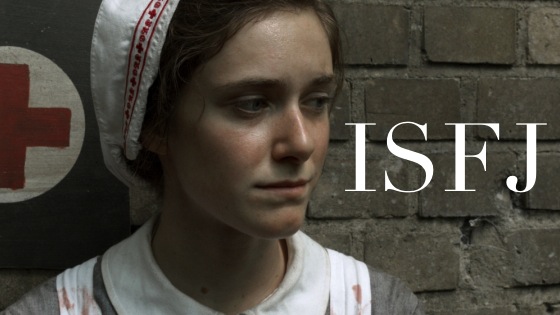
Charlotte Weiss: ISFJ

Generation War / Unsere Mütter, unsere Väter

Generation War Charly ISFJ MBTI

Si: Charly compares everything in the present to the past. For instance, when she arrives at the hospital, she wants to know what the building was used for before it was a hospital. She tends to be suspicious of other people, enough so to pry at her helper’s things to discover she’s a jew. Charly would rather tentatively follow Continue reading

So I just saw all of your comments…

Don’t think I’m ignoring them. I swear I will reply to them all after I finish finals.

Also. I just looked at my inbox…which is bursting with a million and six questions and character requests.

As a temporary measure intended to save the life of Arvid Walton, I will be shutting down the Ask an INTJ Anything and Request a Character sections on this blog. Fear not. I shall reinstate them once I get caught up on the many hundreds of questions and requests that beset me there.

In the meantime, I would highly appreciate anyone who wants to help with the character typing queue, and I’d like to further thank all those who have contributed up to this point.

In the next week or so, I intend to announce the winners of the last contest along with the answers to the questions posed about me.

Simultaneously, I will confront the horrors of my inbox. Or possibly I shall run away and write poetry.

Organisation Styles Based on MBTI Type

Kerissa asked: I’ve noticed that you organise your posts one within the other, like stacking boxes. For example, when you hover on ‘Idiot’s guide to MBTI’ there’s ‘Typing Guide’ as an option. Click on that and there’s a list of articles. Click on the first of those and it’s ‘First, Get to Know the Crucial Concepts.’ From there it goes to another list. Some of those links go to a post, others go to a collection of posts. This boxes within boxes approach is a lot how I organize my Google Drive, folders within folders, and I was wondering if it had to do with the functions. It seems like a behavioral thing that actually would relate to functions without being a stereotype.

Somebody is paying attention to the way I organise!

Usually people with a Te function tend to have a specific mode of organisation that they follow (this is not usually true of Ti, especially upper Ti).

Intuitive (Ni & Ne) people are more likely to organise starting with the general, and then working to the specific.

Sensors (and here, I’m talking about Si) are going to organise from the specific to the general.

For instance, my ESTJ mother will organise everything according to specific type (Si) and function (Te). In her sewing room, she has a box for fabric, a box for thread, and a box for elastic, a box for stuffing etc.

Specific combinations of functions are also going to give you different results as well.

As an INTJ, I organise from the general idea of a thing (Ni) and move next to its function (Te).

For instance, I have a large toolbox in which I store my art supplies. Inside the toolbox, you would find a large quantity of smaller cigar boxes in which I’ve stored art supplies and tools according to what they’re used for.

In terms of blog and document storage, I do the same thing. I look at the content of my documents and then arrange them into folders, then subfolders and so on. For this reason, one of my favourite writing programs to use is Scrivener, because it allows me to organise everything of the same topic in one place. I use it for writing novels, poetry, and even taking notes in class.

My ESFP sibling organises based on appearance only (Se). If there is nothing on the floor, their bedroom qualifies as “clean.” Just so long as they can’t see the mess, it’s “organised.”

My ENFP sibling is great at keeping things organised once they’re organised (for the most part – their Te is tertiary), but their Ne sees so many possibilities that they doesn’t always know where to start. I helped them move into their new apartment this fall, and I did most of the organising for them.

All these years, they assumed that because I have so many boxes inside of boxes and folders inside of folders etc. that my stuff was merely cluttered. It had never occurred to them that it was organised, only that it looked chaotic because the method behind it was so structured.

My INTP dad cannot organise at all. At all. He looks at clutter and has absolutely no idea where to start. Part of this is a lack of Te function (Te is a natural organisation function, and part of it is his Ne getting distracted before he can start.

Louis Zamperini: INFP

Unbroken

Louis Zamperini Unbroken ENFP

Fi: As a teenager, Zamperini isolated himself from his classmates and put up a tough front to hide the misery he felt inside. Running gave him a way to deal with his feelings and helped him to develop principles that came to define the rest of his legacy. He was always a bit rebellious and liked to define his own morality, rather than relying on Continue reading