Youthful Reactions to Unwanted Authority

“Can you do a brief overview of how the types would react to authority as kids/teens? Pretty please? :) “

Obviously, I will take the opportunity to exaggerate this extensively.

ESTJ

We’ll keep your rules, but don’t give us any extra work. Continue reading

MBTI School Subject Stereotypes

“Could you do some of the stereotypical school subjects each type might be likely to have interest in?”

ENTJ: business, law

INTJ: chemistry, physics

ENTP: computer science

INTP: philosophy, maths Continue reading

Help! My INTJ is crying!


Bruce Wayne INTJ INFJ MBTI

Question: “I’m in a relationship with an INTJ who’s one of the least emotional people I’ve ever met (I’m an ENFP). He’s usually pretty cynical and calloused, but last night he cried like I’ve never seen anyone cry before and he won’t tell me what’s wrong. I tried to ask him but he then he locked me out of the bedroom and has refused to come out for hours. How on earth am I supposed to handle that? Someone so hard and rational crying is like the most disconcerting and painful thing I’ve ever witnessed.”

Answer: First of all, I’m really sorry you had to witness that. Everyone always criticises INTJs for seeming emotionless, but as soon as they get emotional…people just start to get uncomfortable. Continue reading

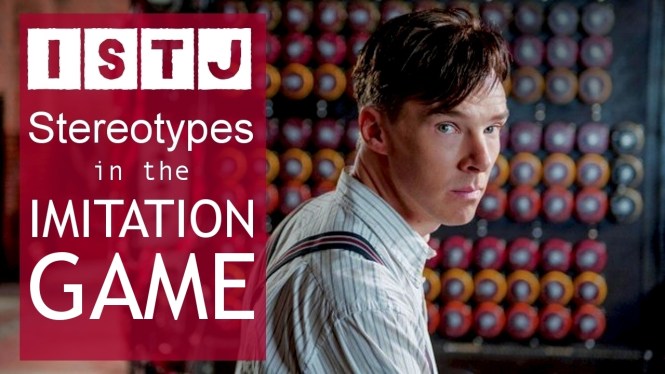
ISTJ Stereotypes in “The Imitation Game”

ISTJ Stereotypes in

ISTJs are frequently stereotyped as whining, OCD, rule-obsessed intellectuals with no social skills. Either that, or they’re portrayed as evil, emotionless cyborgs with no sense of humour. As someone with a close ISTJ friend, I understand exactly how terrible those stereotypes can be on a person. Unfortunately, such stereotypes are ever present in the media, and have found their way needlessly into the recent film, The Imitation Game. Continue reading

My INTJ Movie Tastes

Hi this isn’t MBTI related, but I was wondering what your favourite movie is since you’re an INTJ and I don’t know any.

INTJ Movie Tastes

I don’t really have a favourite movie. I just have a very long list.

Many of the movies that I tend to lean towards the most don’t necessarily appeal to the masses as films they’d want to see over and over again (while others do). Continue reading

Do I take notes when I type characters?

“What do you typically do when you’re watching a movie or reading a book and trying to type someone? Do you take notes? Or do you just figure it out in your head?”

It really depends. Sometimes I don’t take notes for anything –I’m one of those INTJs who doesn’t always study and gets an A on the test (or writes the paper the night before it’s due and gets 100% on it). Other times, however, I’ll take extensive notes for a class –particularly in cases where the teacher doesn’t cater to kinesthetic/visual learners. Continue reading

On Differing from INTJ stereotypes

INTJ: How I Differ from the Stereotypes

Surely, you’ve looked at the personality description for your Meyers-Briggs type at one point and thought, “that’s not me. I don’t do those things.”

Well, guess what? You’re not alone. I can’t tell you how many times I look at the INTJ stereotypes and think to myself, “How can anyone assume that you must be exactly the same as all other people who share your type?” Continue reading

Antisocial Extraverts & Social Introverts

“Hi, I’ve taken the test a lot and I always get typed ESTJ, but I don’t feel like an extravert because I don’t always want to be with people. At the same time, everyone I’ve asked tells me I communicate like a total extravert. Could I be a mix between ISTJ and ESTJ?”

Not likely. My advice to you would be to learn more about the functions and determine your type based on that rather than any of the MBTI tests. The tests can be rather inaccurate because a lot of the questions are interpretively ambiguous.

Antisocial Extraverts

Remember Mycroft? Whom I retyped from ISTJ to ESTJ a while back? (based on the functions). He’s what you might call and antisocial extravert. His cognitive functions work in the order of an ESTJ, but he doesn’t necessarily need to be around people to get Continue reading

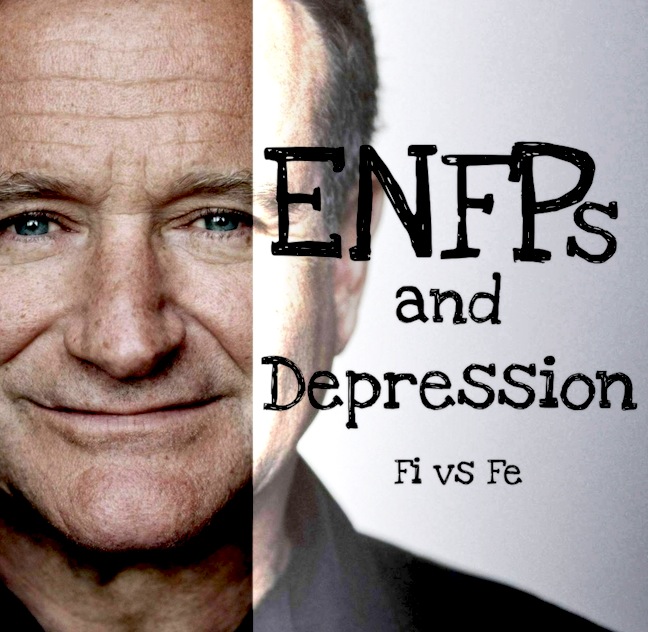
Depression in ENFPs – Fi vs Fe

Depression in ENFPs - Fi vs Fe

Question: “I suffer from depression (ENFP) and was wondering about how that translates to functions. I understand if you don’t know much about depression and can’t answer the question, but I just wondered.”

Answer: No matter your MBTI type, depression is always a highly emotional experience, so that ought to clear up the myth that T-types can’t be depressed.

Function-wise, depression tends to lock people into their introverted functions (this applies more to clinical depression than acute depression). As an ENFP, you’re likely going to lock yourself into your Fi and Si functions. Depending on the intensity of your depression, as well a your ability to control it (here, the word control is subjective), you may also end up suppressing your extroverted functions entirely. Continue reading

Gender in INxJs

“Hi, I’m an INTJ female and noticed that there aren’t really a lot of other female INTJs. Most of them eeem to all be male. Is there a correlation between gender and type or is that just stereotype when it comes to characters.”

Nope. For once, that one’s not a stereotype. INTJ females are incredibly rare, as are INFJ males, supposedly comprising about .02% of the global population (versus the 8% that each INxJ type comprises as a whole).

I’ve heard varying accounts of MBTI assigned-gender statistics, but generally, this is the consensus:

INxJs are the rarest types

INFJ is without a doubt the rarest of the rare types, as it is: the rarest of the introverts, the rarest of the intuitives, the rarest of the judgers, Continue reading

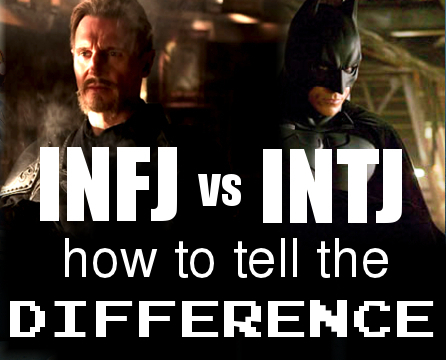
How to tell the Difference: INTJ vs INFJ

How to tell the Difference: INTJ vs INFJ

Loads of people get it into their heads that the sole difference between INTJs and INFJs is that the latter are sweet and kind while the former are complete apathetic jerks. Unfortunately, this assumption is based on stereotypes and doesn’t include the jungian functions at all.

In my experience, there are plenty of both types that defy the stereotype beyond reason, to the point that MBTI-Typers who go based on stereotypes are bound to get them wrong.

This type of behaviour can also be observed if you watch Sherlock.

INxJs share two common functions: dominant Ni, and inferior Se. As a result, it’s easy for the Continue reading