INTJs: How to deal with Low Self-Esteem and Emotional Emptines

Asthma asked: As an intj how do you deal with :
– lack of confidence/ low self-esteem.
– emotional emptiness.

Low Self-Esteem

I’ve never had a problem with low self-esteem myself, but I suspect that my methods for dealing with self-criticism could apply to your question just fine.

My interior monologue often runs along these lines: Why don’t I feel anything? Why don’t I care that this person in front of me is crying? Am I a bad person? Did l have to say that? It may have been true, but it wasn’t kind. I am a terrible friend. etc.

Here’s how I deal with it. Continue reading

How INTJs cope with Trauma

How INTJs cope with Trauma

There is no defined route traveled by every traumatized individual, and variations range so widely even within the INTJ realm that all we can really observe are the patterns. Continue reading

9 MBTI Typing Mistakes Tumblr Makes

9 MBTI Typing Mistakes Tumblr Makes

Credit: quotes & bullets borrowed from celebritytypes.com and expounded upon in an understandable format

If you haven’t already, read my Mistyping post for further input on what mistakes to avoid when typing people.

Continue reading

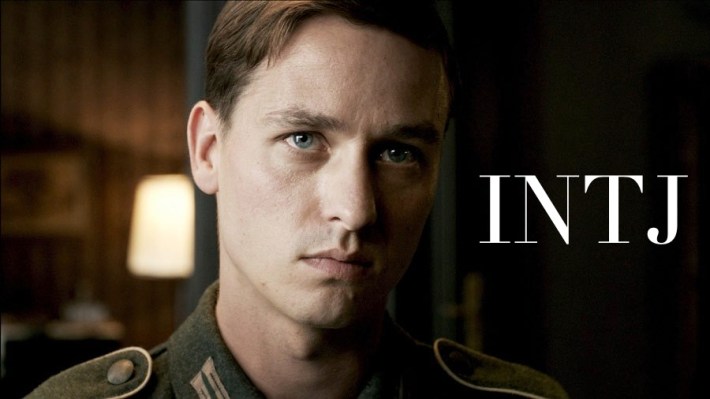
Claus Von Stauffenberg: INTJ

Valkyrie

Claus von Stauffenburg INTJ | Valkyrie #MBTI #INTJ

Ni: Stauffenberg had a very specific end in mind when he set out as a conspirer against Adolf Hitler. He understood that up until he joined, most of the other conspirers didn’t intend to go quite far enough to achieve that end. Thus, he refused to participate until they were willing to follow his game plan. He’s the one who suggested all the out-of-the-box solutions that everyone else was afraid to even think about. Stauffenberg had no trouble keeping a secret, and was better Continue reading

INTJs! Don’t Hide from your Feelings!

Sumayyah asked: As an INTJ. I used to be very detached and anything emotional aggravated me. However, my problem lately has been that I’m usually in a bad mood or temper. I snap at people more often. I don’t like to hear or have any conversations that make emotions and feelings the center. Also, I have been betrayed by the man that I liked. I don’t know how to deal with these sudden feeling and emotions. It seems very illogical to me and aggravates me that they are controlling me. Do you have any advice or tips for an INTJ do deal with this situation.

Here’s my #1 piece of advice: DO NOT TURN OFF YOUR UPPER FUNCTIONS. Do everything you can to avoid locking into only your lower functions (this is called being “in the grip” and it isn’t a healthy state to be in). Make use of your upper functions.

My second piece of advice is to avoid locking into a loop between your Extraverted Thinking (Te) function and your Extraverted Sensing (Se) function. Often, INTJs experiencing emotional trauma will do this in order to detach from the strong feelings they’re enduring. Just as I warn you not to lock into only your lower functions, it’s unwise to stop using any function simply to avoid dealing with a problem.

To quote one of my all-time favourite Christopher Nolan films, “you always fear what you don’t understand.” And it sounds like there’s a disjunct between your emotions and your understanding of them (thus your fear of them).

Take your TeFi and analyse your feelings. Allow yourself to feel those feelings, but then ask yourself why you’re feeling what you’re feeling. Mature INTJs do not hide from their feelings. They face them without allowing the feelings to control them.

It is perfectly possible to feel strongly and still be rational. The feelings themselves may be irrational, but the only way you’re going to talk yourself out of that irrationality is to analyse those feelings so that you can understand them, and to do that, you have to feel them.

You will never understand anything that you spend all your time hiding from.

ENFPs and Trauma

Meredith asked: “I have a friend who’s was a total ENFP but then he went through a traumatic experience and now he doesn’t seem like an ENFP at all. Could he have changed to an introverted type?”

Probably not, although, yes, if the trauma you’re referring to was physical head trauma, a stroke or anything that could cause brain damage and literal personality changes. However, I’m going to assume that you’re talking about something that was psychologically traumatizing.

First of all, everyone (hopefully) undergoes Continue reading

INTJs: Embarrassed about Crying in Public?

Abbie asked: Help! I’m an INTJ and I’m crying… In a public place… With no secluded spot or sanctuary I can run to… And people are watching… What do I do? What do you do?

Answer: Curtesy queue interruption –this is what you should do.

Forget that other people are watching.

It does not matter what anyone thinks of you. A person who judges you for crying is not someone whose opinion you should value enough to let it affect you. When you cry in public, that’s when you really discover the character of the people you care about. The ones who judge you aren’t people you want to keep around and those who don’t will probably be your friends for life.

Secondly, you should never be ashamed of crying.

There are large quantities of immature T-types out there who will tell you that emotion is for weaklings. To that, I say that if you have not cried –if you have not been broken, your life has been too easy and you have not learned enough.

Don’t listen to anyone who tells you that you’re weak for emoting. Crying releases endorphins, which is why we sometimes can’t feel better until we’ve had a decent cry. Emotion is what makes us human. If we could not feel, we would not make moral decisions.

If there is nowhere to hide your tears, stop worrying about it and deal with what’s really important (aka the issue that’s making you cry in the first place).

When an issue is important enough, just let yourself cry. Who cares if people are watching? Cry, and then move on. That’s all I can really tell you.

To my Grammar Nazis

Recently, I’ve gotten an influx of grammar-correcting comments, which I’d like to address. I believe grammar is expressly important, but it’s not the most important thing in writing.

You spelled ______ wrong! Don’t you understand how important grammar is?

Being a grammar nazi is a poor way to assert your intelligence because it merely expresses emotional immaturity. A grammar nazi is a person who lacks the self-control necessary to restrain themselves from voicing their inner-critic at inappropriate times and places. He misses the big picture in order to focus on minute details.

Correcting other people’s grammar does not make anyone think of you as a genius. A person may be academically intelligent, but that does them no good if they lack emotional maturity. On a larger scale, this is why Ender Wiggin was chosen to fight the bugger war over his brother Peter. Both were incredibly intelligent, but one of them lacked emotional maturity.

I completely understand the urge to correct other people’s grammar –believe me. However, self-control is far more important. If you can’t control the things you chose to say, then who are you? Because you’re not your own person. You’re simply being swayed one way and another by your emotional responses to things that aren’t important.

“Recognise is spelled with a Z.”

Yeah, maybe in America, but in the UK, we spell it with an S. My earlier attempts to cater all my spellings toward Americans (who comprise the largest percentage of my readership) were a flop, and I’ve gone back to UK spellings.

Consider this. Which is more important? Somebody else’s correctness, or your maturity? Are you simply going to react to everything you see, rather than assertively making a decision as to how you will respond? Are you going to sacrifice your own maturity for the sake of something you probably can’t change?

I am an English Major. I knew the risks of deciding not to spend an extra ten minutes editing per post on this website. It’s for this very reason that I specifically avoid connecting this blog to the books/stories that I’ve published.

I apologise for any grammatical errors you may find on this blog. I’m sorry if they offend you, but they don’t offend me enough that I’m going to spend my entire day off trying to fix all of them.

Friedhelm Winter: INTJ

Generation War / Unsere Mütter, unsere Väter

Generation War Friedhelm INTJ MTBI

Dominant Introverted Intuition (Ni): Friedhelm has clever solutions to impossible problems that didn’t occur to anybody else. He looks at the war from an incredibly big-picture view, against it from the start and disillusioned with it by the end. He’s the ultimate idealist-cynic. Friedhelm is future-oriented, and accurately predicts the long-term Continue reading

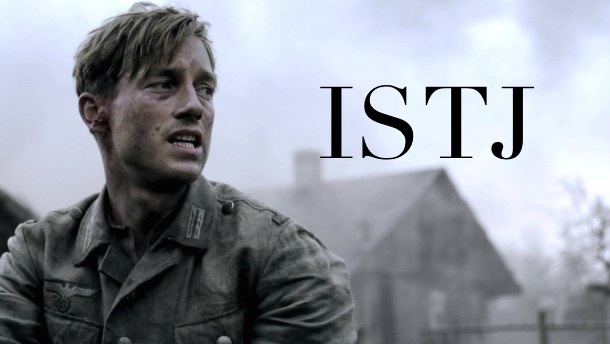
Wilhelm Winter: ISTJ

Generation War / Unsere Mütter, Unsere Väter

Generation War Wilhelm ISTJ MBTI

Si: Commitments are important to Wilhelm, and he frequently judges others against socially accepted standards. Until late into the war, his pragmatism comes before ideals. He prefers to take approaches that he is familiar with, and is uncomfortable when he realizes that experience isn’t going to help him in this war. He cares about Continue reading

Are INFPs Poor Leaders?

Are INFPs Poor Leaders?

Question: “Hello Mr. INTJ.  I am an INFP. On the net, I always find that some of the famous authors, actors, writers, artists, music composers are INFPs . But I have never found a single famous military leader, politician, athlete, player, scientist (except Einstein), sci-fi writer in the list of INFPs.  All other personality types have some or more of these ranges.  Even ENFPs have some world class leaders (though shown in the dark side on celebritytypes.com).  In the list of INFPs there are some who have committed suicide.  On the other side there are people who have committed mass homicides in other personality types.  Why are INFPs  always so meek in their behavior?  Why are we not as outgoing as other types?  I even found on the net that INFPs are the economically the poorest of all types.   I will be thankful to you if you put some light on this topic.  I  know you can understand what I mean to say.  So please answer my question as soon as possible.”

Answer: Hello Mr. big questions. I interrupted the queue just to answer this one, so first off, I’ll give you some NFP scientists to make friends with. Michio Kaku and Brian Cox are my two favourites. Go and look them up.

I can tell you right off the bat why ENFPs are more likely to be famous leaders than INFPs. It’s merely because their Te is higher up in the function hierarchy than INFPs.

As to INFPs always being meek? Actually, no, they’re not.  Continue reading

ISTJ Stereotypes in “The Imitation Game”

ISTJ Stereotypes in

ISTJs are frequently stereotyped as whining, OCD, rule-obsessed intellectuals with no social skills. Either that, or they’re portrayed as evil, emotionless cyborgs with no sense of humour. As someone with a close ISTJ friend, I understand exactly how terrible those stereotypes can be on a person. Unfortunately, such stereotypes are ever present in the media, and have found their way needlessly into the recent film, The Imitation Game. Continue reading

Dieter Dengler: ENTJ

Rescue Dawn

Dieter Dengler ENTJ | Rescue Dawn MBTI

Te: Dieter cares especially about functionality and specifically asks for his equipment to be customised in order to improve the efficiency. He’s resourceful when it comes to creating tools and originally worked as a toolmaker with the specific intent to learn something “useful.” He refuses the idea of sitting idle in the Laotian camp, and insists on finding an immediate way to take action to escape. He can be quite confrontational, and unusually Continue reading