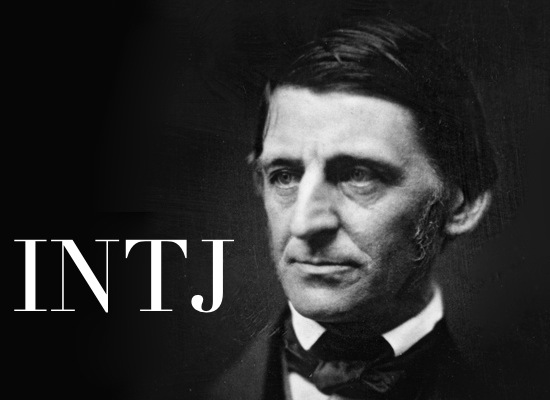
Ralph Waldo Emerson: INTJ

Ralph Waldo Emerson MBTI INTJ

Ni: In multiple of his essays, Emerson focuses specifically on intuition as a source of intelligence, also specifying that for him, it always comes before analysis. Emerson had many very specified focuses, which he was able to obsess over until he had fully fleshed out the ideas to the point where there were few logical fallacies. The structure of his arguments was always such that it’s clear he spent hours Ni-logic-jumping all over the concepts in a chaotic fashion before he organised them into an easy-to-follow Te structure. Continue reading


My INTJ Movie Tastes

Hi this isn’t MBTI related, but I was wondering what your favourite movie is since you’re an INTJ and I don’t know any.

INTJ Movie Tastes

I don’t really have a favourite movie. I just have a very long list.

Many of the movies that I tend to lean towards the most don’t necessarily appeal to the masses as films they’d want to see over and over again (while others do). Continue reading

Dieter Dengler: ENTJ

Rescue Dawn

Dieter Dengler ENTJ | Rescue Dawn MBTI

Te: Dieter cares especially about functionality and specifically asks for his equipment to be customised in order to improve the efficiency. He’s resourceful when it comes to creating tools and originally worked as a toolmaker with the specific intent to learn something “useful.” He refuses the idea of sitting idle in the Laotian camp, and insists on finding an immediate way to take action to escape. He can be quite confrontational, and unusually Continue reading

Do I take notes when I type characters?

“What do you typically do when you’re watching a movie or reading a book and trying to type someone? Do you take notes? Or do you just figure it out in your head?”

It really depends. Sometimes I don’t take notes for anything –I’m one of those INTJs who doesn’t always study and gets an A on the test (or writes the paper the night before it’s due and gets 100% on it). Other times, however, I’ll take extensive notes for a class –particularly in cases where the teacher doesn’t cater to kinesthetic/visual learners. Continue reading

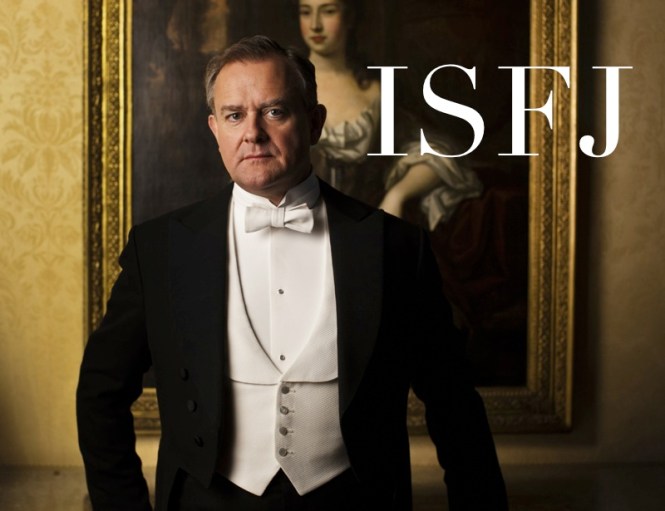
Robert Crawley: ISFJ

Downton Abbey

Robert Crawley ISFJ | Downton Abbey MBTI

Si: Robert is a man of the past. He’s quite upset by the changing times because it means doing away with tradition and predictable lifestyle. He holds on to the past like a life vest to the point that it becomes more of a sinking weight, holding him down. He doesn’t want to change the way the estate is run because in the past, the way they’ve done things has worked. During the war he feels inferior to the younger soldiers because he feels he’s not living up to traditional Continue reading

On Differing from INTJ stereotypes

INTJ: How I Differ from the Stereotypes

Surely, you’ve looked at the personality description for your Meyers-Briggs type at one point and thought, “that’s not me. I don’t do those things.”

Well, guess what? You’re not alone. I can’t tell you how many times I look at the INTJ stereotypes and think to myself, “How can anyone assume that you must be exactly the same as all other people who share your type?” Continue reading

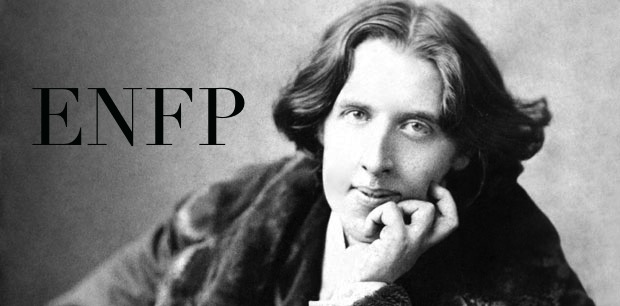
Oscar Wilde: ENFP

Oscar Wilde ENFP

Ne: Oscar Wilde was an idealist and a starry-eyed optimist. He not only idealised the world around him, but people too, viewing them as their best-possible selves until undeniable evidence of their faults starred him in the face. He had perpetual wit, charm and was a master of sarcasm. Wilde loved to tell stories out loud, and did so with a profound characterization that made people excited. He didn’t actually enjoy writing, but wrote down the stories he told in order to make a living. Continue reading

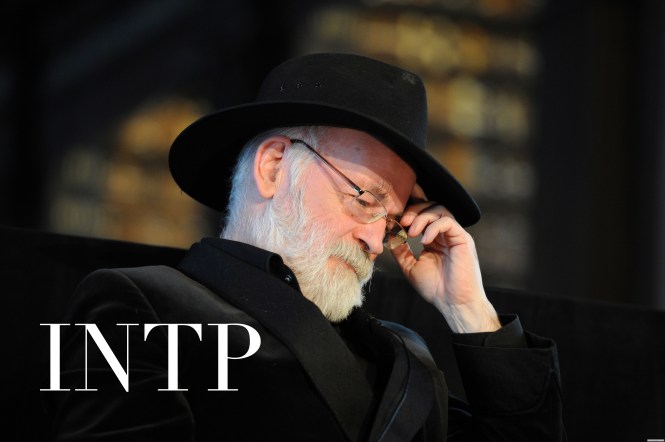
Terry Pratchett: INTP

Terry Pratchett INTP ENTP MBTI

Ti: Logic according to Terry Pratchett may not necessarily be empirical or fitting with the general standards, but it’s darn funny. Any possibility is open when it comes to occurrences in his books. He’s picky about words in a particularly TiNe way. Continue reading

Antisocial Extraverts & Social Introverts

“Hi, I’ve taken the test a lot and I always get typed ESTJ, but I don’t feel like an extravert because I don’t always want to be with people. At the same time, everyone I’ve asked tells me I communicate like a total extravert. Could I be a mix between ISTJ and ESTJ?”

Not likely. My advice to you would be to learn more about the functions and determine your type based on that rather than any of the MBTI tests. The tests can be rather inaccurate because a lot of the questions are interpretively ambiguous.

Antisocial Extraverts

Remember Mycroft? Whom I retyped from ISTJ to ESTJ a while back? (based on the functions). He’s what you might call and antisocial extravert. His cognitive functions work in the order of an ESTJ, but he doesn’t necessarily need to be around people to get Continue reading

Spock: ISTJ

Star Trek

Spock ISTJ | Star Trek MBTI

Si: Let’s just put it this way. Spock has the entire starfleet rulebook memorised. And fear not, he’ll inform you if you violate even the most minute aspect of these rules. It doesn’t matter how strong your friendship with Spock is; he will still cop at you if you break rules (not to say he isn’t extremely loyal). Details are embedded in Spock’s brain like women are in Kirk’s. Image is important to Spock, enough so that he he pretends not to assign Uhura to the Enterprise in Continue reading

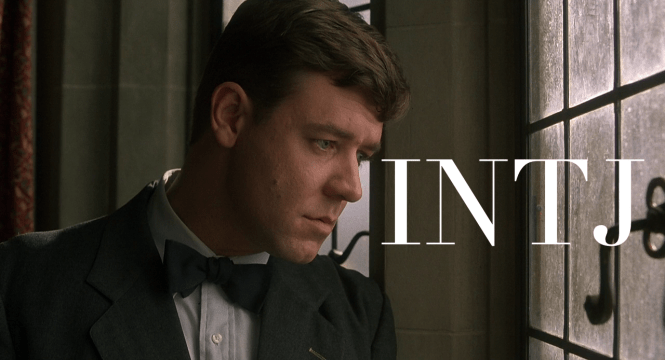
John Nash: INTJ

A Beautiful Mind

John Nash A Beautiful Mind INTJ MBTI

Ni: John Nash was a bit of a workaholic. He was so focused on his vision of what he wanted to accomplish that he had difficulty refraining from that focus to attend lectures, socialise, or date (until compelled). He had an incredibly big picture view of things, to the point that he saw little value in attending classes while in college. He saw fitting into the system as a waste of time, and valued innovation and original thinking instead. Nash’s hallucinations presented themselves in such a way that he believed himself to be a code-breaker, a man paid to Continue reading

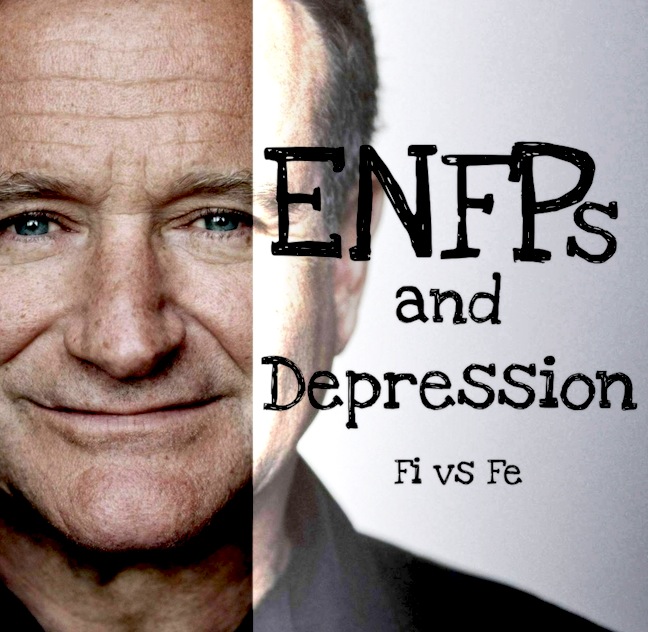
Depression in ENFPs – Fi vs Fe

Depression in ENFPs - Fi vs Fe

Question: “I suffer from depression (ENFP) and was wondering about how that translates to functions. I understand if you don’t know much about depression and can’t answer the question, but I just wondered.”

Answer: No matter your MBTI type, depression is always a highly emotional experience, so that ought to clear up the myth that T-types can’t be depressed.

Function-wise, depression tends to lock people into their introverted functions (this applies more to clinical depression than acute depression). As an ENFP, you’re likely going to lock yourself into your Fi and Si functions. Depending on the intensity of your depression, as well a your ability to control it (here, the word control is subjective), you may also end up suppressing your extroverted functions entirely. Continue reading

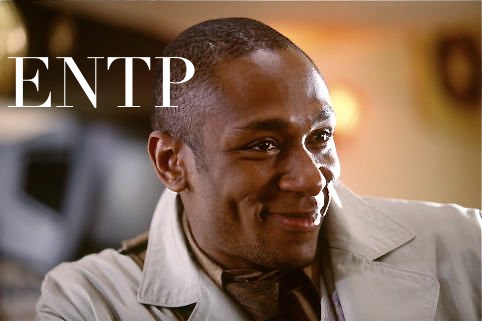
Ford Prefect: ENTP

The Hitchhiker’s Guide to the Galaxy, Douglas Adams

Ford Prefect ENTP | The Hitchhiker's Guide to the Galaxy MBTI

Ne: Ford wants to do everything, see everything and he sort of gets his wish –aside from the boring 15 years he spends trapped on earth. His writing (for the Hitchhiker’s Guide) is rambling and doesn’t stick to one topic or even come to conclusions most of the time. He improvises a lot, Continue reading