Are INTJs Narcissists?

Sue asked: “I have seen INTJ Associated with Narcissistic behaviour. Why is this? It makes no sense when INTJ’s are disinterested in controlling or exploiting other people.”

Simply put: the media is to blame.

I’ve said many times that because people are Continue reading

Harvey Dent: INTJ

Batman Trilogy

Harvey Dent INTJ | Batman MBTI

Ni: Harvey Dent has a singular mission, which he devotes his life and time to fulfilling. He would never leave anything up to chance, though he likes to pretend that he does, but rather, does everything with a purpose and a specific end in mind. He has a strong grasp of irony and Continue reading

Dr. Robert Chase: ISTP

House MD

Chase ISTP | House MD MBTI

Ti: Chase is detail oriented and logical. He doesn’t hesitate to point out when he sees a problem with other people’s logic. At most times, Chase is level-headed and calm. He cares more about details than facts, but when he’s depressed or stressed out, he neglects this dominant trait and makes perilous detail mistakes (that wind up getting him in trouble). Continue reading

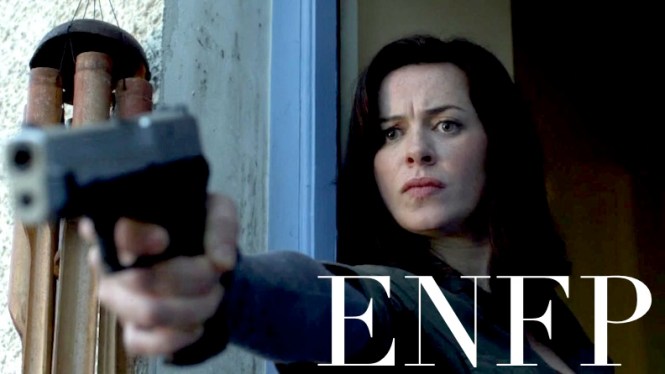
Gwen Cooper: ENFP

Torchwood

Gwen Cooper ENFP | Torchwood #MBTI #ENFP

Extraverted Intuition (Ne): After being dosed with Retcon, Gwen is still able to recall her encounters with Torchwood because she’s able to piece together bits of information and thereby connect the dots in her memory. Gwen is able to connect seemingly random pieces of information to figure out how to solve the problems Torchwood faces. Gwen has an intuitive Continue reading

Dr. Jonathan Crane: INTJ

Batman Trilogy

Dr. Jonathan Crane INTJ | Batman #MBTI #INTJ

Ni: Dr. Crane’s focus is specific, narrow. He does not focus merely on psychology, but on an even more specific thread within the field –experimenting on the criminally insane. He easily picks up on other people’s suspicions and is able to foresee dangers to his operations before they are an actual threat. For this cause, he has a backup Continue reading

INTJs! Don’t Hide from your Feelings!

Sumayyah asked: As an INTJ. I used to be very detached and anything emotional aggravated me. However, my problem lately has been that I’m usually in a bad mood or temper. I snap at people more often. I don’t like to hear or have any conversations that make emotions and feelings the center. Also, I have been betrayed by the man that I liked. I don’t know how to deal with these sudden feeling and emotions. It seems very illogical to me and aggravates me that they are controlling me. Do you have any advice or tips for an INTJ do deal with this situation.

Here’s my #1 piece of advice: DO NOT TURN OFF YOUR UPPER FUNCTIONS. Do everything you can to avoid locking into only your lower functions (this is called being “in the grip” and it isn’t a healthy state to be in). Make use of your upper functions.

My second piece of advice is to avoid locking into a loop between your Extraverted Thinking (Te) function and your Extraverted Sensing (Se) function. Often, INTJs experiencing emotional trauma will do this in order to detach from the strong feelings they’re enduring. Just as I warn you not to lock into only your lower functions, it’s unwise to stop using any function simply to avoid dealing with a problem.

To quote one of my all-time favourite Christopher Nolan films, “you always fear what you don’t understand.” And it sounds like there’s a disjunct between your emotions and your understanding of them (thus your fear of them).

Take your TeFi and analyse your feelings. Allow yourself to feel those feelings, but then ask yourself why you’re feeling what you’re feeling. Mature INTJs do not hide from their feelings. They face them without allowing the feelings to control them.

It is perfectly possible to feel strongly and still be rational. The feelings themselves may be irrational, but the only way you’re going to talk yourself out of that irrationality is to analyse those feelings so that you can understand them, and to do that, you have to feel them.

You will never understand anything that you spend all your time hiding from.

ENFPs and Trauma

Meredith asked: “I have a friend who’s was a total ENFP but then he went through a traumatic experience and now he doesn’t seem like an ENFP at all. Could he have changed to an introverted type?”

Probably not, although, yes, if the trauma you’re referring to was physical head trauma, a stroke or anything that could cause brain damage and literal personality changes. However, I’m going to assume that you’re talking about something that was psychologically traumatizing.

First of all, everyone (hopefully) undergoes Continue reading

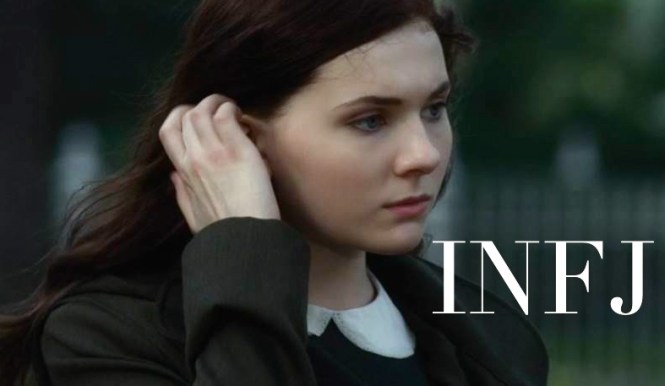
Valentine Wiggin: INFJ

Ender’s Game Saga, Orson Scott Card

Valentine Wiggin INFJ | Ender's Game MBTI

Ni: Valentine has little difficulty keeping Demosthenes a secret for over 3000 years. She’s an incredibly focused person, and tends to be a bit of a workaholic. As a working mom, she regrets not spending more time with her children, Continue reading

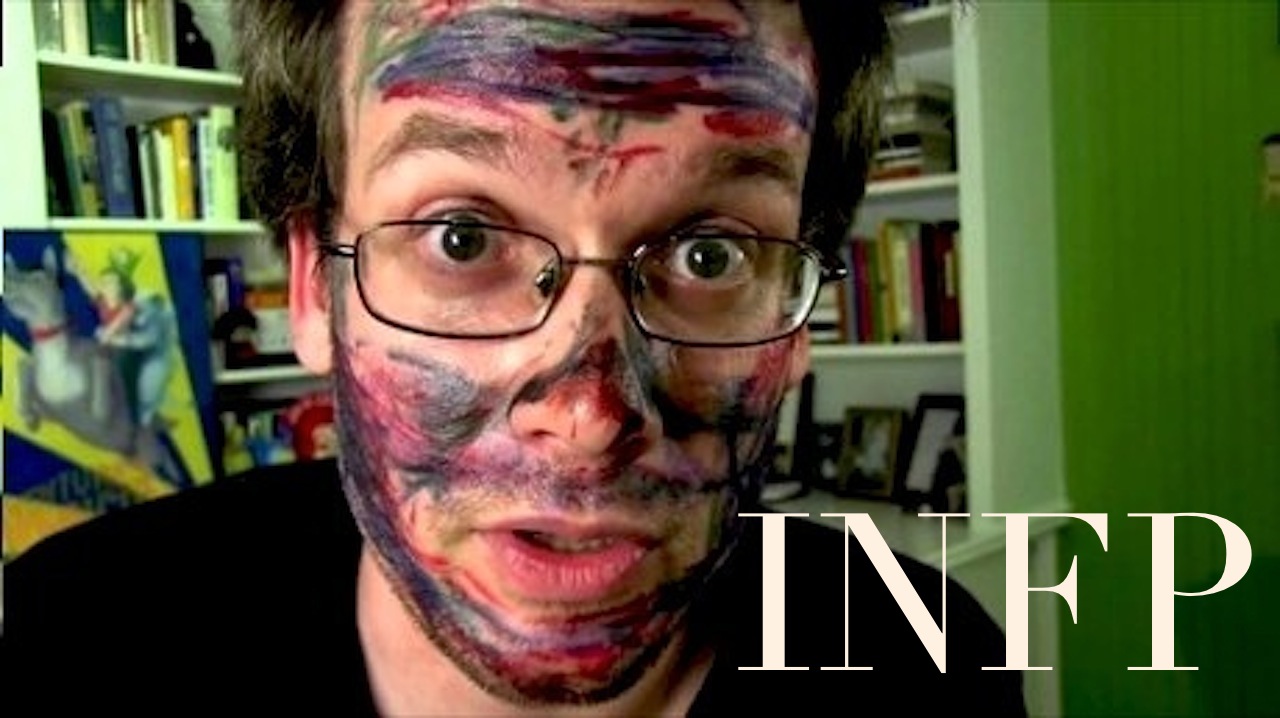
John Green: INFP

John Green INFP

Introverted Feeling (Fi): John Green usually doesn’t make his feelings public (though his ideas are very public). He’s good at writing deep, highly emotional characters who ask harsh questions about morality and the nature of human existence. His writing is always highly emotion driven and leaves most F-type readers sobbing when they The Fault in Our Stars, or Looking for Alaska. John Green has a strong desire to help other people and certainly does so through his writing and vlogging. Continue reading

INTJs: Embarrassed about Crying in Public?

Abbie asked: Help! I’m an INTJ and I’m crying… In a public place… With no secluded spot or sanctuary I can run to… And people are watching… What do I do? What do you do?

Answer: Curtesy queue interruption –this is what you should do.

Forget that other people are watching.

It does not matter what anyone thinks of you. A person who judges you for crying is not someone whose opinion you should value enough to let it affect you. When you cry in public, that’s when you really discover the character of the people you care about. The ones who judge you aren’t people you want to keep around and those who don’t will probably be your friends for life.

Secondly, you should never be ashamed of crying.

There are large quantities of immature T-types out there who will tell you that emotion is for weaklings. To that, I say that if you have not cried –if you have not been broken, your life has been too easy and you have not learned enough.

Don’t listen to anyone who tells you that you’re weak for emoting. Crying releases endorphins, which is why we sometimes can’t feel better until we’ve had a decent cry. Emotion is what makes us human. If we could not feel, we would not make moral decisions.

If there is nowhere to hide your tears, stop worrying about it and deal with what’s really important (aka the issue that’s making you cry in the first place).

When an issue is important enough, just let yourself cry. Who cares if people are watching? Cry, and then move on. That’s all I can really tell you.

Novinha – Ender’s Game: ISTJ

Ender’s Game Saga, Orson Scott Card

Other factors to keep in mind: PTSD

Si: She’s capable of holding long-term, committed grudges. She has an extremely difficult time letting go of pretty much everything from her past. Yeah, her parents died when she was a kid, but she never, ever, ever lets go of that. In fact, she lets it turn her into an icy, cold, and even hateful person (yet, she doesn’t show signs of PTSD). Her first impressions of Ender, she directly relates to Libo and her past experience. Though Novinha is an idealist, her practicality is her strongest trait. She’s practical enough to give up some of her strongest desires to protect people.

Te: In comparison to Novinha, Ender seems like an F dom, but in reality, they’re both Te users. From a young age, Novinha is filled with ambition that leads her to want to take control of Lusitania’s zenobiology department before she’s ready. She likes to be in control of her situation and lashes out at others when she feels she’s Continue reading