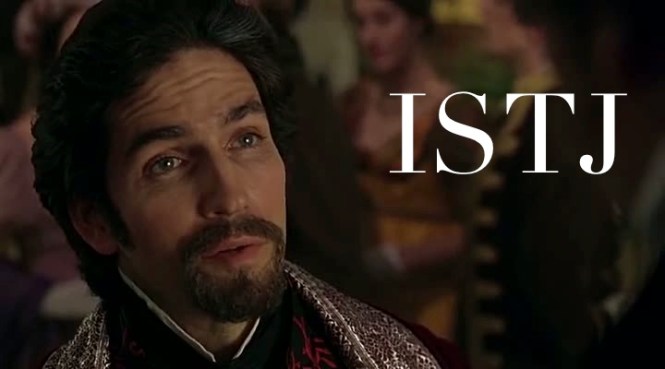
ISTJ Stereotypes in “The Imitation Game”

ISTJ Stereotypes in

ISTJs are frequently stereotyped as whining, OCD, rule-obsessed intellectuals with no social skills. Either that, or they’re portrayed as evil, emotionless cyborgs with no sense of humour. As someone with a close ISTJ friend, I understand exactly how terrible those stereotypes can be on a person. Unfortunately, such stereotypes are ever present in the media, and have found their way needlessly into the recent film, The Imitation Game. Continue reading

Spock: ISTJ

Star Trek

Spock ISTJ | Star Trek MBTI

Si: Let’s just put it this way. Spock has the entire starfleet rulebook memorised. And fear not, he’ll inform you if you violate even the most minute aspect of these rules. It doesn’t matter how strong your friendship with Spock is; he will still cop at you if you break rules (not to say he isn’t extremely loyal). Details are embedded in Spock’s brain like women are in Kirk’s. Image is important to Spock, enough so that he he pretends not to assign Uhura to the Enterprise in Continue reading

Elsa – Frozen: ISTJ

Frozen

Si: Elsa is perpetually in a self-made cage haunted by the past. Even after she professes to having “let it go” she’s really still holding on to it. Elsa is afraid of what her people will think of her for being different and practices social graces with astute determination to try to hide it. She is often so detail oriented that she fails to recognise the big-picture implications of current events as well as her own actions. For instance –freezing the entire kingdom goes beyond her notice because Continue reading

Alan Turing: ISTJ

The Imitation Game

Alan Turing MBTI ISTJ The Imitation Game

Si: Allan Turing was a detail oriented person, meticulous in all things and precise to the point of not even noticing larger social rules and customs. Turing had a tough time picking up on social cues and reading behind the lines. However (unlike the Turing represented in The Imitation Game), he had a keen sense of humour, and was an extremely approachable person. His co-workers at Bechley Park were actually quite fond of him, and in most aspects, Turing was polite and well mannered. Continue reading

Mycroft Holmes: the British Government, or ESTJ

Subscribe to continue reading

Subscribe to get access to the rest of this post and other subscriber-only content.

Charles Carson: ISTJ

Downton Abbey

Carson ISTJ | Downton Abbey MBTI

Si: Carson values tradition and doesn’t particularly like change. He’s reluctant to accept people who diverge from society’s norms, though he’s capable of doing so when he has to. He’s reluctant to talk about or confront his past, though it’s clear he remembers it well and thinks about it often. He’s got a sentimental side that shows through especially in his love for Mary and his comments after Sybil dies. Carson doesn’t like having surprises dropped in on him, but prefers forewarning. Continue reading

Thorin Okenshield: ISTJ

The Hobbit, J.R.R. Tolkien

Thorin ISTJ | The Hobbit MBTI

Dominant Si: All of Thorin’s motivation comes from past experiences. He hates the elves because of age-old racial hatred stemming from the war. Thorin is pretty much stuck in the past and obsessed with trying to return the dwarves kingdom to its former glory. Thorin only believes what he’s actually seen, so he often has trouble believing Continue reading

Severus Snape: ISTJ

Harry Potter, J.K. Rowling

Harry Potter Snap ISTJ MBTI

Dominant Si: Snape absolutely cannot let go of the past. He carries a bitterness of long lost childhood love and this bitterness spills through into the way he treats everyone. He has a particular disliking for Harry purely because Harry stirs up painful memories from his past. He relies on experience to deal with all problems and devises specific methods Continue reading

Edmond Dantes: ISTJ

The Count of Monte Cristo, Alexandre Dumas

Edmond Dantes ISTJ | The Count of Monte Cristo MBTI

Dominant Si: As a young man, Dantes is relatively ignorant about human nature and people in general, and isn’t very good at predicting their behavior or motives. It takes him years to connect the dots between his Mondego and why he is in prison. Though he doesn’t naturally understand how people work, he understands the workings of society and is able to fit into it as a mere shadow with little effort on his part. When it comes to devising quick solutions, Dantes always goes for the most sensible one. Dantes has an intense connection Continue reading

Katniss Everdeen: ISTJ

The Hunger Games, Suzanne Collins

Factors to keep in mind: PTSD.

Katniss Everdeen ISTJ | The Hunger Games MBTI

Dominant Si: Katniss relates everything to past experiences.  Katniss remembers various details that her father told her many years before, and uses those things to help her survive. She has an extremely difficult time overcoming the hardships of her childhood and the games. She frequently lapses into flashbacks of her father’s death and constantly relives the terror of the games. She relies on skills that she is already familiar with in the arena, rather than focusing on trying to learn something new. Obviously he won, so his strategy Continue reading

Martha Jones: ISTJ

Doctor Who/Torchwood

Martha Jones ISTJ | Doctor Who MBTI

Dominant Si: Martha is constantly comparing the present to her past experiences and learning from them. She always asks the Doctor about the minute details of how the Tardis works and how such-and-such will affect history. She has a great memory and can babble details when needed. She has a particular affinity for recalling events in recent history, and always knows the political situation for the last several years Continue reading

Mr. Norrell: ISTJ

Jonathan Strange & Mr. Norrell, Suzanna Clarke

Jonathan Strange and Mr. Norrell ISTJ

Dominant Si: Mr. Norrell easily discerns changes in people’s behavior and countenances, but does not always make accurate judgements based off of these observations. For instance, after Chilldermass is shot by Lady Pole, he is able to discern the servant’s disagreement with him about magic, but takes offense at it, wrongly assuming that Chilldermass intends to abandon him and join ranks with Jonathan Strange. Without unrefutable evidence, Mr. Norrell refuses to see any piece of knowledge as legitimate. Yet, at times, fear prevents him from actually seeking out proof (he won’t go to faery or summon faeries). Mr. Norrell lives in the past, present and future simultaneously. He has a clear vision of what he wants to accomplish (bringing magic back to England), but that goal translates to turning the future into the past.  Continue reading

Understanding Sympathetic INTJs – Fi vs Fe

Understanding Sympathetic INTJs - Fi vs Fe |The Book Addict's Guide to MBTI

Foreword: this post applies equally to ISTJs, in regards to the Fi function)

All the INTJ stereotypes say that we’re cold and don’t care about other people. Yet, many of us defy this stereotype.

When I care about someone, I filter my words to avoid offense and understand people on a deeper level than they often understand themselves (which is another reason to filter my thoughts, because otherwise people freak out at how much I know about them).

Naturally, I started to wonder if my ability to understand people so well stemmed from an Fe function, but eventually I determined that I’m an INTJ with an extremely well developed Fi, and here’s why.

While I understand people on an extreme level, I don’t feel their emotions the way an Fe user would. My Ni lets me know intuitively what’s going on behind the lines and then I’m able to logically put together what someone is feeling by using Te. I can understand, but I cannot empathize unless Continue reading

Aleksandar of Hohenburg: ISTJ

Leviathan, F. Scott Westerfeld

Introverted Sensing (Si): Alek lives in the past and future simultaneously. He is always comparing his present situations to past experiences and as a result, he has no problem learning from his mistakes. He finds it difficult to move past traumatic events in his past (his parent’s murder), but is also constantly thinking of the goals he has for the future. He has a very specific vision of what he wants to do with his life, and he views this as a “destiny” that he is obligated to fulfill. When it comes to accepting fact, Alek needs the details to be explained in depth, for without evidence, he is reluctant to accept anything as truth. He likes life to be predictable and gets discouraged when things don’t go as planned, or when surprises (such as finding out that Deryn is a girl) enter his life. He is very cautious in his approach to life and consequently, is hesitant to try new things. Continue reading