Subscribe to continue reading
Subscribe to get access to the rest of this post and other subscriber-only content.

Dominant Te: Cassio is a reliable person. He is straightforward and honest in his communications with others. He has great social skills and knows how to organize people. His decisions are typically firm, though at times, he can give way to peer pressure (more likely because Iago is a master manipulator). Cassio’s charm and charisma draw people of all Continue reading

Dominant Fe: Danielle is quick to express her opinions and does so very fervently. Though she often talks in what she believes to be facts, everything she says is somehow connected to her emotions. She immediately punishes Henry for stealing her father’s horse, because the animal holds strong emotional connotations with her past experiences. She usually considers others before herself and is willing to put herself in dangerous illegal Continue reading

Dominant Se: Pippin is forever in this moment, right now, having fun. He wants everything to involve fun, and has a hard time understanding that there’s a time and a place for everything. He loves to prank and get into trouble and rarely considers the consequences of his actions. Because he thinks so little about the future, it takes Pippin Continue reading

Dominant Ti: Magnussen collects and analyses information, and refers to his process of reviewing information as “reading.” He needs a way to organize information, thus the “mind palace” (my theory is that he has a photographic memory, but uses a memory palace in addition in order to organize his thoughts). Magnussen gives extremely short answers for everything, not giving out any information until he knows the people he’s giving Continue reading

Dominant Ni: Sherlock is wired for problem solving, He frequently makes logic jumps to pinpoint future occurrence and then works his way backwards to develop a strategy to prevent the outcome. His talent for reading people is almost supernatural, and because of his quickness to anticipate other people’s actions, he is able to adjust his plans accordingly. Though he loves problem solving, he isn’t overly fond of surprises because he’s used to being able to accurately predict everything. For instance, when Magnussen turns Continue reading
The Byronic hero so byronic that Byron himself begins to notice!
Totally stoked for the mini-series to come out!

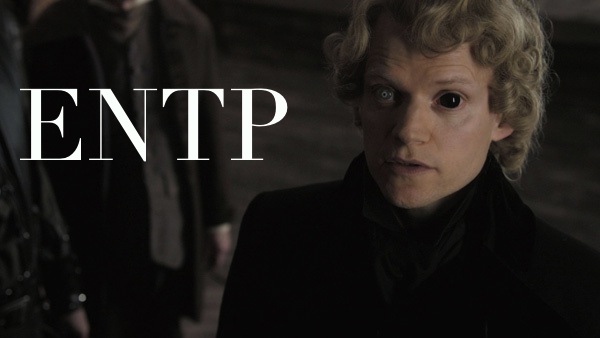
Dominant Extraverted Intuition (Ne): Jonathan Strange is fascinated by new ideas and loves to explore. He firmly believes that magic should be looked at as a wide, free expanse that is to be explored. This is where he differs from Mr. Norrell, who views magic as a wide expanse, that should be controlled and maintained. In his younger days, he is extremely indecisive about his career. He has thousands of ideas as to what he might like to be, but isn’t overly motivated to pursue any of them. His solutions to problems are always readily creative, and he’s able to Continue reading

Dominant Fi: Juliet finds it very important to stay true to herself, and though at times she feels guilty for it, she is not afraid to willingly disobey her parents orders to follow her heart. In fact, she is willing to let them believe that she is dead in order to follow her heart. Juliet makes choices based purely on her feelings –she does what feels authentically right to her, whether or not others believe it is right or not. In a sense, she doesn’t believe Continue reading
Mistypings usually result from ignorance in some form or another. To back up this rather harsh statement, I will group mistypers into categories that explain what they’re doing wrong. Much easier to read that way…
There are a certain group of people in this world –particularly people who use tumblr a lot– who believe, despite evidence to the contrary, that they know everything about whatever they want, and feel the need to broadcast their extensive knowledge to the world.
That said, these people typically experience only brief exposure to MBTI before they consider themselves expert enough to type all characters. Unfortunately, they typically don’t know as much as they suppose they do.
In fact, they typically know very little, which is why I deliberately made this blog a wordpress site rather than putting it on tumblr. I know perfectly well that tumblr is a web full of ignorance and I don’t care to tread there for anything except finding lovely reaction gifs for these posts.
There are some people who magically find a way to mentally warp all of their favorite characters to fit themselves. I know plenty of ISTPs that want to claim Sherlock as their own and INTJs that want to assume the role of the ninth Doctor.
Then there are people who assume that any character that they can remotely identify with should also fall into their MBTI category. The thing is, most of the time, these people can only relate to a character’s circumstance (but not the thought functions).
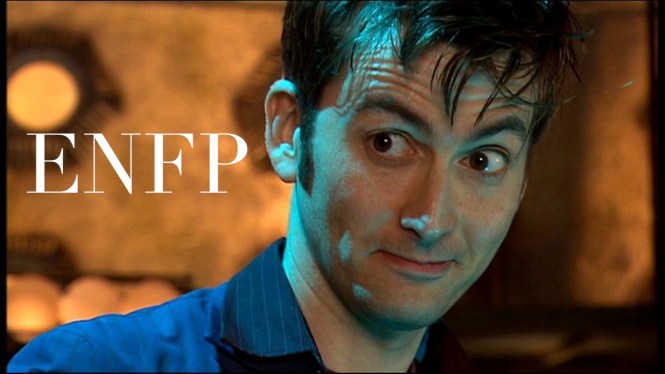
For instance, my favourite Doctors (from Doctor Who) are currently tied between 10 and 12. Much of the reason that I love both of them is that I relate to them a lot. Now, obviously, it would make little to no sense for me to claim the 10th Doctor as an INTJ, because he’s so blinking extraverted, but that’s what a lot of people are doing.
They assume that because they relate to someone, that they must be the same type…but what they don’t take into account is that they’re relating to thoughts that the character has as a result of circumstance or experience, and not cognitive functions.
Other times, the person will relate to one or two of the functions, and find a way to rationalize the other two to fit their desired outcome.
Some people type based solely on personality stereotypes, or, more accurately, based on the four letters I/E, N/S, F/T, P/J. Unfortunately, this doesn’t work, because the typing system isn’t based on those letters –it’s based on the functions. Plenty of people who claim to be expert types don’t even know the functions exist.
Remember that the functions show up slightly differently in all types. Just because someone is extremely intelligent doesn’t mean that they’re a T-type, and just because someone cries in public doesn’t make them an F-type.
They say, oh, all INTJs are cold, heartless and have no emotions, all ENFPs smile 24/7, all ESFJs are sluts, all ISTJs obsess over rules and whine about everything etc.
Can I just say, that’s like claiming that all people with depression wear black, or that all people with cancer are nice, or that all dentists are sadists.
I have massively larger amounts of forgiveness for this kind of mistypers, the reason being that they have actually educated themselves in the realm of MBTI. Their mistypings are generally based off of a fundamental misunderstanding of a character, rather than misunderstanding of MBTI.
They simply haven’t looked deeply enough into the character. Perhaps they can’t see something that’s beneath the surface, obvious once you look deeper.
I happen to be a professional fiction writer (and no, I am not giving my name out so you can read my crap), so I have an advantage in the area of character interpretation if you will. I notice things about characters non-writers tend to miss, and as a result, my typings tend to be accurate.
However, occasionally, I will stumble upon a new character insight that will lead me to retrace my steps and re-type a character completely based on my new understanding.
If you’re trying to type characters, here are my recommendations for accuracy:
In conclusions, I will state that I am by no means claiming that I am always right. I have mistyped characters in the past, but in the case that this is brought to my attention, I don’t simply try to back my original argument up further. I actually set out on a new journey to find the truth.

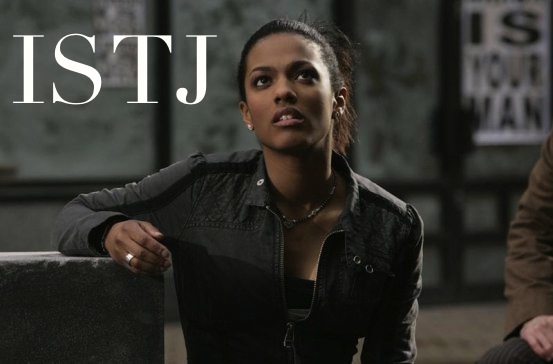
Dominant Ne: Connections are a must in the Doctor’s world. He enjoys any opportunity to blow people’s socks out of the water by impressing them with an incredibly out-of-the-box solution. The Doctor is energized and excited by new ideas and often jumps into hefty trails of thoughts leading to more thoughts leading to more thoughts etc. He views everything in terms of the big picture, both in terms of time, space and morality. He looks for the meaning behind Continue reading
Become a paid subscriber to get access to the rest of this post and other exclusive content.

Dominant Ni: Kurt Wallander instinctually knows when something isn’t right. He can typically tell which direction a case is headed before he’s even examined the clues in depth. This, of course, doesn’t stop him from checking to make sure he’s right, but he typically is fairly close to the truth. He’s open to possibility, and frequently brings up possibilities that no one else considered. As he says, “it’s a possibility –everything’s a possibility.” He has laser Continue reading

Dominant Ne: Mr. Teatime is a pro at reading people. He quickly figures out their weaknesses and uses these to manipulate them. He lives in the realm of possibility so much that when asked whether he might be able to kill personifications, he has already considered the possibility and analyzed the ways to go about it. He’s a planner, but willingly deviates from said plan whenever better possibilities present themselves. He views life in terms of the big picture, and rather than trying an conventional Continue reading

Dominant Te: Othello expresses his feelings and desires best through action. Though the audience does not get to witness it, Othello is clearly organized and task oriented enough to work his way up through the ranks of the Venetian military. He jumps into action as soon as he recognizes a quick and direct solution to a problem. Instead of stopping to consider possibilities of falsehood in Iago’s words, he immediately instigates a punishment on Desdemona. His criticisms of others and himself are frank and objective. He doesn’t appoint men in his army Continue reading

Dominant Si: Gatsby is obsessed with and living in the past. Everything he does is either aimed toward bringing back the good things in his past or from eliminating the bad. Daisy is a good memory from his past, and so he works hard to recreate the experiences he had with her during the war. “Can’t repeat the past? Why of course you can.” His parents and penniless childhood is a bad memory that he not only rejects, but does everything to get away from. He’s changed his name, and isn’t guilty doing illegal jobs in order to avoid being poor. Continue reading