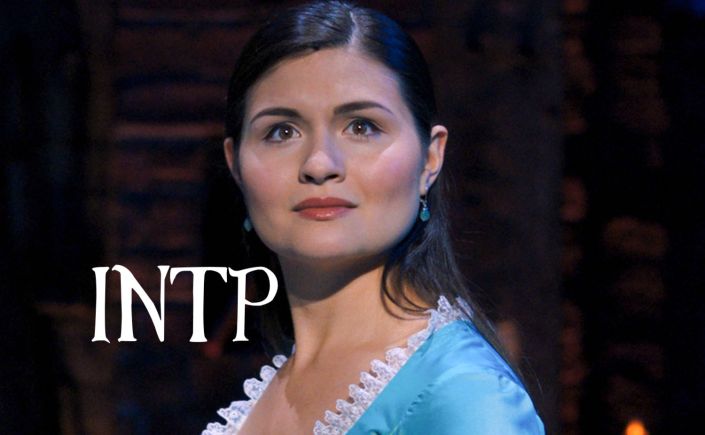
Eliza Hamilton: INTP

Guest Post by Alex, ENFP

Hamilton

Dominant Introverted Thinking (Ti): Throughout the play, Eliza shows a clear preference for taking her time to think about things rather than leaping into the emotions of the situation. When falling in love with Hamilton, a much more energetic and spontaneous Se-dom, she feels “helpless,” and out of control, all though maybe in a good way. A lot of their courtship actually happens through letters, although “Helpless” focuses mostly on their in-person interactions. Written correspondence leaves more time for reaction and processing things, so it makes sense that this is where she was most comfortable. Later, in “Burn,” she says, “I’m re-reading the letters you wrote me/ I’m searching and scanning for answers/ In every line/ For some kind of sign.” Although this is at least partially retreating into Si, she’s also dealing with her intense emotional reaction through analysis, even though logically it probably won’t reveal anything about her husband’s motivations. Historically, she also remained very involved in politics after Alexander Hamilton’s death, co-founding the Orphan Asylum Society, organizing all of Alexander’s writings, raising funds for the Washington Monument, and defending Alexander to his critics, including, notably, President James Monroe. In “Who Lives, Who Dies, Who Tells Your Story,” she says before listing her accomplishments after Alexander’s death, “I stop wasting time on tears.” She prefers remaining emotionally detached, analyzing and working and getting things done, she just has gone through some very emotionally devastating experiences.

Continue reading
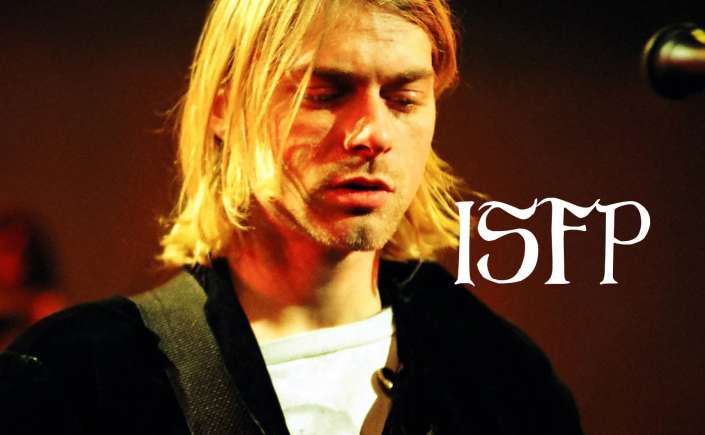
Kurt Cobain: ISFP

Subscribe to continue reading

Subscribe to get access to the rest of this post and other subscriber-only content.

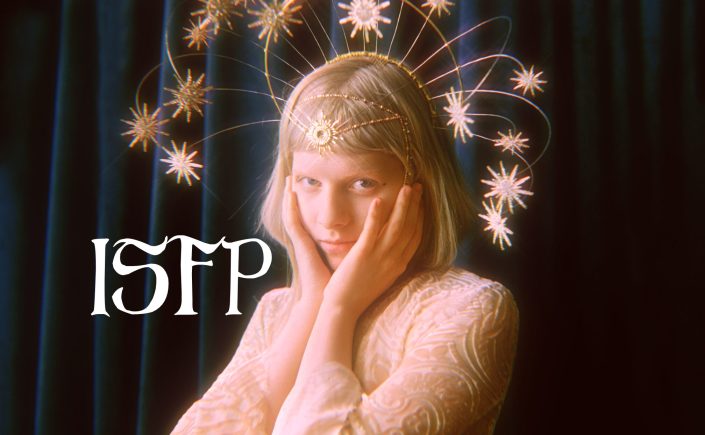
Aurora Aksnes: ISFP

Official typing by Arvid Walton

Dominant Introverted Feeling (Fi):  Aurora doesn’t care what people think of her. She lives her life in the ways that make her the happiest and encourages other people to do the same. Her music is invested in the idea that people don’t need to try to be what society expects. She’s very open about her inner life and is obsessed with trying to understand and connect with other people better, a theme explored heavily in her discography. She is introverted and often feels drained by the end of a show. Though she loves her fans, she enjoys the creative process of writing music alone in her studio much more than interacting with strangers. 

5 Ways I Don’t Fit INFP Stereotypes

Guest Post by Alyssa, INFP

I have always been a very self-aware individual. I know my strengths, weaknesses, emotions and thought processes extremely well, and I’m comfortable with who I am. I already KNOW that I’m a walking paradox. I’m a dreamer and yet I’m practical, I’m creative yet analytical, I love art and excel creatively, but I’m also a maths genius. I’m social yet shy, hard-working but a procrastinator, and organized but messy. There has never been a doubt that I am very much an INFP; however, these little contradictions between me and a stereotypical INFP used to concern me. This was before I realized that MBTI is about the way in which we think, not our personalities. Every person is going to have contradictions and conflicting qualities or tendencies, and that’s okay! That’s what makes us unique and human!

That being said, here are five ways in which I do NOT fit the INFP stereotype (in contrast to the many, many ways in which I do).

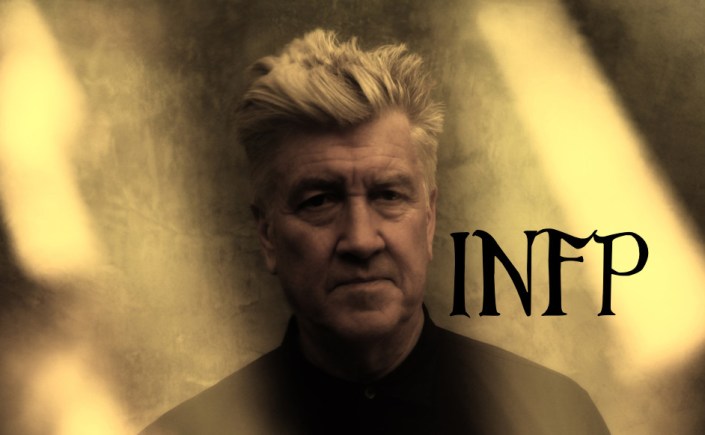
David Lynch: INFP

Guest Post by Anonymous, ENTP

Dominant Introverted Feeling (Fi): Lynch talks a lot about his personal vision when making movies and he stands by this vision, if a film cannot be made in the way he wants it then he will leave production. Lynch was given the chance to direct the Return of the Jedi by George Lucas but turned it down as he said that the film would more Lucas’ vision than his own. Lynch seems to understand his emotions well because he is usually able to talk about feelings he has experienced as examples to audiences during question time. He also made the comic series The Angriest Dog in the World at a time when he was personally feeling great anger. Lynch enjoyed painting and arts when in school and once considered it as a career choice before turning to films. Lynch never tells the meaning of his films as he wants people to have their own interpretation of it [FiNe]. David Lynch’s characters are usually individualistic in most ways as they all have their own quirks and are typically idiosyncratic to the viewers making them not relatable on a universal level and this makes his films hard to watch for some.

Continue reading

Tyler Joseph: INFP

Guest Post by Andrea, INFJ

Dominant Introverted Feeling (Fi): Tyler appears to be aware and practising his personal values, often stemming from his Christian faith which teaches kindness to the disadvantaged. This value is illustrated when he momentarily stops showing to help those in need. As an example, he asked security to help out an audience member having a panic attack during a performance. He is unafraid to challenge the mainstream music scene in preference for his own unique style of musical composition. Tyler is also mindful of how his own emotions are affected by his internal thoughts and external environment.

Continue reading

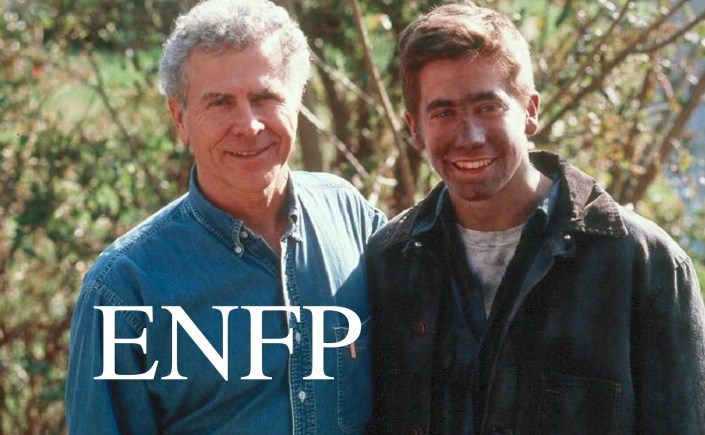
Homer Hickam: ENFP

Guest Post by Jessica Prescott, INFJ

October Sky

Dominant Extroverted Intuition (Ne): Homer Hickam is nothing if not a dreamer. He loves new ideas, hates to be cooped up in a small mining town, and, more than anything, longs for a glimpse of the “outside world.” His original (and strongest) motivation to carry out his rocketry project is not a desire to understand how rocket science works, but simply a romantic fascination with the mere idea of rocketry—the idea that human beings can be capable of sending objects up into space. He isn’t shy about sharing his dreams with others, either, but is perfectly willing to blurt out his latest plan at the breakfast table: “I’m gonna build a rocket.” One of Homer’s greatest assets is his optimism—his ability to see possibilities where others see only obstacles. Even though no student from Coalwood has ever won the science fair before, Homer is firmly convinced that he and his friends can pull it off—and he manages to convince them to believe it, too.

Continue reading

Tyler Hoechlin: ESFP

Guest post by Occam’s Chainsaw, INTJ —http://systematicthinker.wordpress.com

Tyler Hoechlin ESFP | Actors #MBTI #ESFP

Se: The first thing you recognize about Hoechlin is how utterly physical he is—and by this, I’m not referring to how athletic he looks. I mean how conscious you are about all of his movements, even the small ones. While talking, he engages his whole body in the conversation or in what he’s saying, and there won’t be a moment where he’s just sitting/standing without doing much of anything else; he will either be stepping around, shifting his weight from one leg to another, move his head, smile, gesture with his arms, scratch, make wide movements, wiggle his eyebrows, etc all the time. His eyes are always wide and alert-looking, like he’s constantly scanning his environment for little clues, to suck up as many information as possible from there. He seems to be invested in his surroundings and aware of every small detail of it. He’s clearly an opportunist, willing to try out new things for the experience—according to him, at the age of 8-9, he was offered a role in a commercial and he thought, “why not, that would be fun”. His dominant Se plays a role in the way he acts/depicts characters; e.g. he unconsciously made Derek Hale’s character extremely physical, to the extent that it could be hard for typers who go for stereotypes/are inexperienced/beginners to tell apart Derek’s dom Te from his tert Se, because Hale’s character is also a very strong Se user. Hoechlin’s biggest passion has always been baseball. Continue reading

Let’s be Real: One INFJ to the Rest of Mankind

Guest post by Heather, INFJ

I’d like not only to dispel some of the myth and mist surrounding the INFJ legend today, but to cast some light and provide some entertainment as well. There are some frequently repeated assumptions (aka stereotypes) regarding INFJs that have been circulating internet-land for years. These legends affect non-INFJs, it’s true, but they also have a tendency to inform INFJs’ opinions of themselves. It’s the power of suggestion. Particularly when there is a grain of truth to a stereotype, it is both easy and agreeable to say, “oh yes, that’s me,” so long as the stereotype is positive or comical or gives us an excuse for our bad habits.

One of these assumptions that INFJs love to claim for their own is being psychic, otherworldly narwhalicorns. It’s kind of an attractive idea to have about oneself. Particularly when one has felt like something of an alien amongst other humans for most of one’s life, and when one is actually quite clever at reading people. So, let’s be real: INFJs very often know a substantial amount of information about you that they don’t let on to, because first and foremost, they want you to be comfortable with them. No one feels very comfortable if they think you’re aware of their motivations and inner life. So then, where did this mysterious cache of information come from, you may ask. First, INFJs are simply very attuned to people in general. Se is our inferior function, but it is still a function. Because we are sort of ‘set’ to the people wavelength, that is the information we tend to pick up a lot of. This information is fed into our Ni (dominant function), which recognizes patterns and themes and can extrapolate accurate readings based on very little data. Add to this that I at least (sorry guys, I don’t know any INFJs in real life besides myself) amuse myself by studying personality theory, graphology, and Chinese face reading so that I can know even more about every specimen that crosses my path unsuspectingly. Continue reading

Connor Franta: INFP

Official typing, by Arvid Walton

Connor Franta INFP | The Book Addict's Guide to MBTI #MBTI #INFP

Fi: Connor is a genuinely nice person who is deeply affected by acts of cruelty or unkindness. He cares about other people and has a sincere desire to help them, and this is part of the reason that he shares much of his personal life with the public. Furthermore, he has pursued many a project to help people in developing countries (Ex. his Thirst Project to help fund water wells for people in Swaziland). Connor stays true to his own beliefs and principles regardless of what other people think o Continue reading

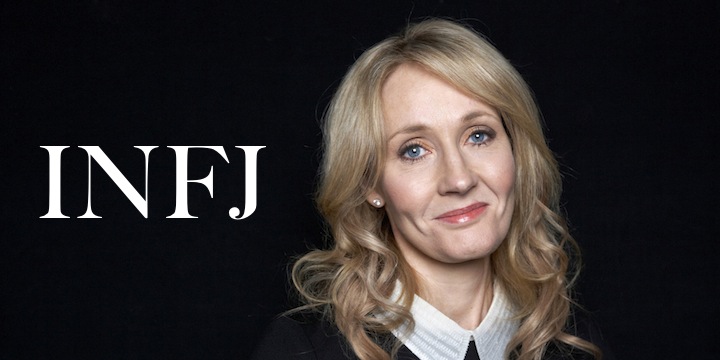
J.K. Rowling: INFJ

Guest post by Danielle, INTJ

Factors to Keep in Mind: Clinical Depression

J.K. Rowling INFJ | Harry Potter #MBTI #INFJ

Ni: With a passion for folklore and imagination, Rowling aspired to be a writer since she was 5 or 6 years old. She has scores of stories in mind, willing to wait years to write all of them. She mentions that once an idea pops into her head it floods her mind. In her account of creating Harry Potter while on a train, she described it as “an explosion of color, and… could see lots of detail about the world.” She hates small talk, preferring to learn about others’ differing opinions and fee Continue reading

Lucien Carr: ISFP

 Kill Your Darlings

Lucien Carr ISFP | Kill Your Darlings #MBTI #ISFP

Introverted Feeling (Fi):  Lucien Carr was a rebellious, anti-establishment youth who detested commonality and tradition. Oft times, he was rebellious just for the sake of being differing from the norm, but also to make a statement against living a life that wasn’t your own. “Lu” Carr, as he was known, had a profound influence on everyone with whom he associated, among them, Allan Ginsberg, whom he taught all manner of crass vocabulary. Continue reading