Organisation Styles Based on MBTI Type

Kerissa asked: I’ve noticed that you organise your posts one within the other, like stacking boxes. For example, when you hover on ‘Idiot’s guide to MBTI’ there’s ‘Typing Guide’ as an option. Click on that and there’s a list of articles. Click on the first of those and it’s ‘First, Get to Know the Crucial Concepts.’ From there it goes to another list. Some of those links go to a post, others go to a collection of posts. This boxes within boxes approach is a lot how I organize my Google Drive, folders within folders, and I was wondering if it had to do with the functions. It seems like a behavioral thing that actually would relate to functions without being a stereotype.

Somebody is paying attention to the way I organise!

Usually people with a Te function tend to have a specific mode of organisation that they follow (this is not usually true of Ti, especially upper Ti).

Intuitive (Ni & Ne) people are more likely to organise starting with the general, and then working to the specific.

Sensors (and here, I’m talking about Si) are going to organise from the specific to the general.

For instance, my ESTJ mother will organise everything according to specific type (Si) and function (Te). In her sewing room, she has a box for fabric, a box for thread, and a box for elastic, a box for stuffing etc.

Specific combinations of functions are also going to give you different results as well.

As an INTJ, I organise from the general idea of a thing (Ni) and move next to its function (Te).

For instance, I have a large toolbox in which I store my art supplies. Inside the toolbox, you would find a large quantity of smaller cigar boxes in which I’ve stored art supplies and tools according to what they’re used for.

In terms of blog and document storage, I do the same thing. I look at the content of my documents and then arrange them into folders, then subfolders and so on. For this reason, one of my favourite writing programs to use is Scrivener, because it allows me to organise everything of the same topic in one place. I use it for writing novels, poetry, and even taking notes in class.

My ESFP sibling organises based on appearance only (Se). If there is nothing on the floor, their bedroom qualifies as “clean.” Just so long as they can’t see the mess, it’s “organised.”

My ENFP sibling is great at keeping things organised once they’re organised (for the most part – their Te is tertiary), but their Ne sees so many possibilities that they doesn’t always know where to start. I helped them move into their new apartment this fall, and I did most of the organising for them.

All these years, they assumed that because I have so many boxes inside of boxes and folders inside of folders etc. that my stuff was merely cluttered. It had never occurred to them that it was organised, only that it looked chaotic because the method behind it was so structured.

My INTP dad cannot organise at all. At all. He looks at clutter and has absolutely no idea where to start. Part of this is a lack of Te function (Te is a natural organisation function, and part of it is his Ne getting distracted before he can start.

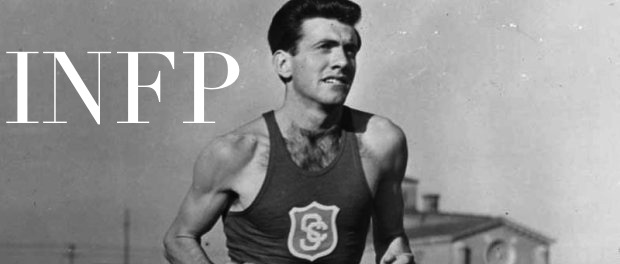
Louis Zamperini: INFP

Unbroken

Louis Zamperini Unbroken ENFP

Fi: As a teenager, Zamperini isolated himself from his classmates and put up a tough front to hide the misery he felt inside. Running gave him a way to deal with his feelings and helped him to develop principles that came to define the rest of his legacy. He was always a bit rebellious and liked to define his own morality, rather than relying on Continue reading

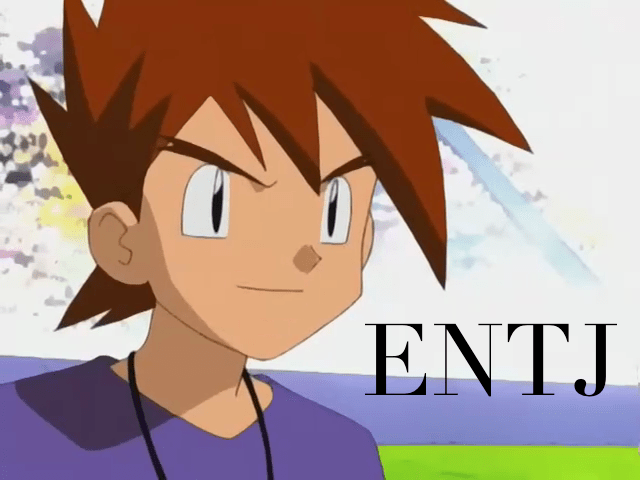
Darry Curtis: ENTJ

Guest post by Andrew, ENTJ

The Outsiders, S. E. Hinton

Extroverted Thinking (Te): Darry is a consummate leader.  Having stepped in as the legal guardian to his two younger brothers, he easily lays down and enforces ground rules.  Although the greasers have no “leader,” official or not, it is Darry who takes up the mantle most often, as he remains cool and logical even when fists are flying all around him.  He desperately wants Ponyboy to succeed in life, and puts a great deal of pressure on him to stay out of trouble and keep his grades up.  Having eschewed the more mainstream road to gain status (a college education), he instead engages in fighting, an activity at which he excels, and which guarantees him social standing among the greasers.

Introverted Intuition (Ni): Darry has a singular focus: he wants Ponyboy to go to college and escape poverty.  All of the rules he sets for Ponyboy are there to prevent him from either getting poor grades or being put in a home for orphaned boys: the two things that could most easily derail his plan.  Darry carefully makes life decisions based on the long-term consequences of his actions; alone of the greasers, he abstains from smoking cigarettes so as to avoid any adverse health effects down the road. Continue reading

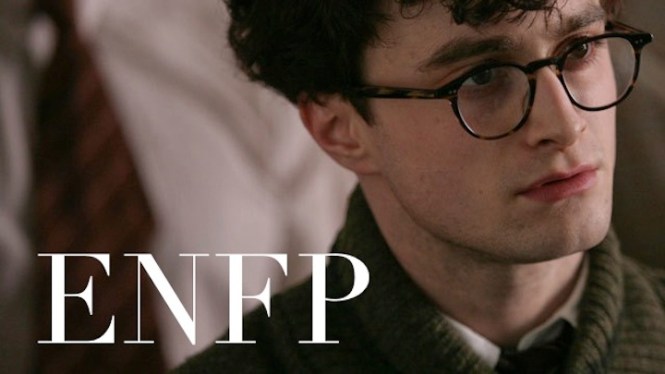
Allan Ginsberg: ENFP

Kill Your Darlings

Allan Ginsberg ENFP | Kill Your Darlings #MBTI #ENFP

Extraverted Intuition (Ne): Ginsberg was all about taking ordinary situations and making them new. Because he was full of ideas, he wrote prolifically, cranking out a large quantity of very long poems in short amounts of time. Even up to the last decade of his life, Ginsberg was putting out quick, vast amounts of poetry. Ginsberg was an open-minded, energetic individual who embraced tolerance and genuinely inspired others to do likewise, not only through his poetry, but through his energetic involvement in counter-cultures. In fact, Ginsberg is attributed to have coined the infamous “flower power” phrase of the 1960s Vietnam era as he encouraged war protestors to engage in peaceful rejection of violence.  Continue reading

Shikamaru Nara: INTP

Guest post by whatisfreethen, INTP

Naruto

Shikamaru Nara INTP | Naruto #MBTI #INTP

Ti: Shikamaru was a logical thinker who’s most popular characteristic was his ability to stay cool headed in crisis situations and conceive a winning strategy. Shikamaru’s fighting style indicated a dominant Ti, in which he first engaged an opponent, then tried to bring them at an impasse, to analyst their moves and devise a plan of action. He was also often shown to have an affinity to intellectual puzzles and strategic games, like shogi. He disliked physical work and would rather lie down and think. Continue reading

Ron Weasley: ESFP

Guest Post by Andrew, ENTJ

Harry Potter, J. K. Rowling

Ron Weasley ESFP | Harry Potter #MBTI #ESFP

Extroverted Sensing (Se): Ron likes to have fun, and lives for the thrills of the moment.  He often neglects to study for important exams, as he cannot handle the tedium of prolonged studying.  He has the most prominent sense of humor in his inner circle of friends, and is much more likely to crack a joke than Harry or Hermione is.  Ron likes physical activity, and has a natural ability for Quidditch.  Ron usually doesn’t think before acting, and at times, this has landed him in trouble (blasting himself with his own malfunctioning wand, flying his parents’ car to Hogwarts), but it also allows him to escape from sticky situations (talking his way out of an encounter with a group of “snatchers”).  Ron becomes impatient when Harry admits that he has no plan to find all of Vordemort’s horcruxes, and he makes an impulsive decision to bail out of hunt for them. Continue reading

Anna – Frozen: ESFP

Guest Post by E.J., INTJ

Frozen

Anna ESFP | Frozen #MBTI #ESFP

Dominant Se: Ana loves to be active. As a small child, her way of bonding with her sister was shared activity time. When Elsa is no longer allowed to engage in physical play with Ana, their relationship suffers. Ana misses her sister on an emotional level, but she expresses her feelings by complaining about how bored she is and wishing that they could do something together (“Do you wanna build a snowman?/ Or ride our bikes around the halls…”). Ana looks forward to her sister’s coronation because of the party involved. Excitement makes her move physically–she runs and dances around throughout the movie. Ana’s Se gives her boldness in some situations that would terrify others: she has enough confidence in her physical abilities that she is willing to climb into the mountains alone. Throughout the movie, Ana helps to connect her sister to the real, physical world–running interference for Elsa early on as Elsa grieves, and, eventually, encouraging Elsa to use her gift to delight their people. Continue reading

Edmund Pevensie: ENTJ

Guest Post by E.J., INTJ

The Chronicles of Narnia, C.S. Lewis

edmundblue2

Dominant Te: Edmund takes a logical approach to life, and he hates it when others try to control him. At the beginning of the series, he uses his combination of NiTe to manipulate other people, including his older siblings. He sometimes misses social cues in his effort to analyze the evidence: for instance, in the Beavers’ house, he asks whether the Witch could turn Aslan to stone, which shocks and offends the others present. In joining the Witch’s side, Continue reading

Katza – Graceling: ISTP

Graceling

Ti: Katsa’s survival skills are enhanced by her studies and knowledgeability. Katsa’s nature is serious, but her worldview and logic aren’t based on the same logic as the rest of the world’s. She doesn’t always catch on to people’s jokes and tends to take things too seriously. She isn’t afraid to voice uncomfortable questions, as she tends to be rather detached. She doesn’t talk about her thoughts where she doesn’t have to and doesn’t really enjoy social settings.

Se: Katsa tests her body to the limits, and even studies it to understand it better. Katsa is built to survive, be it through the awareness of her physical world or through her physical abilities. She’s impulsive and doesn’t always plan out her actions before she carries them out. She likes new physical experiences and lets himself get carried away with Po.

Ni: She knows perfectly well that she’s capable of killing people by reflex, and to avoid this, she tries to predict her opponents moves. She’s reluctant to trust people at first, and tends to be a bit judgmental. She’s good at pinpointing problems with plans and can visualize what she needs to do to get to where she wants to be.

Fe: She tends to jump to assumptions about people based on stereotypes. She doesn’t want to hurt people, and has to come to terms with her abilities. She tends to repress her emotions and doesn’t really understand them. Instead of facing them, she engages in various physical activities to get her mind off of them.

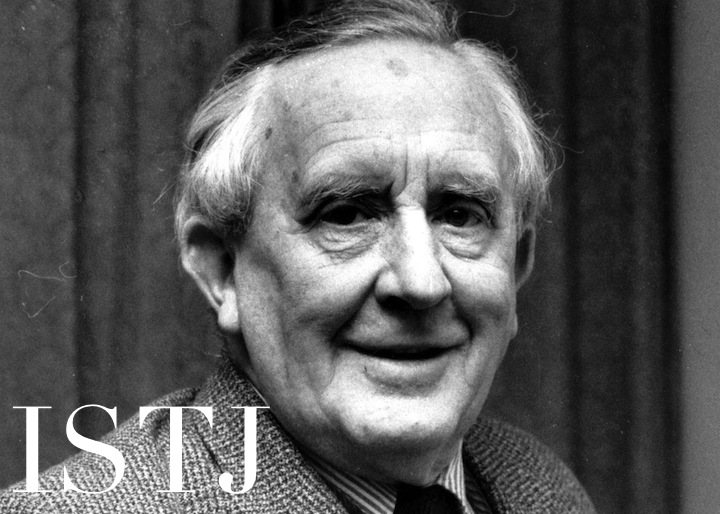
J.R.R Tolkien: ISTJ

Guest post by E.J., INTJ

J.R.R. Tolkien ISTJ | The Book Addict's Guide to MBTI #ISTJ

Introverted Sensing (Si): Tolkien’s mother died when he was eight years old, and his memory of her motivated him throughout his adult life. Since her family had abandoned her after her conversion to Catholicism, and her health had subsequently deteriorated, Tolkien considered her a martyr. Her memory was part of the reason why Tolkien became such a staunch Catholic. Continue reading

C.S. Lewis: INTJ

Guest post by E. J., INTJ

C.S. Lewis INTJ | The Book Addict's Guide to MBTI

Dominant Ni: C. S. Lewis had a relatively narrow set of interests, primarily focusing on academic topics and especially medieval and Renaissance literature. A high school tutor told Lewis’s father that Lewis could become a scholar, but little else. Symbolism was important to Lewis: his favorite genres of literature (epic poetry, fantasy, and science fiction) were filled with it. He infused a great deal of very blunt symbolism (NiTe) into his own fictional works, especially the Chronicles of Narnia. Many of his other works are philosophical in nature, and C.S. Lewis was fond of discussing ideas with the Mastermind group that he engineered as a college student (the organisation part of this would be Te). Continue reading

Tracey Sketchit: ISFP

Guest post by Andrew, ENTJ

Pokémon Anime Franchise

Tracey Sketchit ISFP | Pokemon #MBTI #ISFP

Introverted Feeling (Fi): Tracey lives life his own way.  When he meets Ash and Misty, he is following his passion of watching and drawing wild Pokemon.  He is very emotional and caring toward those he cares about, but is often oblivious of others’ emotions; he once made an indiscreet comment suggesting that Ash and Misty were in love, provoking an angry response from both of them.  He cares very much about Professor Oak’s opinion of his work, owing to the respect he has for the veteran researcher; he cannot contain his nerves when the famed Pokemon Professor reviews his drawings for the first time. Continue reading