

Subscribe to continue reading
Subscribe to get access to the rest of this post and other subscriber-only content.
Subscribe to get access to the rest of this post and other subscriber-only content.
Become a paid subscriber to get access to the rest of this post and other exclusive content.
Anonymouslemer asked: “Are there any canonical examples of an INTJ/INFJ friendship?”
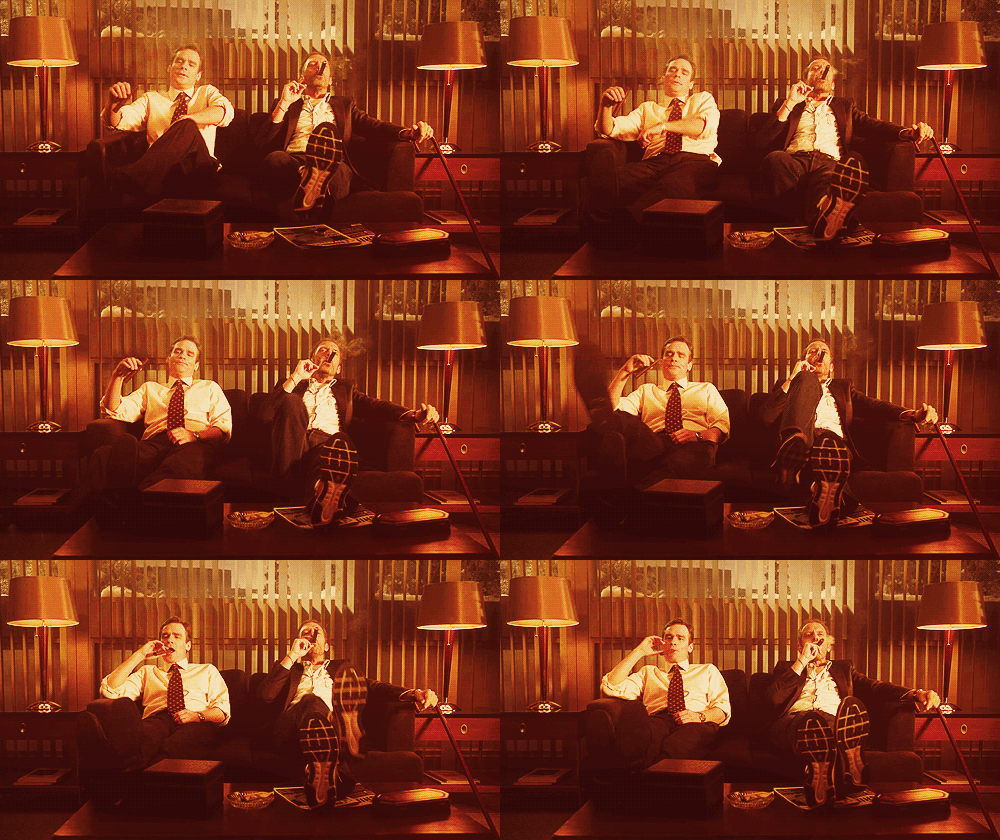
Look no further than House M.D. House and Wilson are a perfect example of a relationship between unhealthy INxJs. Let’s just say they’re the type of friend-pair that will feel perfectly comfortable sitting and problem solving in a room with a random comatose grandpa that they’ve never met. They both toss around Ni, understanding each other’s deepest motivations and secrets without having to ask. Both of them are gifted at figuring out other people’s deepest secrets, but House does i Continue reading
ComradeJocasta asked: Is it possible that upper-Se users might be more likely to gesture a lot when they speak?

I haven’t actually found much research on this topic. However, I’ve given it a bit of thought, and I’d like to hear everyone else’s thoughts as well.
My ESFP sibling definitely is NOT a hand talker. However, he does have a strong need for touch and physical contact with people he’s comfortable around. Same goes for my ISFP roommate.
Out of anyone in my family or friend group, I’m actually the one who talks most via my hands. However, I don’t necessarily attribute this to my Se function so much as to the fact that I’m relatively fluent in Sign Language. Before I learned Sign Language, I didn’t gesture at all when I spoke, but now talking and gesturing practically go hand in hand for me (wow, that was a terrible pun).
It’s the same with any language. As soon as you’re fluent in more than one language, and especially if you know more than two, it’s hard to force yourself not to blend the elements of each. At the same time, you also keep many elements very separate as well (for instance, I swear a lot more in German than I do in English).
Upper Se-users. Now is your time to talk! I’m interested to hear whether you talk with your hands.
Pasa Fino asked: I have a question which regards Se in a social setting. (I am an INTJ btw). This and the other Se post were helpful in a general sense, but here is a problem I personally encounter.
Whenever I am around people I don’t know well or consider as a friend, I behave in the way I am most comfortable with: distant, observant, serious, quiet, etc.. but when I am with the few people I consider my friends my Se seems to take over my brain in a most distressing manner. I begin to goof off, talk loudly, I become quirky and playful, and overall, much unlike myself. I go home feeling like a total fool. The worst thing about it is that I have little to no control over this while it is happening.
Otherwise, I integrate my Se via art, music, karate, and watching comedies on YouTube, and can control it decently well when I am in my normal environment or interacting with friends over the internet.
I am in my late teens, so I am hoping that in my twenties my Se will be somewhat tamer. Has anyone else encountered this problem? If so, is there a solution for an immediate solution for it?

#1 Yes, many INTJs experiences this:
In order to illustrate to you and others, that discomfort with the Se function is not something that any of us are alone on, I’m going to share an experience that is deeply personal to me. This is not just for you, Pasa Fino (though it is for you), but for all the people out there who may be struggling to connect with the more frightening, more human parts of themselves. Continue reading
Shubham (ENTP) asked: I have observed that some of my friends who are S types retake the MBTI test again and again to get a N type.eg- one of my ISTJ friend took the test almost 5 times and got INTJ once. Now whenever he meets someone he claims to be an INTJ, although he is completely an ISTJ.
I have observed this behaviour with many of my S type friends (specially ISTPs and ISFPs who sometimes claim to be ENFPs.). I personally think that there is no reason one should change their personality type or start behaving like some other type. I think that this is a result of stereotyping of Ns being better than Ss.
Have you observed a similar behaviour anytime? What is your hypothesis on why some Ss want to be typed as Ns.

Yes. Yes, I have.
The internet, and many fandoms seem to have convinced themselves that INTJs are…for some reason…the best MBTI type ever. There is no logical reason to believe that INTJs are somehow better than other types, and there are even fewer logical reasons to try to become an INTJ if you are not one. Continue reading
Become a paid subscriber to get access to the rest of this post and other exclusive content.
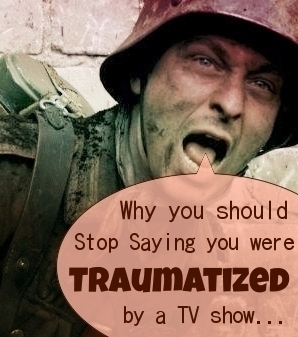
Anon asked: “You’re the first MBTI expert I’ve come across who’s typed the characters from Unsere Mütter, Unsere Väter, and since you’re an INTJ, I must know. Were you emotionally traumatized the first time you watched it?”
Amanda asked: I read your post on traumatized INTJ, which I most certainly have been. I feel I was dead inside until I developed my Fi to be a good mommy to my sweet baby boy (who is now working on his PhD). I have also endured Attention Deficit Disorder most of my life. I have read in an ADHD book “Scattered” (Gabor Mate MD) that ADD can be properly understood as a dissociative condition and ADHD as an attachment/anxiety condition. Basically, trauma responses. I took medication for ADD for a few years, recently. The beneficial effects on my life were profound, and some of them were permanent. I’ve only recently become more interested in MBTI, and I think ADD is pretty ironic in relationship to my being a J. I’m a J, but the part of my brain that can ‘do’ J, the prefrontal cortex, was more or less off-line, forcing me to live the life of a P! It’s as if ADD made me a failed INTJ. Not quite the shadow perhaps, as I’m a solid introvert. I was just curious if you’d ever thought of MBTI in relationship to this disorder, or perhaps any of the cluster B personality disorders. (Which I don’t have, but Cluster Bs were the origin of my trauma.)

Several semesters ago, I had an English professor who is an ENTJ with ADHD, and it was a thrill for me to be a part of her class. Here are my thoughts.
Being an xNTJ will likely determine how you think about things. ADD/ADHD will not necessarily change that thought process, but it will definitely interrupt it. What I typically observe happening as a result is that you will come to conclusions the same way that most other xNTJs would, but while you are coming to those conclusions, you will be distracted by other things that wouldn’t necessarily distract INTJs who don’t have ADD/ADHD.
As a result, your behaviour may be different than the behaviour of other INTJs, specifically with regards to your Te and Se functions. Your NiTe ability to focus will be different. You will always have your eyes on your Ni goal, but your Te may not necessarily keep you consistently working towards it. Your Se may be more easily distracted by things in your physical environment. etc. etc.
I know this was brief, but I hope it answered your question.
INeverForgetPromises asked: if you were reading a literary work, what would hook you more, a plot-driven story or a character-driven story? Do you prefer complex plots with subplots in them or a simple plot with something deep underneath (take hills like white elephants for example)?
Im sorry if I’m asking too many questions, its just that I want to pick at your brain a little bit. Plus, you kinda remind me of my INTJ best friend :)

I personally prefer character-driven stories. However, any well-done character-driven story is subsequently going to have an excellent plot. It may not follow a typical arc, but as long as the characters behave realistically, the plot is also going to move forward in a realistic way.
If you look at any piece of Shakespeare’s work, you’ll realise that every last bit of it is character driven. His plots are fantastic, but they are always driven by the motivations of his characters.
The Ender’s Game Series is another good example of a character-driven storyline in which there is no absence of complex plots and subplots. I could think of a million other examples, but I’ll leave it at that.
Any story that has an interesting and well-developed character who is facing a very real conflict will necessarily end up also having an amazing plot.
Now, I enjoy a story with an intricate plot, but if the characters are boring the story becomes empty. I get bored reading Dan Brown because his writing features incredibly complicated plots with hardly any character development.
Sofia V.N. asked: Hi I am and INFP and there is this really interesting INTJ named Katie at my school and my close friend Shannon is now really good friends with her. I really want to hang out with Shannon again but she is always with Katie (Now I don’t want to be misconstrued she can be friends with who ever she wants) but I never know what to saw to Katie because she always has this very menacing face and I can’t compose and sentence that she will be interested in. I would just like to know what I should talk to her about and what conversational topic she would be interested in. Also if INTJS like us INFPS.
Sorry that this was more me seeking advice then me asking a question.
Sofia V.N.

Since I don’t know Katie, I have no idea what topics of conversation she would be interested in regardless of whether she’s an INTJ or not. MBTI type does not dictate a person’s hobbies or interests. It merely influences how their thought process works.
Do all INTJs like all INFPs? No.
Do some INTJs dislike INFPs? Yes.
Do some INTJs love INFPs? Yes.
There are plenty of INFPs that I enjoy being around, and there are also a fair number that I can’t stand. In my experiences, it really depends on the relative maturity of each of the people in question.
Subscribe to get access to the rest of this post and other subscriber-only content.
MBTIfanatic asked: Hey, as an xNTP, I am dying to develop xNTJ traits , for example, Te and Ni, in order to advance in my career. Any advice?
shawna asked: Do you ever encounter existential depression? Also, your website is coherent and interesting.

 The Book Addict's Guide to MBTI: