Armin Arlert: INFJ

Official typing by Arvid Walton

Attack on Titan

Dominant Introverted Intuition (Ni): Armin is always looking to the future. The most obvious manifestation of this is his perpetual excitement about life beyond the wall. However, even as a civilian child, he accurately predicted the Titan attack moments before it happened. After joining the military, Armin hones his predictive abilities in the service of protecting his friends. He intuitively understands other people, including Titans, and uses this knack to get out of hairy situations more than once. In battle situations, Armin is good at strategically utilising the individual strengths of others, which makes him a great tactician. Armin is at his best when he is sure of his predictive abilities. However, he is tentative and has a hard time making decisions without feeling confident in the outcome.

Continue reading

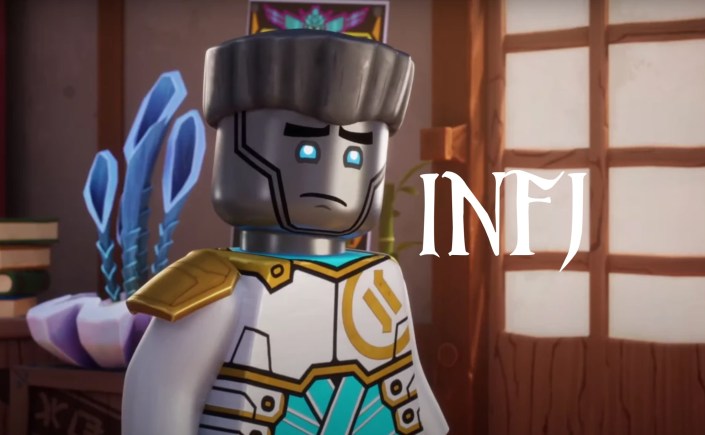
Zane Julien: INFJ

Guest Post by L. Sanderson, INFJ

Ninjago: Masters of Spinjitzu

Dominant Introverted Intuition (Ni): Zane’s main cognitive function allows him to analyse and interpret his surroundings. He can come up with intelligent, out-of-the-box ideas that can surprise everyone. Although he seems ignorant of human nature, he understands each and every one of the ninjas in more ways than they could ever imagine. Zane also has a narrow mindset that allows him to focus intently on his goal of becoming a great ninja. However, his relentless focus on improving himself and helping people makes him forget himself, and can often lead to putting himself in danger.

Continue reading

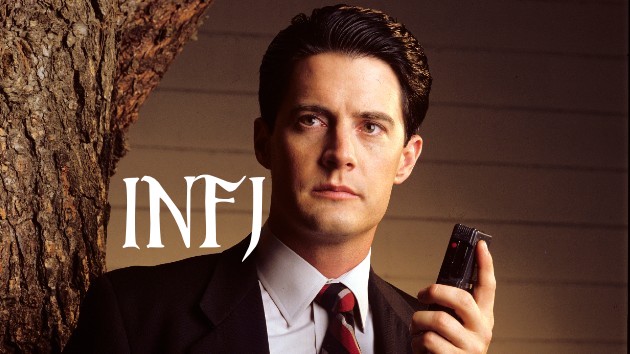
Dale Cooper: INFJ

Guest Post by Anonymous, ENTP

Twin Peaks

Dominant Introverted Intuition (Ni): Dale is very single-minded and sees the world through a lens of symbolism. When solving the murder of Laura Palmer he uses odd and non-traditional methods to choose the guilty suspect and he uses a single dream he had to guide what he should do or find in the investigation. He is very good at making unseen connections. He intends to get things down to a single truth or get easy answers to hard questions as he would say.

Continue reading

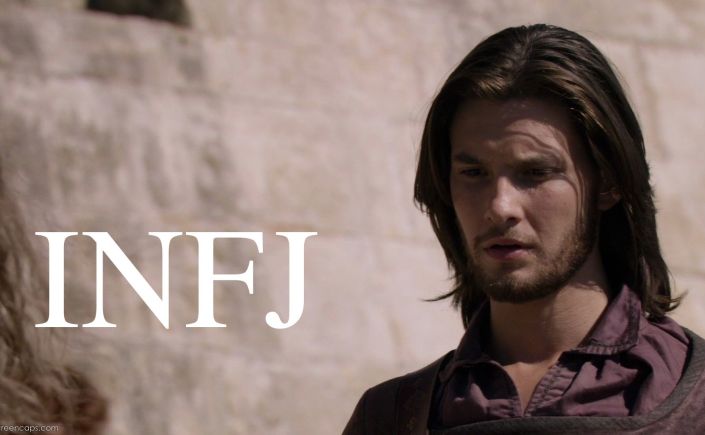
Prince Caspian: INFJ

Guest Post by E.J., INTJ

The Chronicles of Narnia, C.S. Lewis

Dominant Introverted Intuition (Ni): Caspian is a dreamer. As a little boy, his nurse’s stories of Old Narnia capture his imagination, and Caspian’s view of the world is shaped by the stories. Rather than basing his value system on what he sees his uncle Miraz doing, Caspian’s ideals are formed by the heroic legends his nurse repeats to him. Caspian has no strong reason to believe that the old days could return until after he wakes up in the dugout of Trufflehunter, Trumpkin, and Nikabrik. Regardless, he prefers the Narnian moral code, even if he never meets a full-blooded Old Narnian. From a relatively young age, Caspian is driven to accomplish things that other people consider impossible. He successfully defeats Miraz and reawakens Old Narnia—despite the initial superiority of the Telmarine forces—and, as king, he goes on a difficult voyage to find seven Telmarine lords who disappeared when he was a small child. Near the world’s end, Caspian’s imagination almost gets the better of him. He is so fascinated by the thought of traveling to Aslan’s country that he wants to abandon his kingship and continue eastward. Aslan must directly intervene to prevent Caspian from abandoning his responsibilities to follow his imagination.

Continue reading

Si users – How to talk to INxJs

Subscribe to continue reading

Become a paid subscriber to get access to the rest of this post and other exclusive content.

Let’s be Real: One INFJ to the Rest of Mankind

Guest post by Heather, INFJ

I’d like not only to dispel some of the myth and mist surrounding the INFJ legend today, but to cast some light and provide some entertainment as well. There are some frequently repeated assumptions (aka stereotypes) regarding INFJs that have been circulating internet-land for years. These legends affect non-INFJs, it’s true, but they also have a tendency to inform INFJs’ opinions of themselves. It’s the power of suggestion. Particularly when there is a grain of truth to a stereotype, it is both easy and agreeable to say, “oh yes, that’s me,” so long as the stereotype is positive or comical or gives us an excuse for our bad habits.

One of these assumptions that INFJs love to claim for their own is being psychic, otherworldly narwhalicorns. It’s kind of an attractive idea to have about oneself. Particularly when one has felt like something of an alien amongst other humans for most of one’s life, and when one is actually quite clever at reading people. So, let’s be real: INFJs very often know a substantial amount of information about you that they don’t let on to, because first and foremost, they want you to be comfortable with them. No one feels very comfortable if they think you’re aware of their motivations and inner life. So then, where did this mysterious cache of information come from, you may ask. First, INFJs are simply very attuned to people in general. Se is our inferior function, but it is still a function. Because we are sort of ‘set’ to the people wavelength, that is the information we tend to pick up a lot of. This information is fed into our Ni (dominant function), which recognizes patterns and themes and can extrapolate accurate readings based on very little data. Add to this that I at least (sorry guys, I don’t know any INFJs in real life besides myself) amuse myself by studying personality theory, graphology, and Chinese face reading so that I can know even more about every specimen that crosses my path unsuspectingly. Continue reading

Can INFJs use Ti more than Fe?

Subscribe to continue reading

Become a paid subscriber to get access to the rest of this post and other exclusive content.

INFJ: How I Write

Guest post by annesophie, INFJ

writer-waiting-for-ideas-inspiration-writing-animated-gif

As a budding novelist, I spend a lot of time thinking about my characters’ minds and how they work. It seems fitting that I also take the time to look at my own mind and ask myself, with regard to the cognitive functions, how it goes about creating stories. This is my take on how being an INFJ influences my writing.

Being an INFJ, I find that my preferred method of communication (for my sake and for everyone else’s) is of the written sort. Give me a pencil, paper, and some time and I can organize my thoughts in an eloquent fashion, and even perhaps at a rapid pace. Ask me to speak in front of more than two people and…well, results may vary.

Mix this with a preference for fictional friends Continue reading

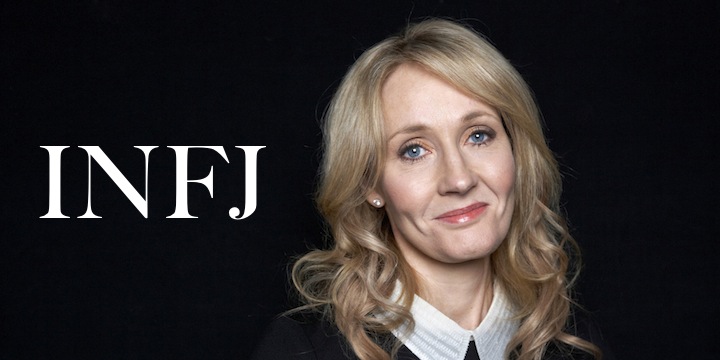
J.K. Rowling: INFJ

Guest post by Danielle, INTJ

Factors to Keep in Mind: Clinical Depression

J.K. Rowling INFJ | Harry Potter #MBTI #INFJ

Ni: With a passion for folklore and imagination, Rowling aspired to be a writer since she was 5 or 6 years old. She has scores of stories in mind, willing to wait years to write all of them. She mentions that once an idea pops into her head it floods her mind. In her account of creating Harry Potter while on a train, she described it as “an explosion of color, and… could see lots of detail about the world.” She hates small talk, preferring to learn about others’ differing opinions and fee Continue reading

Canonical INxJ Friendships

Anonymouslemer asked: “Are there any canonical examples of an INTJ/INFJ friendship?”

Look no further than House M.D. House and Wilson are a perfect example of a relationship between unhealthy INxJs. Let’s just say they’re the type of friend-pair that will feel perfectly comfortable sitting and problem solving in a room with a random comatose grandpa that they’ve never met. They both toss around Ni, understanding each other’s deepest motivations and secrets without having to ask. Both of them are gifted at figuring out other people’s deepest secrets, but House does i Continue reading

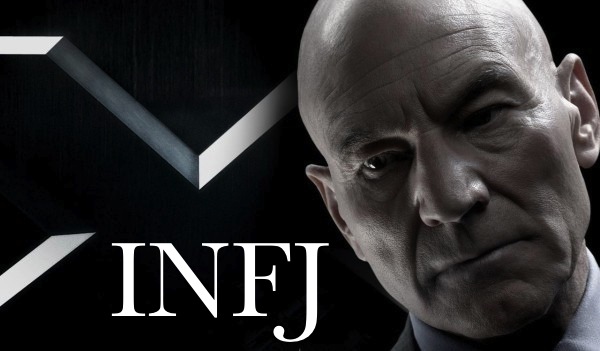
Charles Xavier: INFJ

Guest Post by Shubham, ENTP

X-Men

Charles Xavier INFJ | X-Men #MBTI #INFJ

Introverted Intuition (Ni): Charles is a mutant who has the power of telepathy (and to some extent telekinesis), but can also recognize what is going on in the minds of others very easily without having to read their minds. Thus many times when he is asked, “so did you read my mind,” he responds, “I didn’t have to.” Charles is extremely focused towards a long term goal (to make the society accept the mutants) and all of his actions are directed towards achieving it. Towards this goal, he has a very visionary, idealistic approach. His being the most powerful brain on the planet also gives him the a fair idea of ‘what comes next’ as that kind of thought requires a calm and detailed analysis (Ni) than a quick and some-what impractical response (Ne). This gives him a bit of a mystic charm. Like Magneto, he has a very specific approach to problem solving, a fact which is often the root stressor of their disagreements. Continue reading

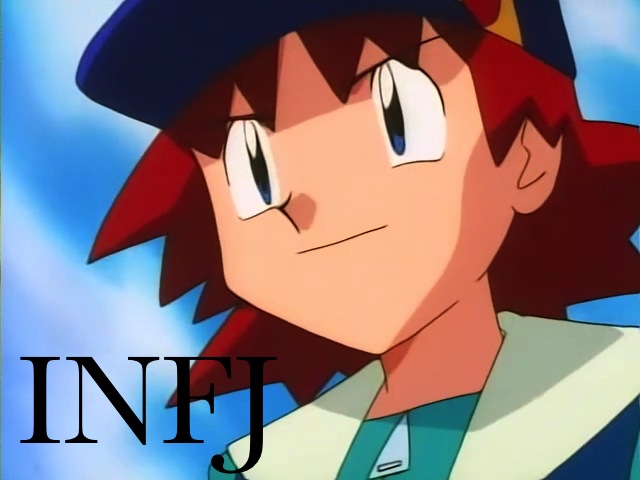
Ritchie – Pokemon: INFJ

Guest Post by Andrew, ENTJ

Pokemon

Ritchie INFJ| Pokemon #MBTI #INFJ

Introverted Intuition (Ni): Ritchie always contemplates his next move instead of jumping straight into anything.  When he decided to search for the legendary Pokemon Lugia, he did extensive research on the Whirl Islands (where Lugia was rumored to be found) before even traveling to the area to look.  On arrival, he concentrated his search on the most likely areas to find Lugia.  He anticipates that his Pokeballs might get mixed up with those of other trainers, so he marks his own with stars as a precaution.  When Team Rocket tricks all Pokemon League participants into giving them their Pokeballs, Ritchie discovers their ploy with a very small sliver of information. Continue reading