Mr. Norrell: ISTJ

Jonathan Strange & Mr. Norrell, Suzanna Clarke

Jonathan Strange and Mr. Norrell ISTJ

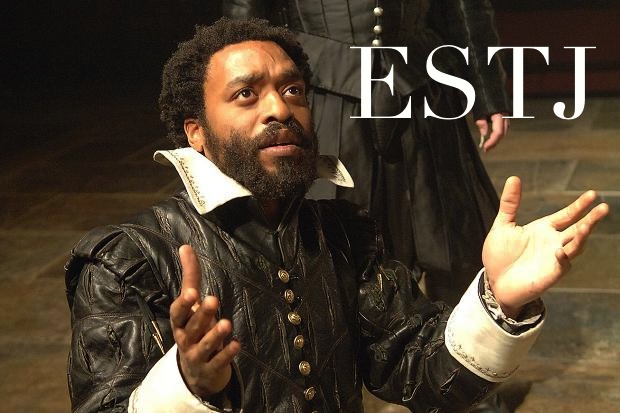
Dominant Si: Mr. Norrell easily discerns changes in people’s behavior and countenances, but does not always make accurate judgements based off of these observations. For instance, after Chilldermass is shot by Lady Pole, he is able to discern the servant’s disagreement with him about magic, but takes offense at it, wrongly assuming that Chilldermass intends to abandon him and join ranks with Jonathan Strange. Without unrefutable evidence, Mr. Norrell refuses to see any piece of knowledge as legitimate. Yet, at times, fear prevents him from actually seeking out proof (he won’t go to faery or summon faeries). Mr. Norrell lives in the past, present and future simultaneously. He has a clear vision of what he wants to accomplish (bringing magic back to England), but that goal translates to turning the future into the past.  Continue reading

Jim Moriarty: ENTP

Subscribe to continue reading

Subscribe to get access to the rest of this post and other subscriber-only content.

Bilbo Baggins: ESFJ

The Hobbit / Lord of the Rings, J.R.R Tolkien

Bilbo-Baggins-Wallpaper

Dominant Fe: Bilbo, despite the fact that he doesn’t want the dwarves in his house, is reluctant to send them away. Notwithstanding his dislike for the idea of adventuring, he still decides to help the dwarves out with their quest. He carefully thinks before speaking because he doesn’t want to offend others and finds it easy to adapt his behavior to suit the needs of people/creatures very different from himself. This comes in very handy when Continue reading

Anxiety Cycles by Type

“How does Anxiety manifest differently in each type?” 

ISxJ

Trigger: uncertainty, issues of reality, overdoing things etc.

Once the trigger is pulled, the ISxJ will become obsessive about details, lose their task orientated center and grow impulsive. They will fall into the grip of their inferior Ne function and rather than thinking about possibilities, they will catastrophize.

To re-balance him/herself, the ISxJ needs to let go of the details that they’ve been obsessively swallowing up. They need someone to take them seriously and often need the help of close friends to work through their issue. If they come out on top, they will have a broader perspective, clearer values and stronger flexibility than before. Continue reading

Ophelia: ISFJ

Hamlet, William Shakespeare

Ophelia ISFJ | Hamlet MBTI Shakespeare

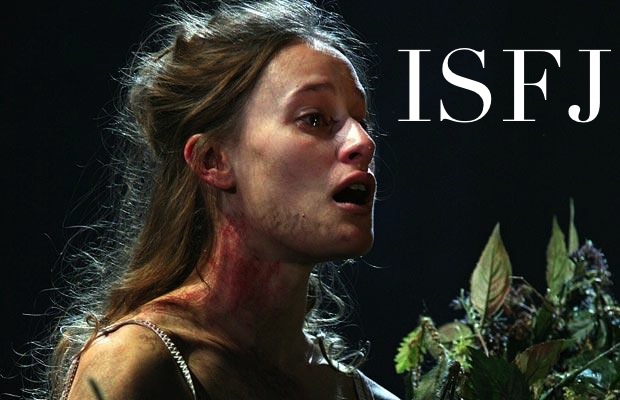
Dominant Si: Ophelia knows how life was in the past, and likes it to stay that way. Unlike Hamlet, who “goes mad” mainly because he can’t handle the fact that others are apathetic about his father’s death, Ophelia goes mad purely because she cannot handle the abrupt changes in her life. Within hours of her father’s death, she has literally fallen to pieces. She knows when people are different than they used to be, and she can easily pin-point exactly what has changed. Rather than accusing Hamlet for mistreating her, she Continue reading

George – Of Mice and Men: ISTP

Of Mice and Men, John Steinbeck

George - Of Mice and Men ISTP MBTI

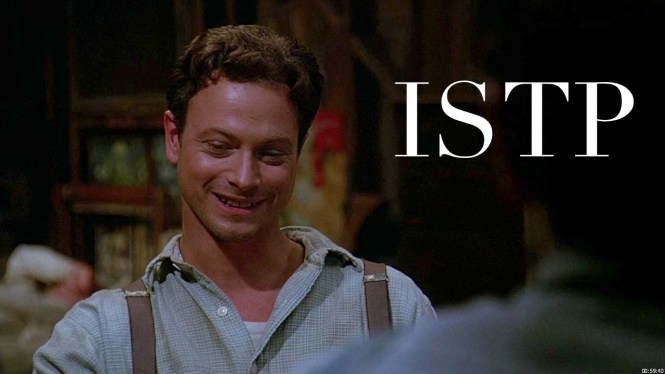
Dominant Ti: George has is relatively reserved, but has a sharp tongue when he is impatient. His words don’t necessarily wring with love towards Lennie, although they are intended to protect him. He doesn’t particularly enjoy involving his emotions in his decision making process and doesn’t enjoy lengthy explanations. He can take apart the things that people say and determine whether to believe it based on whether or not it seems logical to him. Even though George’s dreams of settling down seem impossible, he never gives Continue reading

Understanding Sympathetic INTJs – Fi vs Fe

Understanding Sympathetic INTJs - Fi vs Fe |The Book Addict's Guide to MBTI

Foreword: this post applies equally to ISTJs, in regards to the Fi function)

All the INTJ stereotypes say that we’re cold and don’t care about other people. Yet, many of us defy this stereotype.

When I care about someone, I filter my words to avoid offense and understand people on a deeper level than they often understand themselves (which is another reason to filter my thoughts, because otherwise people freak out at how much I know about them).

Naturally, I started to wonder if my ability to understand people so well stemmed from an Fe function, but eventually I determined that I’m an INTJ with an extremely well developed Fi, and here’s why.

While I understand people on an extreme level, I don’t feel their emotions the way an Fe user would. My Ni lets me know intuitively what’s going on behind the lines and then I’m able to logically put together what someone is feeling by using Te. I can understand, but I cannot empathize unless Continue reading

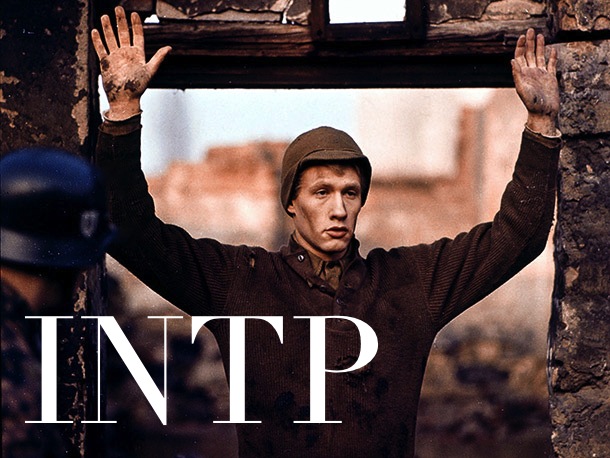
Billy Pilgrim: INTP

Slaughterhouse-Five, Kurt Vonnegut

Slaughterhouse-Five Billy Pilgrim INTP | Literary MBTI

Dominant Ti: Although Billy is not the brightest bub on the street, he’s clearly a thinker who suppresses his emotions. He likes to analyse ideas and many of his beliefs stem from abstract realities in his head, rather than from physical evidence and facts in his reality. For instance, he firmly believes that he has been abducted by the Tralfamadoreans and refuses to give up this belief just because other people tell him it’s impossible. Despite his otherwise ignorant mindset, Billy has a philosophical mind. Billy’s ideas about death sound wild and absurd to his daughter, Continue reading

ENTJ in the Grip

Can you explain what you meant when you said Falstaff is an ENTJ “in the grip?”

A little more on that grip-idea –as it relates specifically to ENTJs.

When an ENTJ stops utilizing his upper functions (Te-Ni) to their full capacity, he is prone to a rather unique problem. He tends to get stuck in his lower functions, which isn’t necessarily a good thing, because rather than being a doer, who plans and visualizes what he wants his life to be, be becomes something else entirely.

He turns lazy, and laziness never made and ENTJ happy Continue reading

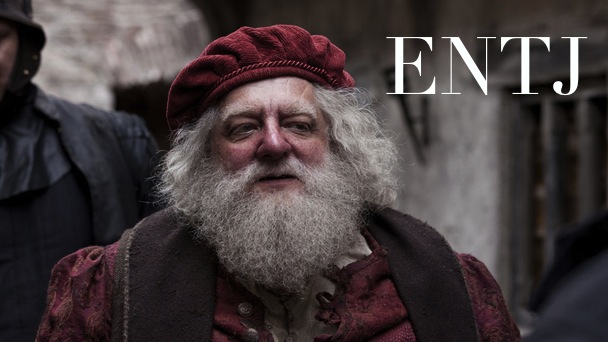
John Falstaff: ENTJ

Henry IV / Henry V, William Shakespeare

John Falstaff ENTJ | The Hollow Crown MBTI

Dominant Te: John Falstaff is a doer. He devises strategies to get what he wants and then actively seeks to make those plans a reality. He befriends Prince Hal in hopes of gaining prestige and status (that’s my take on him, although some would argue otherwise) and does everything he can to impress him, pretending to fight off a horde of enemies, and even going so far as to claim that he killed Hotspur. When his plans don’t work out, he takes a fatal blow –for instance, when Harry is crowned King and Continue reading

Deryn Sharp: ESTP

Leviathan, Scott Westerfeld

Dominant Se: If there’s anything that Deryn loves, it’s a thrill. She joins the navy with the intent to fly, not to fight in a war. She is agile and excited about jumping into action and gets bored when she’s not doing something active. She typically has confidence in her ability to not only learn new skills, but to be the best at them in no time at all (and she usually achieves this). She lives in the moment, making split-second, action-based decisions, and thinking on her feet to save her own life as well as many others. Her ability to think quickly, coupled with her awareness of her physical environment allows her to creatively use her environment to her advantage in a fight. Fear hardly phases her as she willfully Continue reading

Neil Gaiman: INFP

Neil Gaiman INFP

Dominant Fi: Neil Gaiman is well known for encouraging people to always be true tho themselves, but he rarely mentions being true to others (“Do the things that only you can do,” etc.). Neil Gaiman’s principles and ethical views are internally based, and not based off of anything he has learned from his external world (“I think hell is something you carry with you, not somewhere you go.”). In his 2012 commencement speech, he admitted that as a new writer, he lied about Continue reading

Nick Carraway: ISFP

The Great Gatsby, F. Scott Fitzgerald

Nick Carraway ISFP | The Great Gatsby MBTI

Introverted Feeling (Fi): Nick’s consciousness about his values flow into every part of his life. He left is home to come to New York because of value clashes with his father. Nick is the only person who is not morally “burned” by the end of the novel, and the reason for this is that he considers his ethical standing in everything that he does. His morals stem from within, not from his external environment. When he decides whether or not to help Gatsby connect with Daisy, he asks himself whether it is right, rather than asking someone else Continue reading