

Subscribe to continue reading
Become a paid subscriber to get access to the rest of this post and other exclusive content.
Become a paid subscriber to get access to the rest of this post and other exclusive content.
Guest Post by Andrew, ENTJ

Introverted Intuition (Ni): Ritchie always contemplates his next move instead of jumping straight into anything. When he decided to search for the legendary Pokemon Lugia, he did extensive research on the Whirl Islands (where Lugia was rumored to be found) before even traveling to the area to look. On arrival, he concentrated his search on the most likely areas to find Lugia. He anticipates that his Pokeballs might get mixed up with those of other trainers, so he marks his own with stars as a precaution. When Team Rocket tricks all Pokemon League participants into giving them their Pokeballs, Ritchie discovers their ploy with a very small sliver of information. Continue reading
Guest post by Andrew, ENTJ
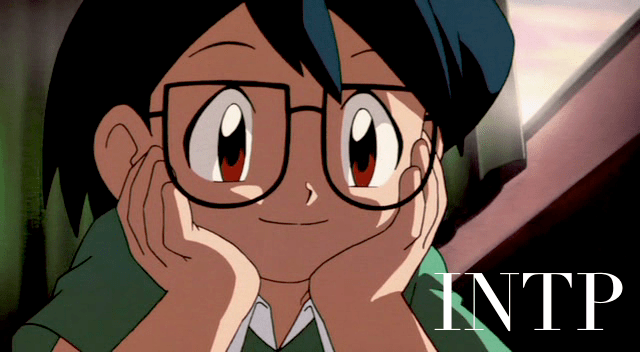
Introverted Thinking (Ti): Although too young to train Pokemon himself, Max is intimately familiar with the theory of Pokemon battling. He will analyze every battle he sees, trying to figure out exactly what each trainer does right and wrong. In the few battles in which Max does participate, he follows theory rather than tuning into the reality of the situation; he will often set up a defense single-mindedly while his opponent is mercilessly attacking. On his journey with Ash, Brock, and May, Max would always be on the lookout for a Pokemon to use its special move or ability. Max has a curiosity that would sometimes get him into trouble; when he saw a Bulbasaur, a Charmander, and a Squirtle for the first time, he inspected the three Pokemon with his hands, provoking them to attack him. Continue reading
Guest Post by E. J., INTJ

Dominant Si: Arthur prefers approaches that he considers tried-and-true. He has difficulty accepting that inception is possible because it is outside the realm of his experience–which, fortunately for Cobb, is vast. His traditional approach is one of the reasons that Eames (who calls him “that old stick-in-the-mud”) loves teasing him at every opportunity. Arthur instinctively distrusts most out-of-the-box ideas, despite his highly unusual profession, but his eye for detail helps make him among the best extraction experts in the world of corporate espionage. It is also his attention to detail that leads to some of the friction between Arthur and Eames: Arthur is frustrated by Eames’s tendency to suggest unusual strategies without fleshing out the details. Continue reading
Guest Post by Andrew, ENTJ

Introverted Intuition (Ni): Yoda is future-focused, and encourages everyone else to be the same way. He understands the consequences of failure in every circumstance (if Count Dooku is not apprehended, the Clone Wars will only be bloodier than they otherwise would, and his inability to kill Palpatine means that he has to go into hiding). Yoda is very wary of the Dark Side, and teaches his pupils to banish all fear (“the path to the Dark Side”) to avoid any anger and hatred (full-fledged Dark Side emotions) down the line. Since Anakin has already experienced a great deal of fear before the beginning of his training, Yoda is exceedingly cautious about granting him any status in the Jedi Order; he votes not to allow Anakin to be trained at all, and he seeks to mitigate any damage that Anakin could cause when Palpatine appoints him to the Jedi Council. Yoda is patient about making up his mind, but he doesn’t necessarily need much information to do so, and he can infer a lot of facts from limited evidence; he figures out the Sith practice of the Rule of Two from a couple of skirmishes between Qui-Gon and Darth Maul. After the sudden collapse of the Jedi Order, Yoda is content to rebuild it slowly, starting with Anakin’s children, who were born just after the Jedi were slaughtered en masse. Continue reading
Become a paid subscriber to get access to the rest of this post and other exclusive content.
Guest post by Andrew, ENTJ

Introverted Sensing (Si): On the whole, Cedric lives a conventional life, even with the exciting things happening within it. He is diligent in his schoolwork, and he takes his girlfriend to nice cafes when he can. He is predictable enough in his day-to-day actions that both Harry and the false Mad-Eye Moody are able to guess his exact reactions to certain situations. Although Cedric competes in both the inter-house Quidditch Cup and the Triwizard Tournament, he is almost indifferent to the attention showered upon him by either competition. In fact, he is almost more concerned with making sure the competitions are conducted fairly than with securing his own victory. Cedric can sometimes be suspicious when told something he doesn’t expect, as when Harry tells him what the first task in the Triwizard Tournament will entail (this was supposed to be a secret from all the champions).

Extroverted Feeling (Fe): Cedric is a perfect gentleman who is polite to everybody. He sends up a distress signal so that Viktor Krum will be rescued, even though he thinks his opponent doesn’t deserve it. Cedric plays fair, but not in a legalistic way; twice, he tries to give Harry victories in competitions that he has won according to the rules (but due to the circumstances, Harry SHOULD have won both times, in Cedric’s opinion). When Cedric plays Quidditch or competes for the Triwizard Cup, he isn’t doing so for his own glory; instead, he’s in it for Hogwarts and for Hufflepuff House.

Introverted Thinking (Ti): Cedric is not one to stretch the truth. When his father brags about his Quidditch match (“You beat Harry Potter!”), Cedric responds by explaining why the match played out the way it did. Cedric solves the riddle required for the second Triwizard task by searching his mind for clues rather than using external ones (he didn’t pay attention to the mermaid painting on the wall).

Extroverted Intuition (Ne): When facing a dragon in his first Triwizard task, Cedric takes a risky approach to reach his goal. While trying to figure out what he has to do for the second task, he takes a highly unusual suggestion (taking the egg to the bath with him) when he hits a roadblock. Once he figures out the clue, he successfully anticipates everything he is expected to do as part of the task.
Guest post by Occam’s Chainsaw, INTJ

Ne: Alaska was a girl who was restless when it came to trying out new things. She was in for the experience, and came up with several ideas that she wanted to do to make her presence in the academy memorable, to make sure everyone in the next generations will know that once a girl named Alaska studied there. Alaska was very unpredictable and wild, and an independent spirit who lived in the world of possibilities, which is also the reason why she and Miles developed such a strong connection with each other after clicking instantly; Miles caught up to all of her ideas, and talked to her about her idea of The Labyrinth of Misery, and how she wanted to find a solution to it. She enjoyed the thrills of everything that was forbidden and was a bit reckless at times. Continue reading
Amanda asked: I read your post on traumatized INTJ, which I most certainly have been. I feel I was dead inside until I developed my Fi to be a good mommy to my sweet baby boy (who is now working on his PhD). I have also endured Attention Deficit Disorder most of my life. I have read in an ADHD book “Scattered” (Gabor Mate MD) that ADD can be properly understood as a dissociative condition and ADHD as an attachment/anxiety condition. Basically, trauma responses. I took medication for ADD for a few years, recently. The beneficial effects on my life were profound, and some of them were permanent. I’ve only recently become more interested in MBTI, and I think ADD is pretty ironic in relationship to my being a J. I’m a J, but the part of my brain that can ‘do’ J, the prefrontal cortex, was more or less off-line, forcing me to live the life of a P! It’s as if ADD made me a failed INTJ. Not quite the shadow perhaps, as I’m a solid introvert. I was just curious if you’d ever thought of MBTI in relationship to this disorder, or perhaps any of the cluster B personality disorders. (Which I don’t have, but Cluster Bs were the origin of my trauma.)

Several semesters ago, I had an English professor who is an ENTJ with ADHD, and it was a thrill for me to be a part of her class. Here are my thoughts.
Being an xNTJ will likely determine how you think about things. ADD/ADHD will not necessarily change that thought process, but it will definitely interrupt it. What I typically observe happening as a result is that you will come to conclusions the same way that most other xNTJs would, but while you are coming to those conclusions, you will be distracted by other things that wouldn’t necessarily distract INTJs who don’t have ADD/ADHD.
As a result, your behaviour may be different than the behaviour of other INTJs, specifically with regards to your Te and Se functions. Your NiTe ability to focus will be different. You will always have your eyes on your Ni goal, but your Te may not necessarily keep you consistently working towards it. Your Se may be more easily distracted by things in your physical environment. etc. etc.
I know this was brief, but I hope it answered your question.
Become a paid subscriber to get access to the rest of this post and other exclusive content.
Guest Post by E. J., INTJ

Dominant Si: Éomer was raised in Rohan and firmly believes in the way of life that was instilled in him as a young boy. Although Wormtongue’s influence was weakening his uncle, King Theoden, Éomer’s close friendship with his older cousin Theodred, as well as the relationships built through his military training, ensure that Éomer is thoroughly formed by the culture of Rohan–in particular, its military and leadership traditions. The adult Éomer becomes angry when he sees how Wormtongue is subverting Rohan’s traditional values, but his loyalty to Theoden’s kingship never wavers. Continue reading
Guest post by Andrew, ENTJ

Introverted Intuition (Ni): Obi-Wan is an admirer of Yoda, and he takes the older Jedi’s advice about being mindful of the future seriously. While training the young Anakin, he is always aware of the danger he poses to the Jedi Order, and he randomly gets flashes of future visions of things to come. When assigned to watch over Luke on Tattooine, he has the patience to wait for the right moment (a whole 19 years!) to start training him as a Jedi. When dueling with Vader aboard the Death Star, Obi-Wan sees further ahead than anyone else, sacrificing his life to allow Luke and the others to escape, and to guarantee that he can still guide Luke (in spirit form) without have to run or hide from the Empire. Obi-Wan’s chosen lightsaber style is a defensive one; he defeats his enemies using patience. Obi-Wan is able to guess, with suspicions but no real evidence, that Padme is pregnant with Anakin’s child. Continue reading

Fi: Viktor is willing to sacrifice himself to save others, though he usually gets away unscathed. He is kind and gentle towards other people, and he often plays with insects that he finds on his journeys. Most of his emotions remain unspoken, and he doesn’t usually let many other people in on his inner life. Viktor’s sense of right and wrong differs not only from his parents’ but from the general Jewish population. He tends to disagree with any belief that stands merely because it has been societally accepted.
Continue reading
INeverForgetPromises asked: if you were reading a literary work, what would hook you more, a plot-driven story or a character-driven story? Do you prefer complex plots with subplots in them or a simple plot with something deep underneath (take hills like white elephants for example)?
Im sorry if I’m asking too many questions, its just that I want to pick at your brain a little bit. Plus, you kinda remind me of my INTJ best friend :)

I personally prefer character-driven stories. However, any well-done character-driven story is subsequently going to have an excellent plot. It may not follow a typical arc, but as long as the characters behave realistically, the plot is also going to move forward in a realistic way.
If you look at any piece of Shakespeare’s work, you’ll realise that every last bit of it is character driven. His plots are fantastic, but they are always driven by the motivations of his characters.
The Ender’s Game Series is another good example of a character-driven storyline in which there is no absence of complex plots and subplots. I could think of a million other examples, but I’ll leave it at that.
Any story that has an interesting and well-developed character who is facing a very real conflict will necessarily end up also having an amazing plot.
Now, I enjoy a story with an intricate plot, but if the characters are boring the story becomes empty. I get bored reading Dan Brown because his writing features incredibly complicated plots with hardly any character development.
 The Book Addict's Guide to MBTI: