

Subscribe to continue reading
Subscribe to get access to the rest of this post and other subscriber-only content.

Subscribe to get access to the rest of this post and other subscriber-only content.

Official typing by Arvid Walton
Dominant Introverted Feeling (Fi): Zuko feels everything intensely, a trait that both makes him a force for good (when he can detach his own moral code from what his father expects of him) and causes him a great deal of suffering. When he forces himself to live by his father’s value system instead of his own, Zuko is plagued by inner dissonance and depression. From a young age, he has a strong sense of ethics and is happiest when he feels aligned with his moral code. His drive to do the right thing pushes him to speak against his father’s military plans, ultimately leading to his banishment from the Fire Nation. As much as he lashes out at people (Mai, his crew, Uncle Iroh), Zuko puts them first when they are in danger. When he makes a mistake, he accepts full responsibility for his actions and does everything in his power to correct the damage he’s caused. As Fire Lord, Zuko puts his life on the line to stand up for the misunderstood people of the Fire Nation colonies. However, when gaslighting and manipulation from his family members cause him to doubt his inner compass, Zuko is wracked with anxiety about whether he’s doing the right thing (to the point of being unable to sleep). When under intense stress, Zuko has the tendency to retreat inward, keeping his struggles to himself despite Mai’s urgings for him to talk openly.
Continue reading
Subscribe to get access to the rest of this post and other subscriber-only content.
H Janeway asked: “How does an INTJ know what she needs? I am a bit disconnected from my emotions because of depression, depression medication and being an INTJ. How do I know what I need so that I can make a plan/schedule and hopefully get better?”
I hope the best for you in your journey.
I have depression that’s heavily influenced by PTSD, I can speak to your experience of struggling to figure out what you need to do to heal.
Before I was fully aware that I had PTSD, I was very confused and very, very concerned with how I was supposed to figure out this “trap” that had caught me. At the time, many factors combined to make it so that I was not in a position to seek help. As a result, I had to figure things out on my own.
Here is what I have learned the hard way: Continue reading
Anon asked: “You’re the first MBTI expert I’ve come across who’s typed the characters from Unsere Mütter, Unsere Väter, and since you’re an INTJ, I must know. Were you emotionally traumatized the first time you watched it?”
shawna asked: Do you ever encounter existential depression? Also, your website is coherent and interesting.

Asthma asked: As an intj how do you deal with :
– lack of confidence/ low self-esteem.
– emotional emptiness.

I’ve never had a problem with low self-esteem myself, but I suspect that my methods for dealing with self-criticism could apply to your question just fine.
My interior monologue often runs along these lines: Why don’t I feel anything? Why don’t I care that this person in front of me is crying? Am I a bad person? Did l have to say that? It may have been true, but it wasn’t kind. I am a terrible friend. etc.
Here’s how I deal with it. Continue reading
There is no defined route traveled by every traumatized individual, and variations range so widely even within the INTJ realm that all we can really observe are the patterns. Continue reading
Credit: quotes & bullets borrowed from celebritytypes.com and expounded upon in an understandable format
If you haven’t already, read my Mistyping post for further input on what mistakes to avoid when typing people.
Meredith asked: “I have a friend who’s was a total ENFP but then he went through a traumatic experience and now he doesn’t seem like an ENFP at all. Could he have changed to an introverted type?”

Probably not, although, yes, if the trauma you’re referring to was physical head trauma, a stroke or anything that could cause brain damage and literal personality changes. However, I’m going to assume that you’re talking about something that was psychologically traumatizing.
First of all, everyone (hopefully) undergoes Continue reading
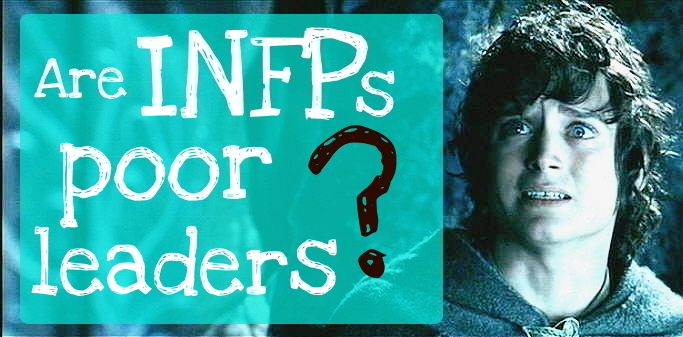
Question: “Hello Mr. INTJ. I am an INFP. On the net, I always find that some of the famous authors, actors, writers, artists, music composers are INFPs . But I have never found a single famous military leader, politician, athlete, player, scientist (except Einstein), sci-fi writer in the list of INFPs. All other personality types have some or more of these ranges. Even ENFPs have some world class leaders (though shown in the dark side on celebritytypes.com). In the list of INFPs there are some who have committed suicide. On the other side there are people who have committed mass homicides in other personality types. Why are INFPs always so meek in their behavior? Why are we not as outgoing as other types? I even found on the net that INFPs are the economically the poorest of all types. I will be thankful to you if you put some light on this topic. I know you can understand what I mean to say. So please answer my question as soon as possible.”
Answer: Hello Mr. big questions. I interrupted the queue just to answer this one, so first off, I’ll give you some NFP scientists to make friends with. Michio Kaku and Brian Cox are my two favourites. Go and look them up.
I can tell you right off the bat why ENFPs are more likely to be famous leaders than INFPs. It’s merely because their Te is higher up in the function hierarchy than INFPs.
As to INFPs always being meek? Actually, no, they’re not. Continue reading
Subscribe to get access to the rest of this post and other subscriber-only content.
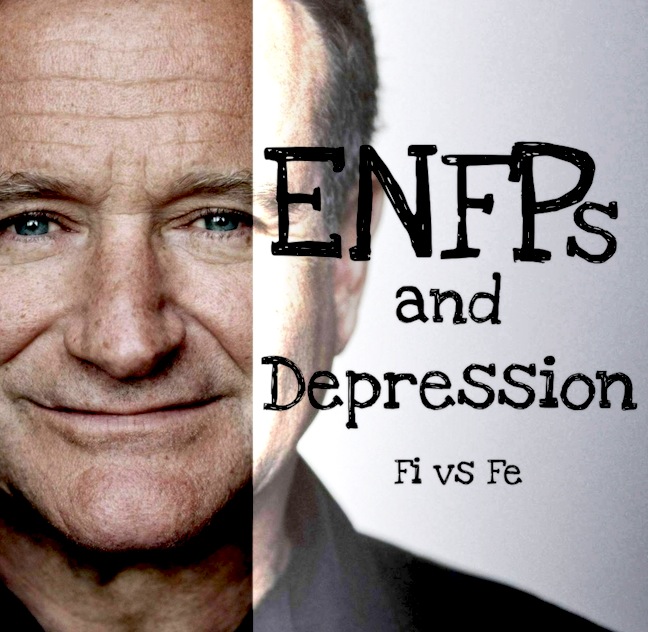
Question: “I suffer from depression (ENFP) and was wondering about how that translates to functions. I understand if you don’t know much about depression and can’t answer the question, but I just wondered.”
Answer: No matter your MBTI type, depression is always a highly emotional experience, so that ought to clear up the myth that T-types can’t be depressed.
Function-wise, depression tends to lock people into their introverted functions (this applies more to clinical depression than acute depression). As an ENFP, you’re likely going to lock yourself into your Fi and Si functions. Depending on the intensity of your depression, as well a your ability to control it (here, the word control is subjective), you may also end up suppressing your extroverted functions entirely. Continue reading
Subscribe to get access to the rest of this post and other subscriber-only content.
“I saw that you changed Hamlet from an INTP to INTJ. I’m assuming there’s a reason for that?? Also, you said a lot of people type him as an INFP? Could you elaborate on why you’re against that? Could he perhaps be an INFJ?”
Hamlet is the ultimate Elizabethan emo kid. He’s a teenager who suffers from an undiagnosed mental condition that affects his hormonal balance separately from his personality.
Inexperienced typers are often oblivious to the reality that depression is an illness, not a personality trait. As a result, most people assume that Hamlet is an F-type. However, one can be very logical (as Hamlet is) and yet have surging emotions as a result of depression.
My analysis of his Meyers-Briggs type Continue reading
 The Book Addict's Guide to MBTI: