My Friend Group as an INTJ

Pejar asked: “As an INTJ, what is your friend group like? Are there certain types that you gravitate towards or that gravitate towards you? Like, do you have other INTJ friends? And do you make friends differently than other types?”

Which types am I most likely to be friends with?

My current room-mates, an INFJ and ISFP, were handpicked by me –and by handpicked, I mean my Te took over, organised a flat and then told them they were living with me. They were both fine with that. Generally, my friend group has one INTJ (me) and a whole bunch of INFxs and couple of ISFPs, occasionally allowing for a few tagalong xxxxs.

The most likely reasons for this are as follows: Continue reading

Acting Style and MBTI Recap

Subscribe to continue reading

Become a paid subscriber to get access to the rest of this post and other exclusive content.

How to Test Accurately

MMR asked: The whole Myer-Briggs Theory is interesting but how does one know if it is accurate. I have taken the test multiple times over the past year to be sure of my type. I was typed each time as an INTJ; I however am afraid I am being biased, trying to be original, or just answering the same way from memory. In reading the other types it is easy to find small traits to identify with in all INxx types. I strongly agree with most typing a for INTJ and feel, if I can say that, that it is my personality type. Wanting to be sure, my question to you is, how does one know if they are being biased when typing themselves?

That’s a good question, and one that I can’t teach you the answer to. I can however, give you a starting place to learn from.

  • Do your answers to the questions match up with your behaviour?
  • In other words, are you answering questions about who you are, rather than who you’d like to be?
  • Do you fully understand the question that is being asked?
  • Are you answering ‘yes’ on questions that only occasionally apply to you?

In general –and I have stressed this time and time again– I suggest not trusting the test as your guide to MBTI. READ. LEARN. INTROSPECT. That is the only way to know yourself.

Do I relate to INFPs?

Elise Ann asked: How do you relate to INFPs? you must find us exhausting

I do find you exhausting. You burst out with seemingly random topic changes while I’m still philosophically analysing something you said two hours ago. Also, your emotions…dear me, they are everywhere…

But yes, there are a few ways that I relate to INFPs (not drastic ways, just subtle ones).

The main way that I relate to INFPs in the persistent Fi desire to do the right thing. Of course, we go about it vastly differently, but the goal is the same.

Secondly, there is the often frequent drive for creativity –which, as a writer, artist and Ni user, I relate to regardless of whether the creativity stems from an Ni or Ne function. Both types of intuition can be vastly creative, just in different ways. Many make the mistake of assuming that only Ne is creative, and that Ni is merely a goal setting function –this is based on a limited understanding of MBTI.

Ni presents more of a focused and vision oriented creativity while Ne presents an unexpected and possibility based creativity.

INTJs: How to deal with Low Self-Esteem and Emotional Emptines

Asthma asked: As an intj how do you deal with :
– lack of confidence/ low self-esteem.
– emotional emptiness.

Low Self-Esteem

I’ve never had a problem with low self-esteem myself, but I suspect that my methods for dealing with self-criticism could apply to your question just fine.

My interior monologue often runs along these lines: Why don’t I feel anything? Why don’t I care that this person in front of me is crying? Am I a bad person? Did l have to say that? It may have been true, but it wasn’t kind. I am a terrible friend. etc.

Here’s how I deal with it. Continue reading

Dr. Eric Foreman: ISTJ

House MD

House MD Foreman ISTJ MBTI

Si: Foreman is practical and detail oriented. He trusts conventional protocols because they have worked in the past (therefore, we don’t need to find new methods). He has a hard time understanding and dealing with House’s lack of care about conventions and protocols. He’s connected to his past, though he doesn’t much enjoy talking about it with others. He’s quite serious, and doesn’t like House’s sarcasm at all. Foreman jumps to assumptions based on generalizations and social stereotypes. Continue reading

9 MBTI Typing Mistakes Tumblr Makes

9 MBTI Typing Mistakes Tumblr Makes

Credit: quotes & bullets borrowed from celebritytypes.com and expounded upon in an understandable format

If you haven’t already, read my Mistyping post for further input on what mistakes to avoid when typing people.

Continue reading

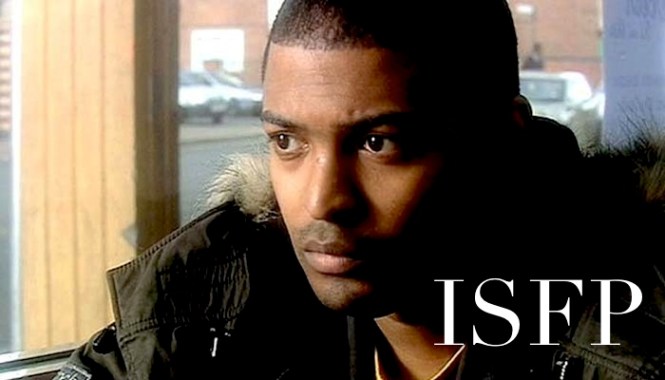
Mickey Smith: ISFP

Doctor Who

Mickey Smith ISFP | Doctor Who #MBTI #ISFP

Dominant Introverted Feeling (Fi): Mickey has an independent streak that drives him to want to be useful. He has a strong desire to help other people and stays with Rose even as he watches her fall away from him. Even as Rose and the Doctor grow closer and Rose farther from Mickey, he doesn’t hate them or even express much anger towards them. Instead, he tags along and tries to help out. He even encourages them. Though he’s quiet about his feelings, he’s deeply sensitive and hurt when other people reject him. Mickey acts according to whatever feels right to him and determines right and wrong for himself rather than differing to other people’s opinions. Continue reading

Jane – Ender’s Saga: ISFP

Ender’s Saga, Orsen Scott Card

Dominant Introverted Feeling (Fi): Jane desperately needs to feel loved and accepted by the few people that she befriends. Though she doesn’t like to let it show, she is deeply hurt when Ender withdraws to be with his wife. When she leaves the filotic web to enter a human body, she is overwhelmed by the emotions she feels and has little control over them. Jane is introspective and likes to personalise her behaviour to meet the needs of the people she interacts with. She doesn’t have many friends, but and she is incredibly selective about whom she choses to reveal herself to. Even then, she doesn’t really reveal her whole self to anyone but Ender and Miro.

Auxiliary Extraverted Sensing (Se): She loves to get reactions out of people and enjoys putting on a show. Her thought process moves quickly and focuses mainly on action. At times, Jane can be very annoying and attention needing, but her swiftness to do the impossible makes her a useful ally. Though most of Jane’s life is not spent in a human body, Jane pays a great deal of attention to physical details in the human world. When she experiences them for the first time herself, she is ecstatic, but also overwhelmed.

Tertiary Introverted Intuition (Ni): Jane is more than aware of the larger implications of her existence (that people would fear a sentient computer) so she is hesitant to reveal herself to the human race. She often obsesses over individual people and concepts (Ender, for instance) and has a hard time accepting that humans don’t always operate on the vast theoretical scale that she does.

Inferior Extraverted Thinking (Te): She is a task-oriented being who knows how to organise people and technology to accomplish impossible things. She is highly intelligent and able to argue complex logic with millions of people at once. Jane communicates bluntly, through facts, and tends to reject emotional communication despite being quite emotional herself (she denies this).

Can you develop all 8 MBTI Functions?

“Can you develop all eight functions? If so, how would one go about doing that?”

Can you develop all 8 MBTI Functions?

That would be an excellent idea if you want to go nowhere in life.

I would not recommend trying to develop all eight functions, and here’s why.

You have four functions that you utilize on a regular basis, but occasionally, when you’re extremely stressed out, you can lapse into using all opposite functions (aka, your shadow functions). Continue reading