Conway – Pokémon: INTP

Guest Post by Andrew, ENTJ

Pokémon Anime Franchise

Dominant Introverted Thinking (Ti): Conway is an intellectual first and last. He takes pleasure in researching statistics for upcoming battles and has the most fun when he is using his brain. Conway never shares his thought processes with others, preferring to work things out in his head rather than thinking out loud (and excluding input from other people). However, after figuring everything out, he proudly shares his conclusions. Conway has a focus on the theoretical foundations of his battle plans; while this gives him creativity beyond that of Ash, Dawn, or Paul (all Te-users), it also causes him to get caught up in his head rather than pay attention to the reality of his situation.

Continue reading

Kenny – Pokémon: ENFJ

Guest Post by Andrew, ENTJ

Pokemon Anime Franchise

Dominant Extroverted Feeling (Fe): Kenny puts others’ emotions before his own. He commiserates with Dawn when she doesn’t make the battle rounds of a contest, even when he qualifies. He also doesn’t put pressure on his Pokemon when they lose battles, preferring to take the blame for himself instead. Kenny tries hard to conceal his feelings for Dawn, as he is unsure how she (or Ash or Brock) will receive them; his main recourse is to tease Dawn about her nickname (“Dee Dee”). When he lets slip certain indicators of how he feels (and Dawn doesn’t notice), he resorts to desperate measures to keep Ash quiet. Upon meeting Ash and Brock, he makes sure to get in their good books right away (by telling funny stories about Dawn), and he befriends Barry, a trainer from his hometown, immediately upon meeting him.

Continue reading

Matilda: INTJ

Guest Post by E.J., INTJ

Matilda, Roald Dahl

Dominant Introverted Intuition (Ni): Most young children with parents like Matilda’s would accept their behavior as normal, as Matilda’s older brother does. Matilda, however, figures out that her father is being dishonest and correctly guesses that his behavior may get him in trouble. She also sees that her mother’s belief that women should be primarily interested in their looks has gotten her mother nowhere, and Matilda–not yet six years old–knows that she wants her life to be different. Matilda correctly intuits Miss Trunchbull’s past misdeeds and develops an out-of-the-box plan to deal with her. Matilda has an incredible ability to concentrate, which she applies both to her academic interests and in strategies she develops for daily life. Although Matilda is deeply unconventional, she understands the long-term value of blending into society. As a result, most adults overlook her more nefarious plots.

Continue reading

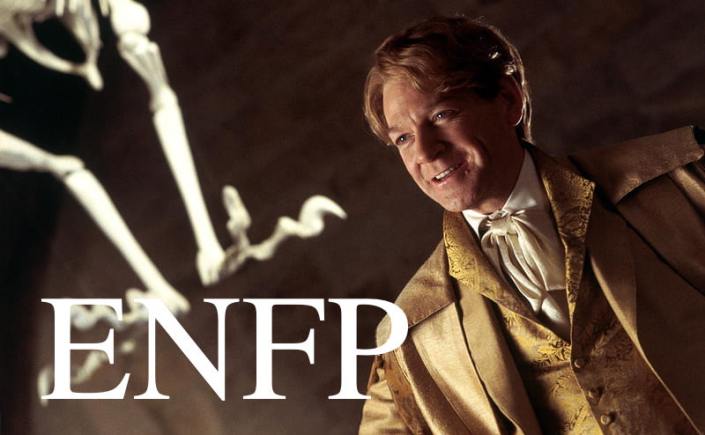
Gilderoy Lockhart: ENFP

Guest Post by Andrew, ENTJ

Harry Potter, J. K. Rowling

Dominant Extroverted Thinking (Ne): Lockhart presents himself as an expert on everything, whether duelling, defeating dark creatures, getting rid of household pests, or the game of Quidditch. He is a prolific author, and always seems to have a new book out, usually about one of his supposed exploits. He relates his stories in fanciful ways, with digressions concerning his personal preferences (favorite color, etc.). Lockhart lives his life in a spontaneous fashion, doing things that many people don’t expect (like taking a teaching job at Hogwarts). He originally has an idealized view of what the experience of teaching is like, and he quickly revises his teaching style after publicly making a fool of himself. All of the things Lockhart says are about trying to maintain and enhance his reputation rather than necessarily doing anything useful, making him appear (with much justification) out of touch with reality.

Continue reading

Harley – Pokémon: INFP

Guest Post by Andrew, ENTJ

Pokémon Anime Franchise

Dominant Introverted Feeling (Fi): Harley lives in a reality where feelings are paramount – and only his own, not anyone else’s. In fact, he has a tendency to blow trivial hurts out of proportion and to hold grudges for ridiculous reasons. He doesn’t only hate the girl who stole his snack in school, but also the girl who looks exactly like her (May). He has a vendetta against May for no other reason than this; he does everything in his power to humiliate her in public and derives pleasure from her embarrassment. Harley gives captivating contest performances which engage the emotions of the audience, but he opts to work with their fear and shock rather than their wonder and admiration. He is individualistic in both his clothing style (derived from his favorite Pokemon, Cacturne) and his effeminate mannerisms.

Continue reading

Homer Hickam: ENFP

Guest Post by Jessica Prescott, INFJ

October Sky

Dominant Extroverted Intuition (Ne): Homer Hickam is nothing if not a dreamer. He loves new ideas, hates to be cooped up in a small mining town, and, more than anything, longs for a glimpse of the “outside world.” His original (and strongest) motivation to carry out his rocketry project is not a desire to understand how rocket science works, but simply a romantic fascination with the mere idea of rocketry—the idea that human beings can be capable of sending objects up into space. He isn’t shy about sharing his dreams with others, either, but is perfectly willing to blurt out his latest plan at the breakfast table: “I’m gonna build a rocket.” One of Homer’s greatest assets is his optimism—his ability to see possibilities where others see only obstacles. Even though no student from Coalwood has ever won the science fair before, Homer is firmly convinced that he and his friends can pull it off—and he manages to convince them to believe it, too.

Continue reading

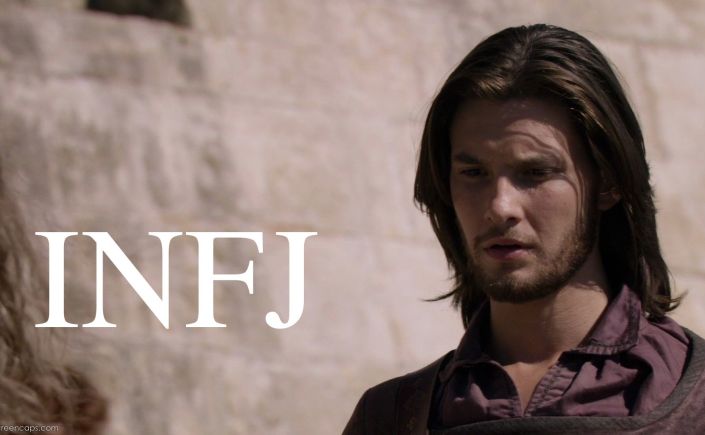
Prince Caspian: INFJ

Guest Post by E.J., INTJ

The Chronicles of Narnia, C.S. Lewis

Dominant Introverted Intuition (Ni): Caspian is a dreamer. As a little boy, his nurse’s stories of Old Narnia capture his imagination, and Caspian’s view of the world is shaped by the stories. Rather than basing his value system on what he sees his uncle Miraz doing, Caspian’s ideals are formed by the heroic legends his nurse repeats to him. Caspian has no strong reason to believe that the old days could return until after he wakes up in the dugout of Trufflehunter, Trumpkin, and Nikabrik. Regardless, he prefers the Narnian moral code, even if he never meets a full-blooded Old Narnian. From a relatively young age, Caspian is driven to accomplish things that other people consider impossible. He successfully defeats Miraz and reawakens Old Narnia—despite the initial superiority of the Telmarine forces—and, as king, he goes on a difficult voyage to find seven Telmarine lords who disappeared when he was a small child. Near the world’s end, Caspian’s imagination almost gets the better of him. He is so fascinated by the thought of traveling to Aslan’s country that he wants to abandon his kingship and continue eastward. Aslan must directly intervene to prevent Caspian from abandoning his responsibilities to follow his imagination.

Continue reading

Molly Weasley: ESFJ

Guest Post by Andrew, ENTJ

Harry Potter, J.K. Rowling

Dominant Extroverted Feeling (Fe): Molly is all about family, and she always tries her best to keep hers together. She arranges vacations to visit her sons who live abroad, and she takes it very hard when Percy cuts ties with everyone else. Her worst fear is losing loved ones, rather than suffering some misfortune herself. When she sees Harry by himself, Molly is immediately sensitive to what she thinks he must need (she forbids her children from staring at him like some mythical creature), and she all but adopts him into her family. Molly puts a lot of stock in social standing; she is glad when her husband gets a promotion to a big job that takes him away from his own passion, and she wants her children to have successful careers as well. Molly is openly emotional, and she will always make her feelings abundantly clear.

Continue reading

Johanna Mason: ENTJ

Guest Post by Kerissa, INFJ

The Hunger Games

Dominant Extroverted Thinking (Te): At the interviews for the 75th Hunger Games, Johanna is the first to directly question if the games could be changed. She’s very blunt. For example: when Katniss is explaining canaries in coal mines, Johanna asks, “What’s it do, die?” She also says, “I’m not like the rest of you. There’s no one left I love.” In District 13, she’s the one who makes Katniss stick with training through a mixture of ‘motivational insults’ and pushiness.

Continue reading

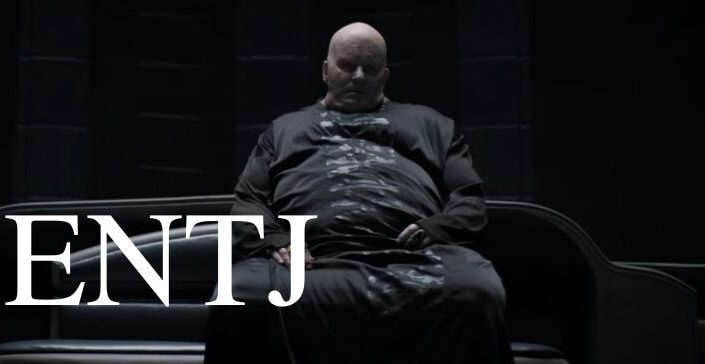
Baron Vladimir Harkonnen: ENTJ

Guest Post by Andrew, ENTJ

Dune, Frank Herbert

Dominant Extroverted Thinking (Te): Baron Harkonnen wants nothing less than the imperial throne, and he goes after it in a systematic fashion. His allies and even his family members (except maybe Feyd-Rautha) are mere pawns in his game, and his enemies are nothing more than obstacles to be overcome – or to be destroyed utterly. He has a brutal, ruthless way of dealing with everyone, and he gives direct orders to his subordinates. The baron is extremely resourceful, and he will add anyone whom he believes will be of use to his retinue; he even takes Thufir Hawat, the chief strategist of his slain arch-enemy, Leto Atredies, to be his adviser after the death of his own strategist.

Continue reading

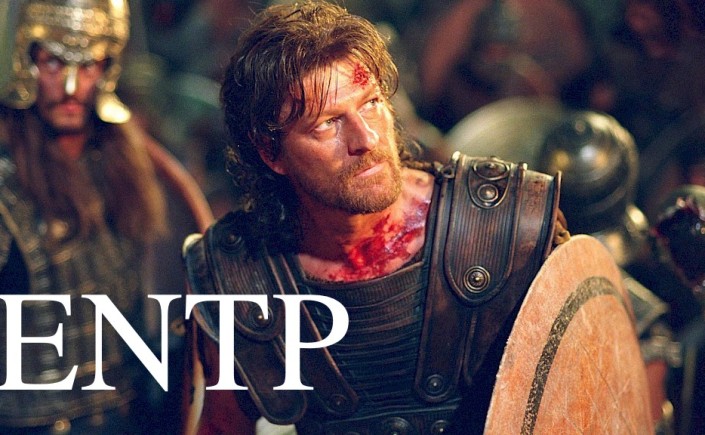
Odysseus: ENTP

Guest Post by E.J., INTJ

The Iliad & The Odyssey

Dominant Intuition (Ne): Odysseus is a man of new ideas, and this accounts for his resilience during the Trojan War. When everyone else, even Agamemnon, is exhausted, Odysseus continues to see positive possibilities in their situation. He is the most insistent supporter of the war––not because of an Ni-style drive, but through his Ne focus on new potential. Odysseus’ Ne gives him the enthusiasm to put new energy in his war-weary fellow Greeks. After the war is over, Odysseus sails around, following a string of new ideas, rather than heading straight home like most of the other Greeks.

Continue reading

Barry – Pokémon: ESTP

Guest Post by Andrew, ENTJ

Pokemon Anime Franchise

Extroverted Sensing (Se): Barry is notoriously hyperactive. He runs when anyone else would walk, and he does not look where he is going, often colliding with Ash when they meet. His battling style is flashy and very aggressive. He attacks with abandon, and he builds up his Pokemon’s speed so as to land hits fast. Barry has no concept of gradualism, asserting that he wants to be the best trainer there is in the least possible time. Similarly, in individual battles, he is often overconfident, stating that nothing can or will stop him from winning. Barry is extremely competitive and wants to prove himself through head-to-head battles. He maintains that data used to analyze trainers is useless if not constantly kept up-to-date, as trainers’ strengths and strategies change constantly.

Continue reading

Hans Hubermann: ISFP

Guest post by Ethereality, INTJ

The Book Thief, Markus Zusak

Hans Hubermann ISFP | The Book Thief #MBTI #ISFP

Dominant Fi: He is very certain of his own emotions and his own moral code, which has been developed over time and is very different to that of his family and most of the rest of Germany; for example, he chooses very deliberately not to join up to the Nazi party, even when most people start supporting it and the only thing that actually changes his mind is when his not being part of it begins to adversely effect his business and thus the wellbeing of his family, who he loves and values. He feels things deeply and is very sensitive to others emotions but he tends to work through his own emotions internally and in a personal manner, which leads to him being often quiet and contemplative, even with Rosa shouting at him most of the time. He keeps hi Continue reading

Eames – Inception: ENFP

Guest Post by E. J., INTJ

Inception

Eames ENFP | Inception #MBTI #ENFP

Dominant Ne: Eames thinks of himself as a creative person, and he provides many of the ideas that allow Cobb’s team eventually uses in their mission. His flexibility is important as the plan goes forward. Although he does not usually allow himself to become angry with others, Eames finds less creative people difficult to understand. As a result, he tends to introduce ideas in his preferred way–leaving the details to the imagination–despite the confusion this sometimes causes in other people.

Eames ENFP | Inception #MBTI #ENFP

Auxiliary Fi: Eames is not overly concerned with other people’s opinions. He knows that Arthur gets annoyed with him at times, but he is not upset: in fact, he often finds Arthur’s frustration humorous. His lifestyle is very unconventional. Even when he is not working at his (illegal) profession, he tends to pass the time doing things that many people would consider unethical or, at least, unwise. Eames understands his own emotions well, and his understanding of his own feelings helps him know how to appeal to Fisher’s, despite their differing personalities.

Eams ENFP | Inception #MBTI #ENFP

Tertiary Te: Although Eames is better at coming up with new ideas than carrying them out, he does care about basing his ideas on empirical evidence. Eames’s analysis of his own previous, failed attempt at inception helps put Cobb’s plans on solid footing. Eames can be very blunt on some occasions–in particular, if he is angry. After finding out that Cobb had not been completely honest about the mission, Eames directly confronts him, grilling Cobb about his behavior.

Eames ENFP | Inception #MBTI #ENFP

Inferior Si: As Arthur points out, specificity can be a weakness for Eames. He has a tendency to introduce new ideas without fully considering the details necessary to carry them out. Eames prefers to think in terms of future possibilities, but he is willing to learn from his mistakes. His earlier attempt at inception did not dissuade him from believing that inception was possible. He did, however, carefully consider what happened, how it went wrong, and how to prevent a similar occurrence. Eames uses his experience to help Cobb from making the same errors.