

Subscribe to continue reading
Become a paid subscriber to get access to the rest of this post and other exclusive content.
Become a paid subscriber to get access to the rest of this post and other exclusive content.
Become a paid subscriber to get access to the rest of this post and other exclusive content.

Se: Viola uses disguise as a way to avoid dealing with her problems emotionally (the fact that her brother is supposedly dead). Rather, her approach is proactive, an attempt to keep busy rather than introspecting. She’s not afraid of being thrown into a crazy situation, be it pretending to woo another woman or jumping into a sword fight and totally beating the crap out of the guy she’s fighting. She’s really good at acting and judges other people’s thoughts based on what she sees in their expressions. Continue reading
Dominant Extraverted Thinking (Te): Claudius is intelligent, manipulative and conniving. He’s power hungry and though he loves Gertrude, it’s also fairly likely that he married her strategically in order to usurp the throne from Hamlet post Hamlet the elder’s death. Claudius is a great public speaker and maintains the majority of his power via Continue reading
*I spelled Humour the American way in the title because the majority of my readers are American.*
Have you ever noticed how people who like Hitchiker’s Guide to the Galaxy are more likely to enjoy Doctor Who, Sherlock, Neil Gaiman and Terry Pratchett? This is intuitive humour at its finest.
(Psst! If you liked any of the former fandoms, you should read Jonathan Strange & Mr. Norrell!)
Intuitive MBTI types tend to enjoy wordplay related sarcasm, deadpan and hyperbole, especially NT types. The differences between Extraverted Intuitive (Ne) and Introverted Intuitive (Ni) humour are subtle, but I’m going to attempt to dispel those differences. Continue reading
Subscribe to get access to the rest of this post and other subscriber-only content.
Become a paid subscriber to get access to the rest of this post and other exclusive content.

Dominant Ne: Beatrice is incredibly talkative, and very witty. She pulls her humour from reality and branches off of into all manner of new ideas, often beating Benedick in her verbal battles with him. Much of her humour also consists of elaborate buns and connections that are surprising to others, but that come naturally to Beatrice. Underneath this, Beatrice is a deep character. She wants to find meaning in everything and doesn’t settle for Continue reading
Dominant Ni: Iago is a master schemer. He knows what he wants and plots in detail how to get it. His plans are long-term, working slowly over time, unchanging with the circumstances, and he carries each step through decisively. He has an intuitive and accurate understanding of how the people around him think, and he uses this to manipulate them, while still having them believe that he is acting in their best interests. He is able to device plans that work because of this understanding. He knows how people will likely react Continue reading

“I saw that you changed Hamlet from an INTP to INTJ. I’m assuming there’s a reason for that?? Also, you said a lot of people type him as an INFP? Could you elaborate on why you’re against that? Could he perhaps be an INFJ?”
Hamlet is the ultimate Elizabethan emo kid. He’s a teenager who suffers from an undiagnosed mental condition that affects his hormonal balance separately from his personality.
Inexperienced typers are often oblivious to the reality that depression is an illness, not a personality trait. As a result, most people assume that Hamlet is an F-type. However, one can be very logical (as Hamlet is) and yet have surging emotions as a result of depression.
My analysis of his Meyers-Briggs type Continue reading
Fe: Menenius acts as a father figure to Cauis Marcius, trying despite the seeming impossibility of the task, to help Coriolanus learn the social skills that he lacks. Menenius devotes himself entirely to the things that are important to him –volunteering, maintaining the peace and helping his friends. Though his good intentions are broad, his loyalties are few. Continue reading
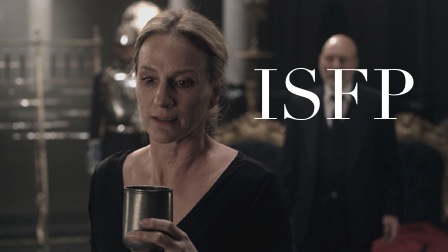
Dominant Fi: Hamlet’s Ghost mentions a “falling-off” between himself and Gertrude to Gertrude and Claudius (1.5.9), which suggests, but doesn’t necessarily conclude that she was cheating prior to his death. The Ghost never accuses her of murder, which suggests that we can’t assume she knew about Claudius’s murder plot, but he does accuse her of adultery. Furthermore, after Hamlet’s death, Gertrude isn’t wracked by the same prolonged Continue reading
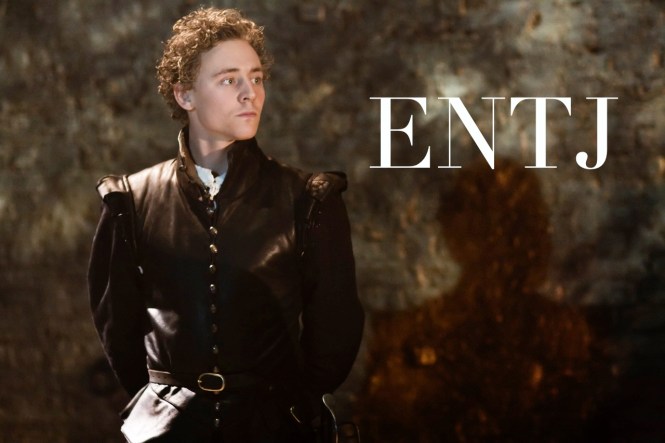
Dominant Te: Cassio is a reliable person. He is straightforward and honest in his communications with others. He has great social skills and knows how to organize people. His decisions are typically firm, though at times, he can give way to peer pressure (more likely because Iago is a master manipulator). Cassio’s charm and charisma draw people of all Continue reading

Dominant Fi: Juliet finds it very important to stay true to herself, and though at times she feels guilty for it, she is not afraid to willingly disobey her parents orders to follow her heart. In fact, she is willing to let them believe that she is dead in order to follow her heart. Juliet makes choices based purely on her feelings –she does what feels authentically right to her, whether or not others believe it is right or not. In a sense, she doesn’t believe Continue reading
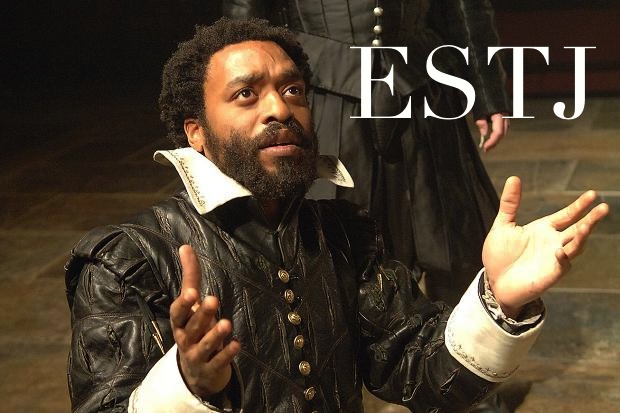
Dominant Te: Othello expresses his feelings and desires best through action. Though the audience does not get to witness it, Othello is clearly organized and task oriented enough to work his way up through the ranks of the Venetian military. He jumps into action as soon as he recognizes a quick and direct solution to a problem. Instead of stopping to consider possibilities of falsehood in Iago’s words, he immediately instigates a punishment on Desdemona. His criticisms of others and himself are frank and objective. He doesn’t appoint men in his army Continue reading
 The Book Addict's Guide to MBTI: