Violet Evergarden: ISTJ

Guest Post by Arvid Walton, INTJ

Violet Evergarden

Dominant Introverted (Si): Orderly and attentive, Violet keeps her space clean and tidy without prompting (SiTe). She is highly detail-oriented, such that she fixates on exact wordings, exact truths/meanings, and exact instructions. She’s also inclined to pay attention to small details of peoples’ appearance, such as Major Bougainvillaea’s eye colour. She thrives on routine (a trait of both Autism and SiTe) and has a strong preference for repetitive activities. In addition to enjoying work as a Doll, Violet regularly dresses in the same clothing (even when not working) and always ties up her hair in the same pattern.

Subscribe to get access

Read more of this content when you subscribe today.

Alastor “Mad-Eye” Moody: ISTJ

Guest Post by Andrew, ENTJ

Harry Potter, J.K. Rowling

Dominant Introverted Sensing (Si): Above all else, Moody does not like to take chances. He would rather take a long time doing something to make sure that he is successful than take a shortcut about which he is the least bit unsure (e.g. taking Harry to the headquarters of the Order of the Phoenix). Moody uses a magic eye which allows him to be completely aware of his surroundings: it can move around in his head freely, and see through anything at its owner’s will. Moody uses each person’s past behaviour as an indicator of what he or she will do in the future, and he neither forgets nor fully forgives past transgressions. Moody enjoys comparing a group photograph of the original Order of the Phoenix with the membership of the new Order, and going over what happened to each member who didn’t make it.

Continue reading

Violet Crawley: ISTJ

Guest Post by Alberto Belota, IxTJ

Downton Abbey

Dominant Introverted Sensing (Si): The Dowager Countess is uncomfortable with change and prefers to live by tradition. Her primary motivation in many episodes of Downton is the preservation of traditional, pre-WWI value systems, as well as social systems. She also has a difficult time seeing why other people may view things differently (and still be considered reasonable) when faced with change. Violet uses the past as a source of emotional security and validation, even when it’s perhaps not the most efficient or cost-effective way of life (such as opposing the installation of electricity in the Dower House).

Continue reading

Stephen Black: ISFJ

Guest Post by Kerissa, INFJ

Jonathan Strange & Mr. Norrell, Suzanna Clarke

Dominant Introverted Sensing (Si): Before a fairy decided to ruin his life appreciate him, Stephen was excellent at managing the details of the household. He is the first to notice a lazy servant or a miscarried command. When met with an unfamiliar situation (there’s a new room and a man in the house!) he acts as he always does (I guess I should shave him). Even after two years of being under the Gentleman’s enchantment, he is extremely uncomfortable with people acting ‘against their nature’ (the overseer, the dog, and the mayor and aldermen).

Subscribe to get access

Read more of this content when you subscribe today.

ISTJs Put Simply

Guest post by Sylver, ISTP

In my project to make known the good and bad sides of every MBTI type, it’s been suggested that I start with ISTJs. A lot of people, even if they don’t say negative things outright, will ignore or turn up their noses at ISTJs online. Also, as it’s been pointed out, many ISTJs will take and retake the test until they get something other than ISTJ, just because of the stigmas attached to ISTJ-ness.

Part of this has to do with the (mis)conceptions about their type that I will debunk here. Please note, of course, that some of the things I will say may not ring true for every single ISTJ out there. Most are based on knowledge of their functions and personal experience. So do feel free to correct me if I’m wrong; most of this is just stuff that I have observed/experienced when dealing with ISTJs.

ISTJs (USUALLY) are:

  • rooted in the past
  • down to earth
  • planers
  • possessed with incredible follow-through
  • caring
  • dutiful

ISTJs are NOT (usually):

  • stubborn for no reason
  • whiny
  • OCD
  • rule-obsessed
  • socially awkward (any more than other types can be)
  • Or, of course…evil

So without further ado, let me expand on how ISTJs work function-wise. My personal favourite thing about them, for a start, is their rich and vivid memories. I experience life through my Ti and Se (Dom and aux respectively), and though I can often remember things I’ve learned for a long time afterwards I have great difficulty remembering the actual experience because I’m instinctively keyed into the present moment. Always moving on, as it were. As Si-doms, ISTJs often have incredible recall of past events. My Mother, for example, is most likely an ISTJ, and whenever I have trouble recalling an old event I’ll call her up and she’ll readily remind me about what happened.

Si-doms are typically great sources of do’s and don’ts, especially the older ones. Any artist/writer/screenwriter/painter should be able to appreciate the opportunities that come with all those memories and stories. Provided, of course, you’re respectful and the ISTJ in question is willing to chat about things that may or may not bring back intense memories.

The ISTJ’s auxiliary function is, of course, Te. This gives them a natural edge when it comes to managing and coordinating, which I appreciate a lot. When it comes to larger projects ISTJs are pro at making sure they (fairly) divvy up the workload. They also––sorry, Arvid––tend to have an advantage, even over INTJs, when it comes to making sure that no details get overlooked. That’s not to say that INTJs don’t also do everything they can to make sure that their project turns out just the way they visualize it. ISTJs are just more naturally detail-oriented.

Fi is a function that…well, it doesn’t seem to get the right type of love in the MBTI community. By that, I mean that people––especially on tumblr––tend to value/admire Fi for the rebelliousness that ALL Fi users exhibit. /sarcasm/

I really like mature Fi users, don’t get me wrong. They know what they’re feeling and, especially in the case of Fi users who also use Te, will do their best to communicate what they need. That’s a genuinely valuable ability. I always appreciate my Mom’s way of telling me things, for example. I’m not hugely touchy-feely, and she isn’t either, so when she needed alone time she would just say something along the lines of, ‘I’m getting a beer, then I’m going upstairs to read. You need anything?’

That right there is the heart of how an ISTJ cares for their people. Making sure they’re okay by doing what they need to do to help. As an action-oriented person I sure as hell appreciate that.

Finally, there’s that inferior Ne. It bears talking about, as does any other type’s inferior function. We all need to know our weaknesses or we’d all crumble from clay feet, a friend of mine once put it.

An ISTJ’s Ne isn’t going to be all that plain. As with INTJs and Se or ISTPs and Fe, it’ll sorta be in the background, still utilized but typically unnoticed. When it does come to the forefront (so to speak) due to stress, it often trips up the ISTJ in question. They begin to catastrophize and freak out about all the things that could happen; during times like these, they focus almost exclusively on the negative outcomes and need a helping hand/mind to get back on track.

Like any instance where an inferior function crops up in this way, an ISTJ’s inferior Ne can be extremely annoying for both them and for others. Part of the package, though.

Besides, a healthy and mature ISTJ can make the most of their Ne’s idiosyncrasies. My dear friend, for example, will usually be the first person to get on my tuchus about things I’ve been unable to get to (read: procrastinated), yet she’ll also be perfectly willing to tag along with me to get lunch out or go to Half-Price Books together. Provided we’ve got ourselves in order, of course.

Overall, ISTJs can be a little stubborn, but they can also be the wisest, fairest, and most trustworthy people you’ve ever met. They may not be the most popular or ‘romantic’ or ‘trendsetting’ of the MBTI types, yet that’s nothing to be ashamed of. If the entire human race were daredevil ISTPs like me, we wouldn’t have survived till now, I guarantee it.

Joking, of course. I’d like to think that ISTPs do have some modicum of self-control! :P

William Murdoch: ISTJ

Guest Post by Fanta, INTJ

Murdock Mysteries

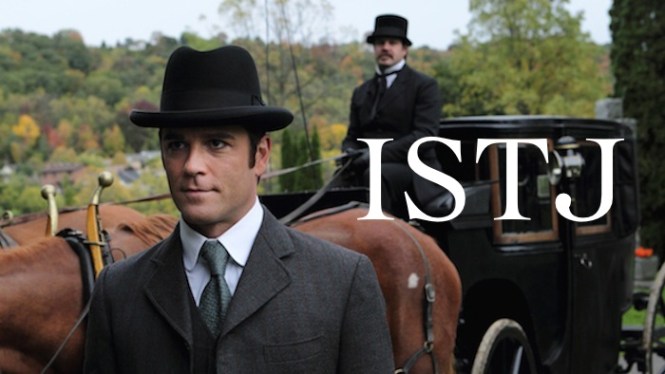
Dominant Introverted Sensing (Si): Detective William Murdoch is a very serious, by-the-book, conventional man who is deeply attached to his Catholic religious upbringing. He has a strong sense of duty guiding him when he has to make difficult and personal choices: he chooses justice over stopping the marriage of the woman he loves. He upholds the law to a tee, always tells the truth (even when it leads to freeing a guilty criminal), and minutely follows criminal and scientific procedures. From very early on, Murdoch has developed a keen interest in scientific knowledge, spending so much personal time absorbing all kinds of information through this hobby that he became an expert without consciously wanting to.

Continue reading

Lucius Malfoy: ISTJ

Guest Post by Andrew, ENTJ

Harry Potter, J. K. Rowling

Dominant Introverted Sensing (Si): Lucius regards heritage as being all-important. He thinks of wizards and witches from old magical families as the most valuable people, while disdaining “mudbloods,” or witches and wizards from muggle families. Moreover, he maintains that some wizarding families (like his own) are better than others (like the financially strapped Weasleys). Lucius has nothing but a dismissive contempt toward the lowest of the low in wizarding society, such as house elves, which has cost him dearly on occasion; in particular, his careless attitude toward his own elf, Dobby, has blinded him to his servant’s frequent attempts to aid Harry and to pass forbidden information to his political enemies. However, in contrast to his lackadaisical attitude toward the underlings of his world, Lucius has a keen sense of the rules of the game in any situation, which has allowed him to get away with a great deal, all while becoming well-connected at the Ministry of Magic.

Continue reading

Miss Havisham: ISTJ

Guest post by Key Lime Pi, INFP

Great Expectations

fdf0c98ef727ef2968a901cacce0100b

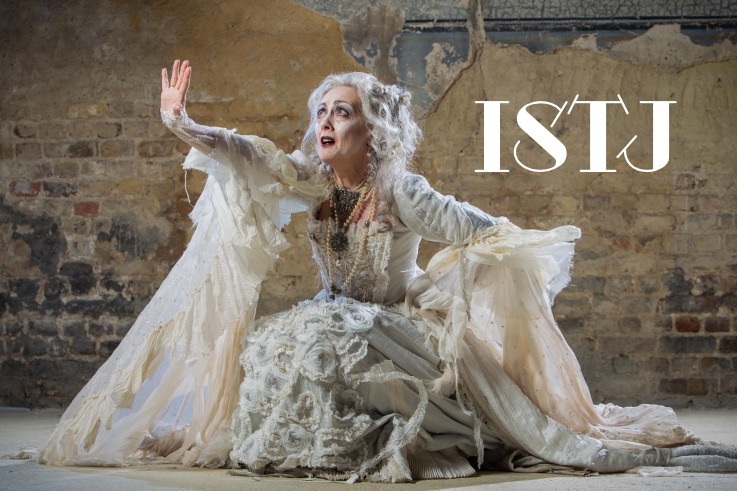
Si: Miss Havisham is fixated on the past, so much so that she keeps her entire house exactly as it was on the day of her canceled wedding, even as it disintegrates around her. She approaches her entire life based on her experience with tragedy in love, trusting a select few people (Estella, Mr. Jaggers, Pip) and raising Estella for the sole purpose of breaking the hearts of men. However, she still allows a few visitors whom she knows from her past, like Miss Camilla, even if she doesn’t like them. Continue reading

Rey – Star Wars: ISTJ

Guest Post by Jessica Prescott, INFJ

Star Wars:  The Force Awakens

Rey ISTJ | Star Wars #MBTI #ISTJ

Introverted Sensing (Si):  The single most important influence on Rey’s thought processes and decision-making is her attachment to the past.  She endures a comfortless existence on Jakku, sustained solely by the hope that the family who abandoned her there fifteen years earlier will one day return to find her.  So tenaciously does she cling to this belief, in fact, that even after narrowly escaping from Jakku with her life, Rey’s first reaction is to insist on returning there as soon as possible: “I’ve been gone too long already.”  Rey is also an avid collector of legends and lore about the old days of the Jedi, and she clearly respects Han Solo for the part he played in those stories (a respect which Se-user Finn does not share).  She has an excellent memory for detail and can give Han an exact history of everything that has happened to the Millennium Falcon since it’s been on Jakku (including all the repairs/alterations it has undergone). Continue reading

Eustace Clarence Scrubb: ISTJ

Guest Post by E. J., INTJ

The Chronicles of Narnia, C.S. Lewis

Eustace Scrubb ISTJ | The Chronicles of Narnia #MBTI #ISTJ

Dominant Si: Eustace initially behaves in ways that do not reflect the customs of English society as a whole because he is used to the behavior of his parents, who have tried to raise him in a way that they consider modern and progressive. In reality, they have accidentally stunted Eustace’s imagination and emotional life, making him unable to enjoy socializing with normal children. When Eustace is transported to Narnia with his cousins Edmund and Lucy, at first he cannot adjust to the fact that he is in a place where his parents’ preferred way of life might hamper his own survival. He insists that a British Consulate must be located somewhere in the area and believes that things on the Dawn Treader are not being done properly. Fortunately, Eustace eventually realizes that the customs of Narnian society make more sense than those taught to him by his parents. He changes his behavior and becomes a much more pleasant person in both Narnia and England. Continue reading

William Murdoch: ISTJ

Guest Post by Fanta, INTJ

Murdoch Mysteries (TV series)

William Murdock ISTJ | Murdock Mysteries #MBTI #ISTJ

Si: Detective William Murdoch is a very serious, by-the-book, conventional man who is deeply attached to his Catholic religious upbringing. He has a strong sense of duty guiding him when he has to make difficult and personal choices: he chooses justice over stopping the marriage of the woman he loves. He upholds the law to a tee, always tells the truth (even when it leads to  freeing a guilty criminal), and minutely follows criminal and scientific procedures. From very early on, Murdoch has developed a keen interest in scientific knowledge, spending so much personal time absorbing all kinds of information through this hobby that he became an expert without consciously wanting to. Continue reading