INTJs: How to develop your Se function

Bryony asked: I am an INTJ with an unhealthy Se function. Out of curiosity, is it possible to change this?

Yes it is.

I had a very unhealthy Se function at one point in my life –so unhealthy in fact, that I wasn’t using it at all (I’ll let your imagination fill in the connotations of that happenstance). Here are some tips for developing an unhealthy Se function. Continue reading

More INTP vs INTJ

Ameya Ravindra Nadkarni asked: How to tell apart between an INTP and INTJ?

I have always been a analytical person, who can see a particular job done in a better way . But always procrastinate it due to even a minor flaw in the plan or method. Though I learn new things to be used for practical purposes, I may never use that knowledge unless I gain complete understanding and mastery over that subject. I have been given sometimes INTP as a result  of my personality tests and been given quite times INTJ as result with a slight preference of judging over perceiving. I am confused and hoping for your advice. Sorry for violating the rule for asking a personal question and for my grammatically improper English but I really need some advice.

If you haven’t yet, review my other INTP vs INTJ post. It’s much more detailed than this one.

I think, for the most part I understand your question –if I translated wrong, don’t hesitate to correct me. Fortunately for you, this isn’t the type of personal question that’s against the rules.

There is a strong possibility that you’re prone to locking into your shadow functions. In terms of how to tell which type you are, these are the questions you need to be asking.

Am I goal-oriented? When I set out to accomplish a goal, do I plan out all the steps and pursue them intricately (NiTe)? Or do I go about it through improv and plan steps as they come (NeTi)? Do I focus on my dreams as fixed realities that I am responsible for making happen (NiTe)? Or do I look at my dreams as grand possibilities that I could, and would like to make happen (NeTi)?

Am I efficient in practice or in theory (Te vs Ti)? When I see something that could be improved, do I ask myself whether its necessary before setting out to change it (Te)? Are my improvements more innovative (NeTi), or are they more practical (NiTe)? Do I tend to theorise about improving things without ever doing anything to fulfil those visions (Ti)?

Do I procrastinate because my plan must be over-perfect before I proceed? Or because I literally don’t know where to start with carrying it out (Ti)? (Be objective when you ask yourself this).

Also, I would suggest taking a look at my INTP vs INTJ post. (The search bar is there for a reason).

C.S. Lewis: INTJ

Guest post by E. J., INTJ

C.S. Lewis INTJ | The Book Addict's Guide to MBTI

Dominant Ni: C. S. Lewis had a relatively narrow set of interests, primarily focusing on academic topics and especially medieval and Renaissance literature. A high school tutor told Lewis’s father that Lewis could become a scholar, but little else. Symbolism was important to Lewis: his favorite genres of literature (epic poetry, fantasy, and science fiction) were filled with it. He infused a great deal of very blunt symbolism (NiTe) into his own fictional works, especially the Chronicles of Narnia. Many of his other works are philosophical in nature, and C.S. Lewis was fond of discussing ideas with the Mastermind group that he engineered as a college student (the organisation part of this would be Te). Continue reading

xxTJ? Or when it’s Just Your OCD Talking

Laurie asked: I’ve always considered myself (and been described as) INTJ, but I also have OCD, and you said in a post that every person with OCD will score as a TJ. I know that you can’t just magically type me without knowing me, but I would really like to find out if I *really* am an INTJ, or it’s just my illness that makes me act in a certain way (though I always recognized my thought process as that of an INTJ, not my actions necessarily). How do you go about typing characters who have mental illness? I know you always try to “separate” the two things and recognize the real type that might be hidden by the illness – are there particular questions I might ask myself, or things I might notice in my actions/thoughts etc.?

I know I shouldn’t give to much importance to my type – I myself use it more as a very useful tool to write plausible fictional characters than anything else – but recognize who I really am might help me overcome things and thought processes that are not “mine” but come from my condition…in a way, I believe I simply don’t want to be defined by my OCD, but recognize who I truly am, in spite of everything else. Thank you!


I don’t know the exact nature of your OCD, so I’m going to do the best I can at a generic, but applicable response.

I would suggest trying to pay attention to what you’re like when you’re less affected by your OCD (if possible). The particular function that tends to be associated most heavily with OCD is the Si function, simply because it likes to pay attention to minute details that intuitive upper functions don’t. Continue reading

xNTP vs xNTJ Writing

Morally Relative Midnight asked: As someone who engages in creative writing frequently, how would you differentiate between INTJ and INTP writing styles? How would an INTJ’s tertiary Fi and an INTP’s tertiary Fe manifest themselves in a creative writing assignment or just any writing project in general?

Now that’s what I call a question.

Best examples of INTJ writing I can think of off the top of my head are Ayn Rand, Jane Austen, Flannery O’Connor and Ralph Waldo Emerson. Some good examples of INTP writing include Edgar Allan Poe, Terry Pratchett and Douglas Adams. Continue reading

My Friend Group as an INTJ

Pejar asked: “As an INTJ, what is your friend group like? Are there certain types that you gravitate towards or that gravitate towards you? Like, do you have other INTJ friends? And do you make friends differently than other types?”

Which types am I most likely to be friends with?

My current room-mates, an INFJ and ISFP, were handpicked by me –and by handpicked, I mean my Te took over, organised a flat and then told them they were living with me. They were both fine with that. Generally, my friend group has one INTJ (me) and a whole bunch of INFxs and couple of ISFPs, occasionally allowing for a few tagalong xxxxs.

The most likely reasons for this are as follows: Continue reading

Do I relate to INFPs?

Elise Ann asked: How do you relate to INFPs? you must find us exhausting

I do find you exhausting. You burst out with seemingly random topic changes while I’m still philosophically analysing something you said two hours ago. Also, your emotions…dear me, they are everywhere…

But yes, there are a few ways that I relate to INFPs (not drastic ways, just subtle ones).

The main way that I relate to INFPs in the persistent Fi desire to do the right thing. Of course, we go about it vastly differently, but the goal is the same.

Secondly, there is the often frequent drive for creativity –which, as a writer, artist and Ni user, I relate to regardless of whether the creativity stems from an Ni or Ne function. Both types of intuition can be vastly creative, just in different ways. Many make the mistake of assuming that only Ne is creative, and that Ni is merely a goal setting function –this is based on a limited understanding of MBTI.

Ni presents more of a focused and vision oriented creativity while Ne presents an unexpected and possibility based creativity.

Johnny Cade: INTJ

Guest post by Andrew, ENTJ

The Outsiders, S. E. Hinton

Johnny Cade INTJ | The Outsiders #MBTI #INTJ

Introverted Intuition (Ni): Johnny needs a realistic vision of a better life for himself for his life to have purpose.  Unfortunately for him, at the beginning of the book, he lives in poverty with abusive parents; there is no exit strategy, no glimmer of hope for a brighter future.  It is only after breaking his back, lying in a hospital bed facing his own death, that Johnny’s will to lives starts to show.  Even after bowing to the inevitable, Johnny makes a last-ditch effort to make things better: for his best friend, Ponyboy, Continue reading

INTJs: How to deal with Low Self-Esteem and Emotional Emptines

Asthma asked: As an intj how do you deal with :
– lack of confidence/ low self-esteem.
– emotional emptiness.

Low Self-Esteem

I’ve never had a problem with low self-esteem myself, but I suspect that my methods for dealing with self-criticism could apply to your question just fine.

My interior monologue often runs along these lines: Why don’t I feel anything? Why don’t I care that this person in front of me is crying? Am I a bad person? Did l have to say that? It may have been true, but it wasn’t kind. I am a terrible friend. etc.

Here’s how I deal with it. Continue reading

How INTJs cope with Trauma

How INTJs cope with Trauma

There is no defined route traveled by every traumatized individual, and variations range so widely even within the INTJ realm that all we can really observe are the patterns. Continue reading

Mr. Darcy: INTJ

Pride & Prejudice, Jane Austen

ESFJ: Why don’t you want to come?

ME: I am the Mr. Darcy of your friend group.

Ni: Mr. Darcy hates crowded places, conventional parties, and pretty much anything that requires him to converse amiably with other human beings. Yet, he has a profound understanding of other people and can size up their character very quickly. He’s rather prideful, but is able to come to terms with his judgements being occasionally inaccurate. His focus is narrow and he prioritizes to prevent the potential tragic consequences that he foresees occurring as a result of current events. Darcy is usually ten steps ahead of the game with regards to knowing what will happen next.  He is always planning for the future and tends to get caught up in his visions as opposed to enjoying the present moment. Continue reading

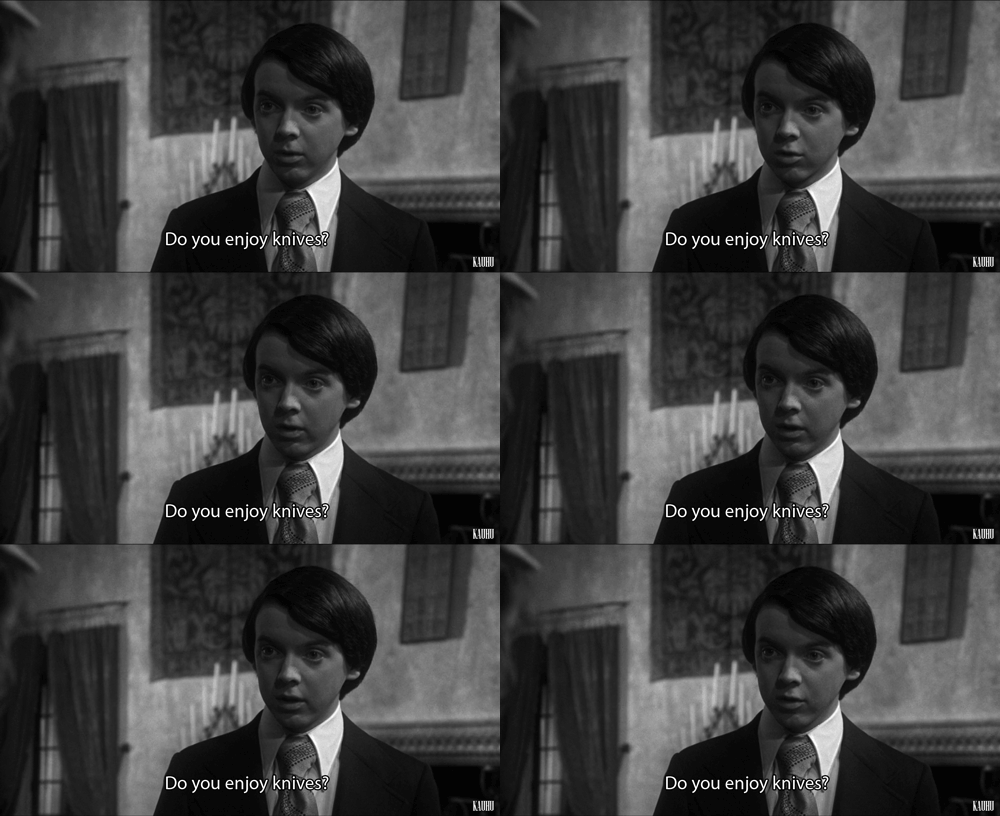
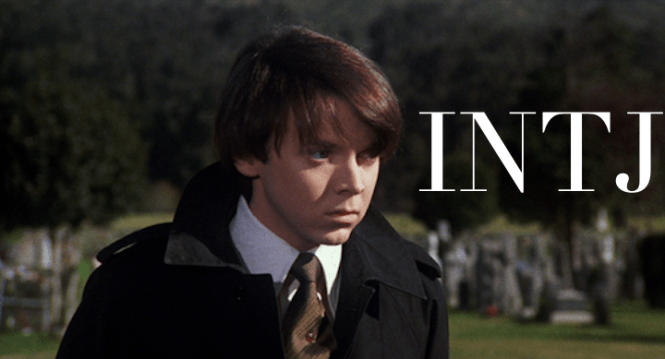
Harold Chasen – Harold and Maude: INTJ

Harold and Maude

Harold Chasen INTJ | Harold and Maude #MBTI #INTJ

Ni: No matter who it is that’s trying, nobody can convince Harold to take the course of conventional lifestyle, and if they try to force it on him, he acts to prevent it. Harold likes to play games with people, testing their gullibility and sense of humour with his suicides. He is obsessive about the world of death, suicide and funerals and spends his free time exploring that world. Continue reading

Atticus Finch: INTJ

Atticus Finch INTJ | To Kill a Mockingbird #MBTI #INTJ

Introverted Intuition (Ni): Atticus has great foresight when it comes to both the consequences of his actions and of other people’s. He predicts danger to Mr. Robinson and heads to the prison to prevent it. He’s aware of the trial’s eventual outcome long before it presents itself, but goes through with it regardless because of his idealism. Atticus’s long-term vision extends well beyond his own lifetime and into a future in which America is a land of equality, and he proceeds to live the ideals of that future rather than fitting into present moral guidelines. Continue reading