

Subscribe to continue reading
Subscribe to get access to the rest of this post and other subscriber-only content.

Subscribe to get access to the rest of this post and other subscriber-only content.
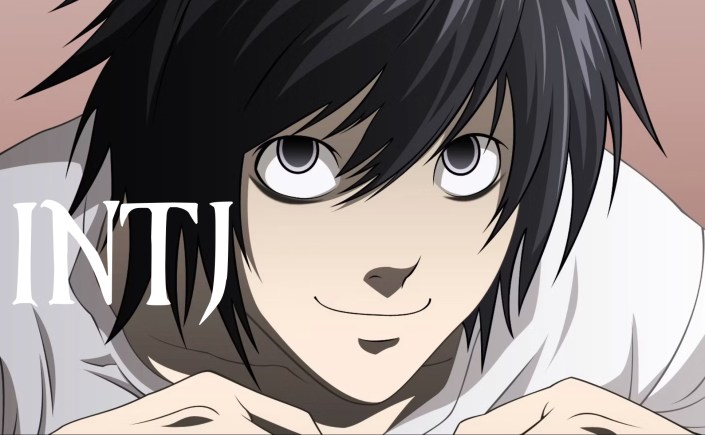
Guest Post by Oliver Greenwood, INTJ
Dominant Introverted Intuition (Ni): As the number one detective in the world, L uses his Introverted Intuition first and foremost to solve a case, intuitively coming to a conclusion near the outset and afterwards spending time and effort to prove his impressively accurate hunches. In a ploy to determine Kira’s whereabouts, a ploy L is prepared to use worldwide, one zone at a time. L succeeds on his first try. When L states that he is 5% sure that Light is the real Kira, he is actually 100% sure (Ohba, Tsugumi (2008). Death Note 13: How to Read) but he lacks the proof to convince others. In spite of proof to the contrary, L continues to suspect Light when everyone else has moved on. L has a single-minded determination to catch Kira, putting other cases aside and going to extreme lengths to catch him, to the point that he has an entire skyscraper built to serve this single case. In general, his lifestyle is built around solving cases, and his surroundings are often Spartan despite his affluence. He tends to ignore his appearance, as well as the general perception people have of him, but he typically has an explanation for his odd behaviour (he claims his habit of crouching increases his mental faculties, and he continues in that posture even though Japanese culture highly values proper posture).
Continue reading
Become a paid subscriber to get access to the rest of this post and other exclusive content.

Guest Post by Arthur, ENTP
Dominant Introverted Intuition (Ni): Doran’s political career is largely characterized by two components: precaution and long-term planning. Those two characteristics are key to understanding his political actions. His Ni is especially easy to spot if you look at his goal of restoring the Targaryen dynasty to the Iron Throne. He plots over decades and contacts various magisters in Essos, as well as Willem Darry, then protector of Viserys and Daenerys, with whom he made a deal to marry Arianne when Viserys is ready to claim the rulership. So over decades, his political goals remained unchanged, them being revenge on the Lannisters and restoring Viserys III, and later Daenerys to the throne.
Continue reading
Guest Post by Andrew, ENTJ
Dominant Introverted Intuition (Ni): From a young age, Trip wants to train and battle with Pokemon. More specifically, he wants to defeat Alder, the champion of the Unova region, in a Pokemon battle from the time he meets his one-time hero in early childhood. Trip always has an idea of how every battle will end before it even starts, and he uses this ability to judge which battles will help him improve the most (Ni-Te). To Trip, experience and popularity are not necessarily indicators of strength; at the very beginning of his journey, he battles Ash, who has already battled a great deal before, with the full intention of winning––which he does. As Trip himself gets stronger, he starts to believe that he can and will defeat anybody, even regional champions; to prove his point, he chooses a poor strategy in his long-awaited match with Alder, insisting that the result would be the same no matter what. Trip is a largely defensive trainer who lets his opponents attack him first instead of trying to seize the initiative right away in battle.
Continue readingCatgyrl asked: ENFP here! I feel guilty for judging other people and it seems like INTJs don’t feel that way. You probably have some long thought process about this and I’d love to hear it. Sorry if that’s not really a question :)

First of all, judgement is a necessary action for those of us who have any of intentions of helping or getting to know our friends. It also serves to protect us against people who would hurt or use us, but judgement is more than people make it out to be. The type of judgement that popular culture and religious organizations encourage us to refrain from is what I would like to call unrighteous judgement. And it’s true that type of judgement can be extremely hurtful, so it’s not only wise but important for our ethical well-being.
Judgement is not so narrow a field, however, that it does not also include a spectrum of righteous judgement, and as someone with an INTJ personality, this just so happens to be somewhat of a strong point for me. I shall endeavour my best to explain the concept in such a way as to make it understandable and doable. Continue reading
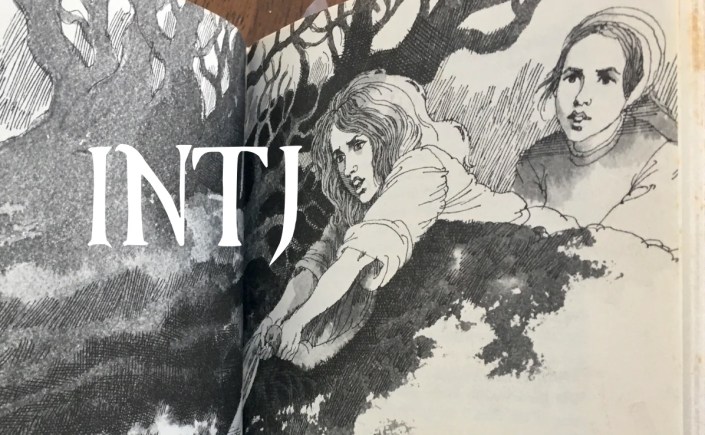
Guest Post by E.J., INTJ
Dominant Introverted Intuition (Ni): As a young woman in Tudor England, Kate’s ability to shape her future is somewhat limited. Her role as a royal maid of honour means that she has to follow orders, regardless of her personal opinions. Kate does, however, have a strong future orientation. To prevent Christopher Herron from becoming unhealthily detached from reality during their imprisonment by the Fairy Folk, Kate forces him to plan ways to rebuild the deteriorating manor he has been longing to buy. She also refuses the Lady’s initial reward offer because she recognizes that its ultimate effects would be damaging. Kate is unusually good at putting together big-picture ideas. While Cecily’s relatives have accepted Cecily’s supposed death, only Kate—a newcomer to the area—is able to piece together what actually happened.
Continue reading
Guest Post by Kerissa, INFJ, Justice and Writeousness
Dominant Introverted Intuition (Ni): Childermass is perfectly content playing the long game, waiting for Strange’s and Norrell’s disagreement to pass before surfacing as a magician. He’s good at knowing when someone’s lying or not, like believing Vinculus’s five wives when they said they didn’t know about the Book and disbelieving Lascelles’s story of Drawlight. When with Vinculus, he’s the one trying to figure out the one right answer to something while Vinculus sees all the possibilities.
Continue readingBecome a paid subscriber to get access to the rest of this post and other exclusive content.

Guest Post by E.J., INTJ
Dominant Introverted Intuition (Ni): Most young children with parents like Matilda’s would accept their behavior as normal, as Matilda’s older brother does. Matilda, however, figures out that her father is being dishonest and correctly guesses that his behavior may get him in trouble. She also sees that her mother’s belief that women should be primarily interested in their looks has gotten her mother nowhere, and Matilda–not yet six years old–knows that she wants her life to be different. Matilda correctly intuits Miss Trunchbull’s past misdeeds and develops an out-of-the-box plan to deal with her. Matilda has an incredible ability to concentrate, which she applies both to her academic interests and in strategies she develops for daily life. Although Matilda is deeply unconventional, she understands the long-term value of blending into society. As a result, most adults overlook her more nefarious plots.
Continue readingBecome a paid subscriber to get access to the rest of this post and other exclusive content.
Become a paid subscriber to get access to the rest of this post and other exclusive content.

This post is dedicated to my readers that want to understand INTJs, but are less familiar with Jungian cognitive functions. I understand that the functions are difficult for newbies to navigate, so I’m making your life easier.
When I say this, I don’t mean that we don’t value human companionship. In fact, I would argue to the contrary. However, our introversion causes us to drain our energy as we attempt to socialize. Our energy stems from within ourselves rather than from being with other people. We value solitude, silence and thought.
To us, silence truly is golden.
As a result, parties are definitely not our favourite place to be and when forced to be in such an environment, we tend to stick to the sides of the room rather than gravitating toward the centre. We are extremely conscious of our personal space and absolutely hate being touched (in any way, shape or form) without our permission. Likewise, incessant noise drives us mad, prevents us from thinking and makes us want to scream at everybody to “shut up.”
We find it astounding that some people can manage to say the same thing three times in different words or that someone can fill an hour of time with words that mean nothing. We value conciseness when it comes to speaking, such that we say nothing more than what needs to be said (and sometimes we can’t even say that much).
Become a paid subscriber to get access to the rest of this post and other exclusive content.
Jannelle67 asked: I often meet people claim to be INTJs who really aren’t when you get to know them (as opposed to people who seem more like INTJs once you get to know them). Which types are most likely to be INTJ posers like this?

Really, any type could try to pose as an INTJ, and could probably convince themselves they were an INTJ if they ignored the evidence well enough. The gal who writes funkymbtifiction did this for years (and then moved on to consecutively convince herself that she was every other type as well). Continue reading
 The Book Addict's Guide to MBTI: