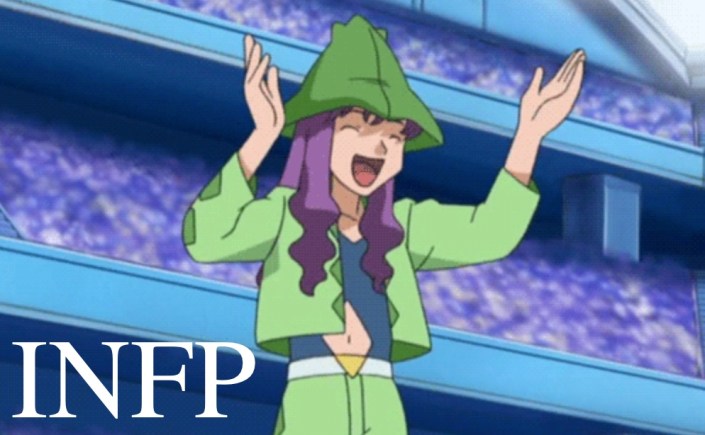
Harley – Pokémon: INFP

Guest Post by Andrew, ENTJ

Pokémon Anime Franchise

Dominant Introverted Feeling (Fi): Harley lives in a reality where feelings are paramount – and only his own, not anyone else’s. In fact, he has a tendency to blow trivial hurts out of proportion and to hold grudges for ridiculous reasons. He doesn’t only hate the girl who stole his snack in school, but also the girl who looks exactly like her (May). He has a vendetta against May for no other reason than this; he does everything in his power to humiliate her in public and derives pleasure from her embarrassment. Harley gives captivating contest performances which engage the emotions of the audience, but he opts to work with their fear and shock rather than their wonder and admiration. He is individualistic in both his clothing style (derived from his favorite Pokemon, Cacturne) and his effeminate mannerisms.

Continue reading

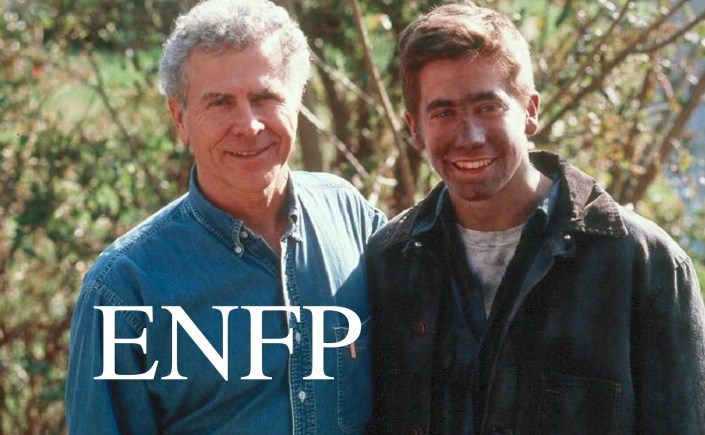
Homer Hickam: ENFP

Guest Post by Jessica Prescott, INFJ

October Sky

Dominant Extroverted Intuition (Ne): Homer Hickam is nothing if not a dreamer. He loves new ideas, hates to be cooped up in a small mining town, and, more than anything, longs for a glimpse of the “outside world.” His original (and strongest) motivation to carry out his rocketry project is not a desire to understand how rocket science works, but simply a romantic fascination with the mere idea of rocketry—the idea that human beings can be capable of sending objects up into space. He isn’t shy about sharing his dreams with others, either, but is perfectly willing to blurt out his latest plan at the breakfast table: “I’m gonna build a rocket.” One of Homer’s greatest assets is his optimism—his ability to see possibilities where others see only obstacles. Even though no student from Coalwood has ever won the science fair before, Homer is firmly convinced that he and his friends can pull it off—and he manages to convince them to believe it, too.

Continue reading

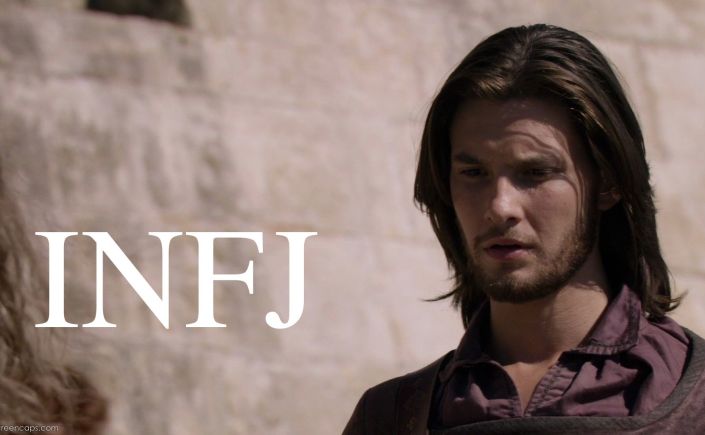
Prince Caspian: INFJ

Guest Post by E.J., INTJ

The Chronicles of Narnia, C.S. Lewis

Dominant Introverted Intuition (Ni): Caspian is a dreamer. As a little boy, his nurse’s stories of Old Narnia capture his imagination, and Caspian’s view of the world is shaped by the stories. Rather than basing his value system on what he sees his uncle Miraz doing, Caspian’s ideals are formed by the heroic legends his nurse repeats to him. Caspian has no strong reason to believe that the old days could return until after he wakes up in the dugout of Trufflehunter, Trumpkin, and Nikabrik. Regardless, he prefers the Narnian moral code, even if he never meets a full-blooded Old Narnian. From a relatively young age, Caspian is driven to accomplish things that other people consider impossible. He successfully defeats Miraz and reawakens Old Narnia—despite the initial superiority of the Telmarine forces—and, as king, he goes on a difficult voyage to find seven Telmarine lords who disappeared when he was a small child. Near the world’s end, Caspian’s imagination almost gets the better of him. He is so fascinated by the thought of traveling to Aslan’s country that he wants to abandon his kingship and continue eastward. Aslan must directly intervene to prevent Caspian from abandoning his responsibilities to follow his imagination.

Continue reading

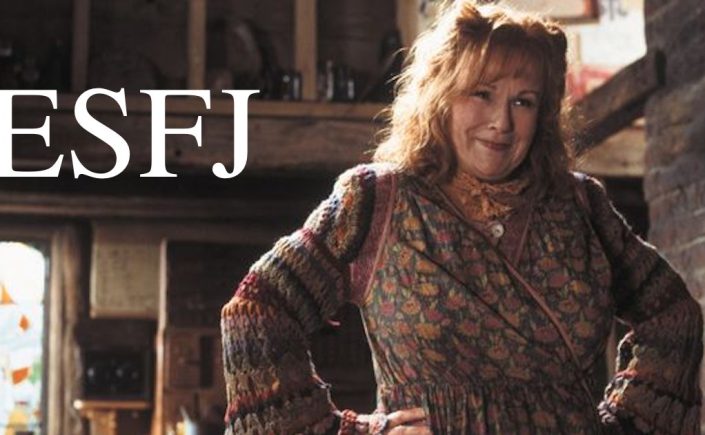
Molly Weasley: ESFJ

Guest Post by Andrew, ENTJ

Harry Potter, J.K. Rowling

Dominant Extroverted Feeling (Fe): Molly is all about family, and she always tries her best to keep hers together. She arranges vacations to visit her sons who live abroad, and she takes it very hard when Percy cuts ties with everyone else. Her worst fear is losing loved ones, rather than suffering some misfortune herself. When she sees Harry by himself, Molly is immediately sensitive to what she thinks he must need (she forbids her children from staring at him like some mythical creature), and she all but adopts him into her family. Molly puts a lot of stock in social standing; she is glad when her husband gets a promotion to a big job that takes him away from his own passion, and she wants her children to have successful careers as well. Molly is openly emotional, and she will always make her feelings abundantly clear.

Continue reading

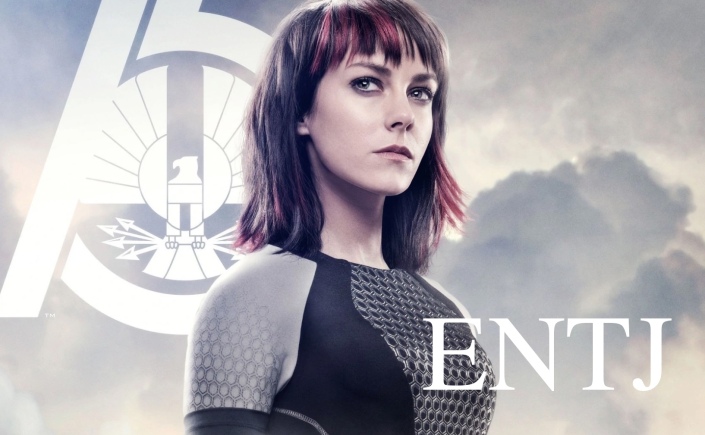
Johanna Mason: ENTJ

Guest Post by Kerissa, INFJ

The Hunger Games

Dominant Extroverted Thinking (Te): At the interviews for the 75th Hunger Games, Johanna is the first to directly question if the games could be changed. She’s very blunt. For example: when Katniss is explaining canaries in coal mines, Johanna asks, “What’s it do, die?” She also says, “I’m not like the rest of you. There’s no one left I love.” In District 13, she’s the one who makes Katniss stick with training through a mixture of ‘motivational insults’ and pushiness.

Continue reading

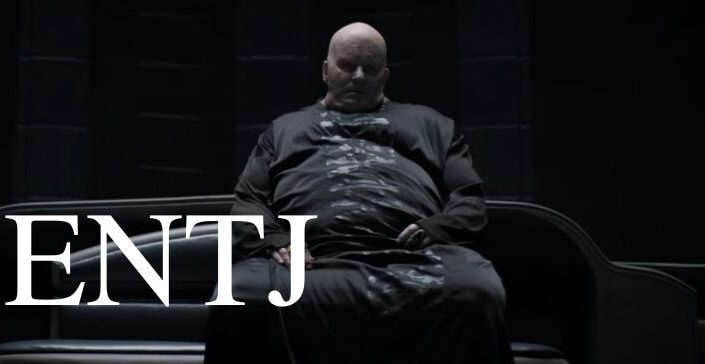
Baron Vladimir Harkonnen: ENTJ

Guest Post by Andrew, ENTJ

Dune, Frank Herbert

Dominant Extroverted Thinking (Te): Baron Harkonnen wants nothing less than the imperial throne, and he goes after it in a systematic fashion. His allies and even his family members (except maybe Feyd-Rautha) are mere pawns in his game, and his enemies are nothing more than obstacles to be overcome – or to be destroyed utterly. He has a brutal, ruthless way of dealing with everyone, and he gives direct orders to his subordinates. The baron is extremely resourceful, and he will add anyone whom he believes will be of use to his retinue; he even takes Thufir Hawat, the chief strategist of his slain arch-enemy, Leto Atredies, to be his adviser after the death of his own strategist.

Continue reading

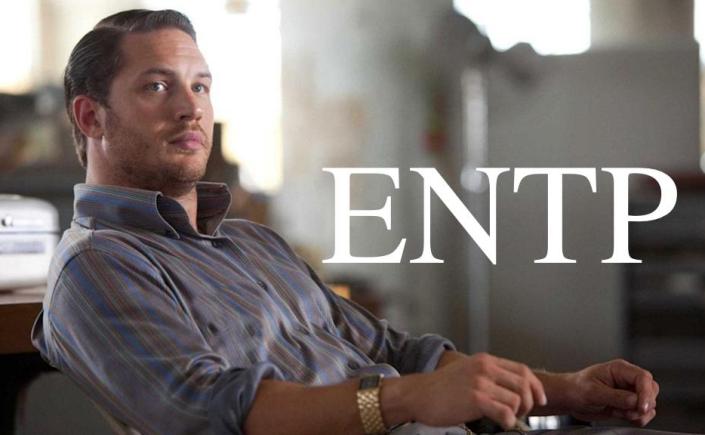
Odysseus: ENTP

Guest Post by E.J., INTJ

The Iliad & The Odyssey

Dominant Intuition (Ne): Odysseus is a man of new ideas, and this accounts for his resilience during the Trojan War. When everyone else, even Agamemnon, is exhausted, Odysseus continues to see positive possibilities in their situation. He is the most insistent supporter of the war––not because of an Ni-style drive, but through his Ne focus on new potential. Odysseus’ Ne gives him the enthusiasm to put new energy in his war-weary fellow Greeks. After the war is over, Odysseus sails around, following a string of new ideas, rather than heading straight home like most of the other Greeks.

Continue reading

INTJ: The Good, the Bad and the Ugly

This post is dedicated to my readers that want to understand INTJs, but are less familiar with Jungian cognitive functions. I understand that the functions are difficult for newbies to navigate, so I’m making your life easier.

Fact #1 People empty us.

When I say this, I don’t mean that we don’t value human companionship. In fact, I would argue to the contrary. However, our introversion causes us to drain our energy as we attempt to socialize. Our energy stems from within ourselves rather than from being with other people. We value solitude, silence and thought.

To us, silence truly is golden.

As a result, parties are definitely not our favourite place to be and when forced to be in such an environment, we tend to stick to the sides of the room rather than gravitating toward the centre. We are extremely conscious of our personal space and absolutely hate being touched (in any way, shape or form) without our permission. Likewise, incessant noise drives us mad, prevents us from thinking and makes us want to scream at everybody to “shut up.”

We find it astounding that some people can manage to say the same thing three times in different words or that someone can fill an hour of time with words that mean nothing. We value conciseness when it comes to speaking, such that we say nothing more than what needs to be said (and sometimes we can’t even say that much).

Continue reading

A Riddle for an INTJ

Once upon a time, I was a seventeen-year-old, bored out of my mind, even in my college-level classes. This boredom morphed into a sort of cosmic angst, anger at the fact that I was sitting in a classroom memorizing facts when I could be problem-solving somewhere else.

One of my siblings tells me I looked like Sherlock pounding around the living room asking for a case.

Boredom is a very dangerous thing in immature INTJs because we’ll do pretty much anything to stop being bored (so long as it doesn’t violate our principles).

In 2014, @Ockham’s Chainsaw linked me to a post they’d written on the topic of intelligence, mentioning that NT types are often reluctant to say, “I can’t do it,” or “I don’t know,” when taking a test because they have firm confidence in their ability to figure the problem out, even if they don’t know the answer.

The following piece of writing consists of the notes I recorded while solving the Einstein Riddle to stop being bored when I was in high school, and it’s a perfect example of Ockham’s idea.
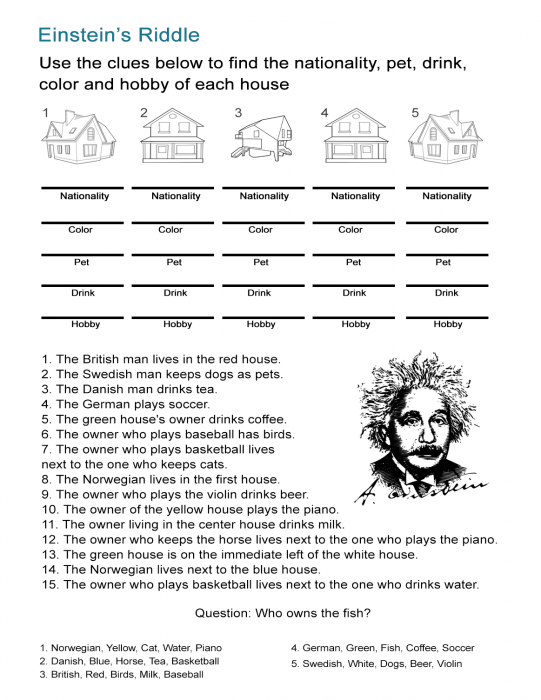
Actually, it is easy. You just have to believe it. The problem with the 98% of people who can’t solve this riddle is that they lack the patience and the solid logic necessary to tell themselves that they can do it. As it turns out, I fall into the 2% that can effectively solve this riddle without googling instructions (since that’s no fun for an INTJ).

Come on, people. If you think you can’t do it, you’ve been watching too much telly.

I started with what I knew for sure.

  • House 1 = Norwegian
  • House 2 = blue (because the house next to the Norwegian is blue)
  • house 3 = Brit/red (because the middle house drinks milk –> green and white have to be next to each other and green drinks coffee, so it couldn’t be them)
  • House 4 = green (because green is on the left of white)
  • House 5 = white

Next, using a graph, I decided to slowly decipher various details about each:

  • House 1 = yellow (since I knew all the other colours) –> The yellow house owner smokes Dunhill
  • House 2 owns a horse (because the horse lives next to Dunhill)

Next, I made a graph of what I knew (in order of houses):

COLOUR Yellow Blue Red Green White
Pet Horse
Cigar Dunhill
Drink Milk Coffee
Nationality Norwegen Brit

I knew then that the water drinker could only belong at the yellow house because:

  1. Yellow doesn’t drink beer (beer is paired with Bluemaster and we know that yellow smokes Dunhill)
  2. He doesn’t drink tea (because the Dane drinks tea, not the Norwegian)
  3. The only option left was water

From this, I determined that the Blue house-owner smokes Blend (because Blend is neighbors with water).

Next, I looked specifically at one clue: the owner who drinks beer smokes Bluemaster

  1. Blue doesn’t drink beer because he smokes Blend
  2. Green drinks coffee and red drinks milk, so neither smoke Bluemaster
  3. Therefore, White drinks beer and smokes blue master
COLOUR Yellow Blue Red Green White
Pet Horse
Cigar Dunhill Blend Bluemaster
Drink Water Milk Coffee Beer
Nationality Norwegen Brit

Well, there was one obvious hole there…looks like blue drinks tea and is a Dane….

I deduce that the German lives in the green house because:

  • he can’t live in the blue house because he smokes Prince, not Blend
  • he doesn’t smoke Bluemaster, so he doesn’t live in the white house

Red must be the bird owner, because the bird owner smokes Paul Mall and all the other cigars are taken

Yellow owns the cat because blend has a neighbor who owns a cat (and we’ve now determined that it’s not red because red owns the bird)

COLOUR Yellow Blue Red Green White
Pet Cat horse Bird
Cigar Dunhill Blend Paul Mall Prince Bluemaster
Drink Water Milk Coffee Beer
Nationality Norwegen Brit German

We can easily see from looking at the graph that the only place left for our tea-drinking Dane is Blue.

That leaves white to be the dog-owning Swede and the green to own the fish.

COLOUR Yellow Blue Red Green White
Pet Cat Horse Bird Fish Dog
Cigar Dunhill Blend Paul mall Prince Bluemaster
Drink Water Tea Milk Coffee Beer
Nationality Norwegien Dane Brit German Swede

The German owns the fish!

Barry – Pokémon: ESTP

Guest Post by Andrew, ENTJ

Pokemon Anime Franchise

Extroverted Sensing (Se): Barry is notoriously hyperactive. He runs when anyone else would walk, and he does not look where he is going, often colliding with Ash when they meet. His battling style is flashy and very aggressive. He attacks with abandon, and he builds up his Pokemon’s speed so as to land hits fast. Barry has no concept of gradualism, asserting that he wants to be the best trainer there is in the least possible time. Similarly, in individual battles, he is often overconfident, stating that nothing can or will stop him from winning. Barry is extremely competitive and wants to prove himself through head-to-head battles. He maintains that data used to analyze trainers is useless if not constantly kept up-to-date, as trainers’ strengths and strategies change constantly.

Continue reading