John Childermass: INTJ

Guest Post by Kerissa, INFJ, Justice and Writeousness

Jonathan Strange and Mr. Norrell, Susanna Clarke

Dominant Introverted Intuition (Ni): Childermass is perfectly content playing the long game, waiting for Strange’s and Norrell’s disagreement to pass before surfacing as a magician. He’s good at knowing when someone’s lying or not, like believing Vinculus’s five wives when they said they didn’t know about the Book and disbelieving Lascelles’s story of Drawlight. When with Vinculus, he’s the one trying to figure out the one right answer to something while Vinculus sees all the possibilities.

Continue reading

How to Differentiate Between Judging/Perceiving, Introverted/Extroverted

Subscribe to continue reading

Subscribe to get access to the rest of this post and other subscriber-only content.

Derek Morgan: ENTJ

Guest Post by Occam’s Chainsaw, INTJ

Criminal Minds

Dominant Extroverted Thinking (Te): Derek has a rational approach to the world, preferring logic to feelings whenever he has to make a choice. When they get a call or they are provided new information about the case, he’s among the first ones to react, wanting to take decisive action to find a solution, not out of mere impulsiveness. He wants to cut to the core of things and solve things as fast as possible, no matter the cost. He gets impatient when they were misled or when the investigation is stuck, because it makes him feel ineffective, and there are not many things that could frustrate strong Te users more than inefficiency. Derek wants to find the quickest solution to get rid of the problem as soon as possible. He can be blunt when it comes to stating facts, but since his Fi has developed over the years, Derek knows when to shut up and keep his inspections to himself.

Continue reading

Clemont – Pokémon: INTP

Guest Post by Andrew, ENTJ

Pokémon Anime Franchise

Dominant Introverted Thinking (Ti): Clemont loves machines. He has a whole gym full of gadgets that he’s invented himself, and he invents all manner of technological contraptions while on the road with Ash (Ti-Ne). Clemont’s affinity with machines comes from his view of life as a system to be analyzed and exploited if necessary, and Clemont applies this worldview to all aspects of his life, not just to his tinkering. For instance, he deconstructs Ash’s battle style in order to find weaknesses as part of his preparation to battle his friend. Also, he builds a robot, Clembot, to run his gym for him, and he programs Clembot with a “wish list” of qualities and qualifications that he would like to see in potential challengers.

Continue reading

Edward Fairfax Rochester: ENTJ

Guest Post by E. J., INTJ

Jane Eyre, Charlotte Brontë

Dominant Extroverted Thinking (Te): Rochester is strong-willed and a natural leader, often to the point of behaving in a domineering manner. Even equally wealthy people tend to obey him instinctively, despite his unattractive appearance and frequent neglect of social conventions. Rochester tends to be very direct, to the point that it catches most people off guard. His focus, however, is practicality. This utilitarian viewpoint leads him to hide Bertha’s identity from most people in England. In Rochester’s mind, if making Bertha’s existence publicly known will not benefit either of them, then there is no reason for him to do so.

Continue reading

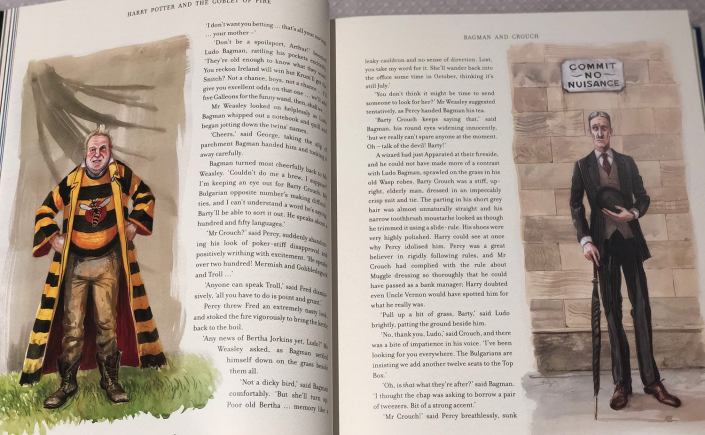
Ludo Bagman: ESTP

Guest Post by Andrew, ENTJ

Harry Potter, J. K. Rowling

Dominant Extroverted Sensing (Se): Bagman used to be a big Quidditch star, owing to his thrill-seeking nature. He played a position (Beater) that requires balance as well as arm strength. Even after leaving the world of professional Quidditch, Bagman still prefers to live life on the edge. He does this mainly by betting; he is a compulsive gambler, especially about Quidditch matches and other sporting events, and he borrows large sums of money in order to cover his gambling debts. Bagman is the announcer at both the Quidditch World Cup and the Triwizard Tournament, owing to two things: his eye for details and his liking for attention.

Continue reading

Lucius Malfoy: ISTJ

Guest Post by Andrew, ENTJ

Harry Potter, J. K. Rowling

Dominant Introverted Sensing (Si): Lucius regards heritage as being all-important. He thinks of wizards and witches from old magical families as the most valuable people, while disdaining “mudbloods,” or witches and wizards from muggle families. Moreover, he maintains that some wizarding families (like his own) are better than others (like the financially strapped Weasleys). Lucius has nothing but a dismissive contempt toward the lowest of the low in wizarding society, such as house elves, which has cost him dearly on occasion; in particular, his careless attitude toward his own elf, Dobby, has blinded him to his servant’s frequent attempts to aid Harry and to pass forbidden information to his political enemies. However, in contrast to his lackadaisical attitude toward the underlings of his world, Lucius has a keen sense of the rules of the game in any situation, which has allowed him to get away with a great deal, all while becoming well-connected at the Ministry of Magic.

Continue reading

Skeeter Phelan: INFP

Guest Post by Emily, INFP

The Help, Kathryn Stockett

Dominant Introverted Feeling (Fi): Skeeter is one of the only people bothered by how the maids are treated. When Mrs. Stein asks her to write a list of things that bother her but don’t seem to bother anyone else, it ends up being a long list. When interviewing Aibileen, she tells her that she is tired of the rules. When she was a kid, visiting Constantine, her mom told her to be nice to Constantine’s neighbours, but Skeeter didn’t know why she wouldn’t be nice to them. When Hilly tells her to write the health initiative for the newsletter, Skeeter eventually tells her she won’t write it. She also paid Pascagoula’s brothers to put the toilets in Hilly’s yard. She has almost no interest in dating and broke up with Stuart after their first date because he said she was writing the Miss Myrna column to get a husband. Although she is writing a cleaning column, she has no interest in learning how to clean. She buys banned books off the black market because “if the State of Mississippi banned them, they must be good.”

Continue reading

Conway – Pokémon: INTP

Guest Post by Andrew, ENTJ

Pokémon Anime Franchise

Dominant Introverted Thinking (Ti): Conway is an intellectual first and last. He takes pleasure in researching statistics for upcoming battles and has the most fun when he is using his brain. Conway never shares his thought processes with others, preferring to work things out in his head rather than thinking out loud (and excluding input from other people). However, after figuring everything out, he proudly shares his conclusions. Conway has a focus on the theoretical foundations of his battle plans; while this gives him creativity beyond that of Ash, Dawn, or Paul (all Te-users), it also causes him to get caught up in his head rather than pay attention to the reality of his situation.

Continue reading

Kenny – Pokémon: ENFJ

Guest Post by Andrew, ENTJ

Pokemon Anime Franchise

Dominant Extroverted Feeling (Fe): Kenny puts others’ emotions before his own. He commiserates with Dawn when she doesn’t make the battle rounds of a contest, even when he qualifies. He also doesn’t put pressure on his Pokemon when they lose battles, preferring to take the blame for himself instead. Kenny tries hard to conceal his feelings for Dawn, as he is unsure how she (or Ash or Brock) will receive them; his main recourse is to tease Dawn about her nickname (“Dee Dee”). When he lets slip certain indicators of how he feels (and Dawn doesn’t notice), he resorts to desperate measures to keep Ash quiet. Upon meeting Ash and Brock, he makes sure to get in their good books right away (by telling funny stories about Dawn), and he befriends Barry, a trainer from his hometown, immediately upon meeting him.

Continue reading

Matilda: INTJ

Guest Post by E.J., INTJ

Matilda, Roald Dahl

Dominant Introverted Intuition (Ni): Most young children with parents like Matilda’s would accept their behavior as normal, as Matilda’s older brother does. Matilda, however, figures out that her father is being dishonest and correctly guesses that his behavior may get him in trouble. She also sees that her mother’s belief that women should be primarily interested in their looks has gotten her mother nowhere, and Matilda–not yet six years old–knows that she wants her life to be different. Matilda correctly intuits Miss Trunchbull’s past misdeeds and develops an out-of-the-box plan to deal with her. Matilda has an incredible ability to concentrate, which she applies both to her academic interests and in strategies she develops for daily life. Although Matilda is deeply unconventional, she understands the long-term value of blending into society. As a result, most adults overlook her more nefarious plots.

Continue reading

Gilderoy Lockhart: ENFP

Guest Post by Andrew, ENTJ

Harry Potter, J. K. Rowling

Dominant Extroverted Thinking (Ne): Lockhart presents himself as an expert on everything, whether duelling, defeating dark creatures, getting rid of household pests, or the game of Quidditch. He is a prolific author, and always seems to have a new book out, usually about one of his supposed exploits. He relates his stories in fanciful ways, with digressions concerning his personal preferences (favorite color, etc.). Lockhart lives his life in a spontaneous fashion, doing things that many people don’t expect (like taking a teaching job at Hogwarts). He originally has an idealized view of what the experience of teaching is like, and he quickly revises his teaching style after publicly making a fool of himself. All of the things Lockhart says are about trying to maintain and enhance his reputation rather than necessarily doing anything useful, making him appear (with much justification) out of touch with reality.

Continue reading