

Subscribe to continue reading
Subscribe to get access to the rest of this post and other subscriber-only content.
Subscribe to get access to the rest of this post and other subscriber-only content.

Guest Post by Kerissa, INFJ
Dominant Extroverted Sensing (Se): Oliver works through stress using physical activities, such as working out and sleeping around. He decides to take down those on his father’s list in a very straightforward, literal, and unconventional way. He sometimes takes too much on, such as trying to run a business and fight crime at the same time. He lives in the moment, not thinking about how he’ll continue his mission when he’s older.
Continue reading
Subscribe to get access to the rest of this post and other subscriber-only content.

Guest post by Sylver, ISTP
In my project to make known the good and bad sides of every MBTI type, it’s been suggested that I start with ISTJs. A lot of people, even if they don’t say negative things outright, will ignore or turn up their noses at ISTJs online. Also, as it’s been pointed out, many ISTJs will take and retake the test until they get something other than ISTJ, just because of the stigmas attached to ISTJ-ness.
Part of this has to do with the (mis)conceptions about their type that I will debunk here. Please note, of course, that some of the things I will say may not ring true for every single ISTJ out there. Most are based on knowledge of their functions and personal experience. So do feel free to correct me if I’m wrong; most of this is just stuff that I have observed/experienced when dealing with ISTJs.
ISTJs (USUALLY) are:
ISTJs are NOT (usually):
So without further ado, let me expand on how ISTJs work function-wise. My personal favourite thing about them, for a start, is their rich and vivid memories. I experience life through my Ti and Se (Dom and aux respectively), and though I can often remember things I’ve learned for a long time afterwards I have great difficulty remembering the actual experience because I’m instinctively keyed into the present moment. Always moving on, as it were. As Si-doms, ISTJs often have incredible recall of past events. My Mother, for example, is most likely an ISTJ, and whenever I have trouble recalling an old event I’ll call her up and she’ll readily remind me about what happened.
Si-doms are typically great sources of do’s and don’ts, especially the older ones. Any artist/writer/screenwriter/painter should be able to appreciate the opportunities that come with all those memories and stories. Provided, of course, you’re respectful and the ISTJ in question is willing to chat about things that may or may not bring back intense memories.
The ISTJ’s auxiliary function is, of course, Te. This gives them a natural edge when it comes to managing and coordinating, which I appreciate a lot. When it comes to larger projects ISTJs are pro at making sure they (fairly) divvy up the workload. They also––sorry, Arvid––tend to have an advantage, even over INTJs, when it comes to making sure that no details get overlooked. That’s not to say that INTJs don’t also do everything they can to make sure that their project turns out just the way they visualize it. ISTJs are just more naturally detail-oriented.
Fi is a function that…well, it doesn’t seem to get the right type of love in the MBTI community. By that, I mean that people––especially on tumblr––tend to value/admire Fi for the rebelliousness that ALL Fi users exhibit. /sarcasm/
I really like mature Fi users, don’t get me wrong. They know what they’re feeling and, especially in the case of Fi users who also use Te, will do their best to communicate what they need. That’s a genuinely valuable ability. I always appreciate my Mom’s way of telling me things, for example. I’m not hugely touchy-feely, and she isn’t either, so when she needed alone time she would just say something along the lines of, ‘I’m getting a beer, then I’m going upstairs to read. You need anything?’
That right there is the heart of how an ISTJ cares for their people. Making sure they’re okay by doing what they need to do to help. As an action-oriented person I sure as hell appreciate that.
Finally, there’s that inferior Ne. It bears talking about, as does any other type’s inferior function. We all need to know our weaknesses or we’d all crumble from clay feet, a friend of mine once put it.
An ISTJ’s Ne isn’t going to be all that plain. As with INTJs and Se or ISTPs and Fe, it’ll sorta be in the background, still utilized but typically unnoticed. When it does come to the forefront (so to speak) due to stress, it often trips up the ISTJ in question. They begin to catastrophize and freak out about all the things that could happen; during times like these, they focus almost exclusively on the negative outcomes and need a helping hand/mind to get back on track.
Like any instance where an inferior function crops up in this way, an ISTJ’s inferior Ne can be extremely annoying for both them and for others. Part of the package, though.
Besides, a healthy and mature ISTJ can make the most of their Ne’s idiosyncrasies. My dear friend, for example, will usually be the first person to get on my tuchus about things I’ve been unable to get to (read: procrastinated), yet she’ll also be perfectly willing to tag along with me to get lunch out or go to Half-Price Books together. Provided we’ve got ourselves in order, of course.
Overall, ISTJs can be a little stubborn, but they can also be the wisest, fairest, and most trustworthy people you’ve ever met. They may not be the most popular or ‘romantic’ or ‘trendsetting’ of the MBTI types, yet that’s nothing to be ashamed of. If the entire human race were daredevil ISTPs like me, we wouldn’t have survived till now, I guarantee it.
Joking, of course. I’d like to think that ISTPs do have some modicum of self-control! :P

Subscribe to get access to the rest of this post and other subscriber-only content.
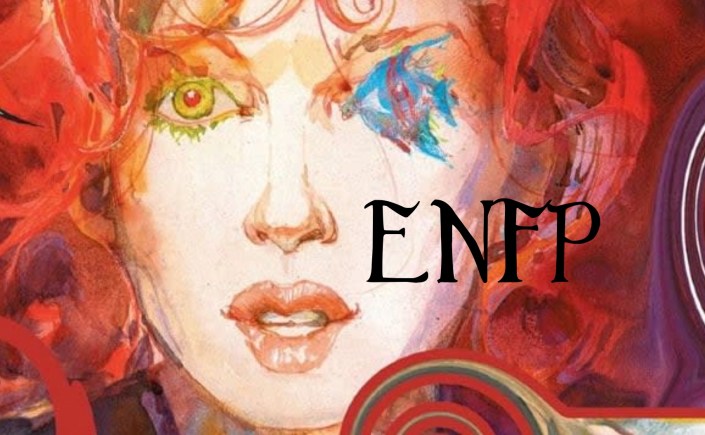
Guest Post by Emily, INFP
Dominant Extroverted Intuition (Ne): Delirium is scatterbrained and gets distracted in the middle of her own sentences. She uses creativity to escape boredom, like when she makes fish and, eventually, sings a song about one of them. On her quest to bring Destruction back, she keeps looking for people who might have seen him instead of giving up hope. Although she was afraid of Dream in the past, she asks him to help her find Destruction.
Continue reading
Guest Post by Fanta, INTJ
Dominant Introverted Sensing (Si): Detective William Murdoch is a very serious, by-the-book, conventional man who is deeply attached to his Catholic religious upbringing. He has a strong sense of duty guiding him when he has to make difficult and personal choices: he chooses justice over stopping the marriage of the woman he loves. He upholds the law to a tee, always tells the truth (even when it leads to freeing a guilty criminal), and minutely follows criminal and scientific procedures. From very early on, Murdoch has developed a keen interest in scientific knowledge, spending so much personal time absorbing all kinds of information through this hobby that he became an expert without consciously wanting to.
Continue reading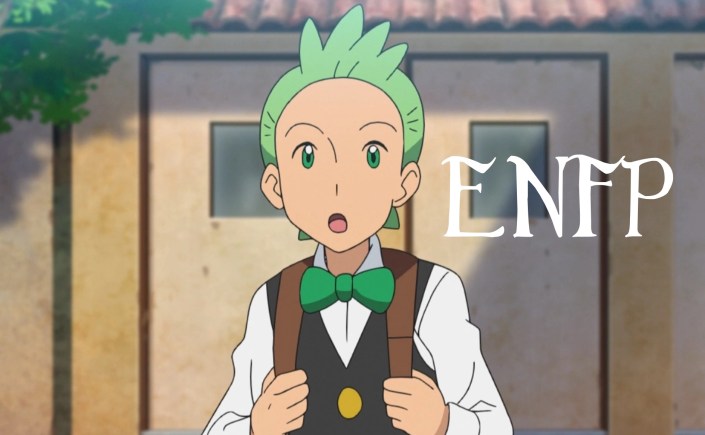
Guest Post by Andrew, ENTJ
Dominant Extroverted Intuition (Ne): Cilan’s interests are many and varied. He is a Pokemon Connoisseur, a science connoisseur, a fishing connoisseur, a railroad connoisseur, etc. Cilan likes to explore connections between trainers and their Pokemon, and, seemingly at random times, he will put forth his analysis of such relationships (he even interrupts battles to do this). Cilan decides to travel with Ash on the spur of the moment, all because Ash shows him (by example) new possibilities in trainers relating to and working with their Pokemon. He doesn’t count his chickens before they hatch, either in battles or in anything else, and he tends to clash with people who have pre-ordained and/or narrow views on anything.
Continue reading
Subscribe to get access to the rest of this post and other subscriber-only content.

Guest Post by Key Lime Pi, INFP
A while ago, I read Help! My INTJ Is Crying! and it caused me to think more about how different types have different approaches to crying, much less any sort of emotion. As an INFP, one of the popular stereotypes I find most irritating is that INFPs are always crying. Some INFPs (especially female ones) might cry more frequently than less dominantly emotional types, but that does not mean we are fragile butterflies whose wings will instantly crumple when touched. To set the record straight for all of you who are less dominated by emotion, here is a brief guide to help you understand your emotion-oriented INFP friends.
Continue reading
Subscribe to get access to the rest of this post and other subscriber-only content.

Guest Post by E. J., INTJ
Dominant Introverted Feeling (Fi): Smeagol is primarily motivated by self-interest. He does think about some moral concepts, such as fairness and kindness, but mainly when they apply to himself in some way. If he breaks some aspect of this moral code, he finds a way of justifying it (e.g., claiming the Ring was his birthday present and that he is therefore the rightful owner). Smeagol, unlike his alter-ego Gollum, can feel personally responsible to people who have helped him (although not to people in general). Gollum does not even care about people who have helped him, reacting viciously toward anyone who stands in his way. Smeagol cannot empathize with other people unless they have had similar experiences–specifically in relation to the Ring. While he understands something of how Bilbo and Sam think because he is a Hobbit himself, he has little sympathy for either of them. On the other hand, he knows that Frodo has experienced something like his own struggle while staying wiser and retaining a strong moral code. Smeagol admires Frodo, but he betrays Frodo anyway because he cannot be loyal to Frodo while fulfilling his own desires.
Continue reading
Guest Post by Andrew, ENTJ
Dominant Introverted Thinking (Ti): Iris hates rules and boundaries, especially the stifling ones she experienced at school. She is always brutally honest, even when her honesty is neither needed nor appreciated, especially when it comes to Pokemon battles. Iris has a disdain for book learning (indeed, she often gets textbook facts wrong) and apathy for being taught by others, preferring instead to figure things out on her own. She prefers a logical approach to problem-solving and doesn’t generally respect people who make emotional decisions. When Iris first meets Ash, she doesn’t know or care about his many past accomplishments; his battle style makes little sense to her and he gets caught up in his emotions, earning him permanent “little kid” status in her book.
Continue reading
Subscribe to get access to the rest of this post and other subscriber-only content.
Catgyrl asked: ENFP here! I feel guilty for judging other people and it seems like INTJs don’t feel that way. You probably have some long thought process about this and I’d love to hear it. Sorry if that’s not really a question :)

First of all, judgement is a necessary action for those of us who have any of intentions of helping or getting to know our friends. It also serves to protect us against people who would hurt or use us, but judgement is more than people make it out to be. The type of judgement that popular culture and religious organizations encourage us to refrain from is what I would like to call unrighteous judgement. And it’s true that type of judgement can be extremely hurtful, so it’s not only wise but important for our ethical well-being.
Judgement is not so narrow a field, however, that it does not also include a spectrum of righteous judgement, and as someone with an INTJ personality, this just so happens to be somewhat of a strong point for me. I shall endeavour my best to explain the concept in such a way as to make it understandable and doable. Continue reading

