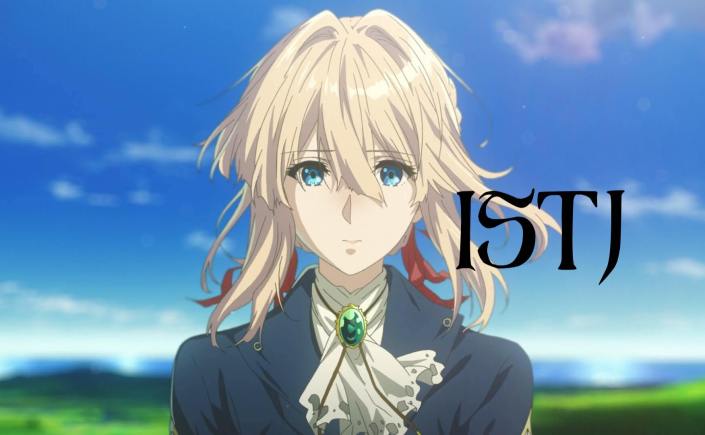
Violet Evergarden: ISTJ

Guest Post by Arvid Walton, INTJ

Violet Evergarden

Dominant Introverted (Si): Orderly and attentive, Violet keeps her space clean and tidy without prompting (SiTe). She is highly detail-oriented, such that she fixates on exact wordings, exact truths/meanings, and exact instructions. She’s also inclined to pay attention to small details of peoples’ appearance, such as Major Bougainvillaea’s eye colour. She thrives on routine (a trait of both Autism and SiTe) and has a strong preference for repetitive activities. In addition to enjoying work as a Doll, Violet regularly dresses in the same clothing (even when not working) and always ties up her hair in the same pattern.

Subscribe to get access

Read more of this content when you subscribe today.

Zuko: ISFP

Official typing by Arvid Walton

Avatar: The Last Airbender

Dominant Introverted Feeling (Fi): Zuko feels everything intensely, a trait that both makes him a force for good (when he can detach his own moral code from what his father expects of him) and causes him a great deal of suffering. When he forces himself to live by his father’s value system instead of his own, Zuko is plagued by inner dissonance and depression. From a young age, he has a strong sense of ethics and is happiest when he feels aligned with his moral code. His drive to do the right thing pushes him to speak against his father’s military plans, ultimately leading to his banishment from the Fire Nation. As much as he lashes out at people (Mai, his crew, Uncle Iroh), Zuko puts them first when they are in danger. When he makes a mistake, he accepts full responsibility for his actions and does everything in his power to correct the damage he’s caused. As Fire Lord, Zuko puts his life on the line to stand up for the misunderstood people of the Fire Nation colonies. However, when gaslighting and manipulation from his family members cause him to doubt his inner compass, Zuko is wracked with anxiety about whether he’s doing the right thing (to the point of being unable to sleep). When under intense stress, Zuko has the tendency to retreat inward, keeping his struggles to himself despite Mai’s urgings for him to talk openly. 

Continue reading

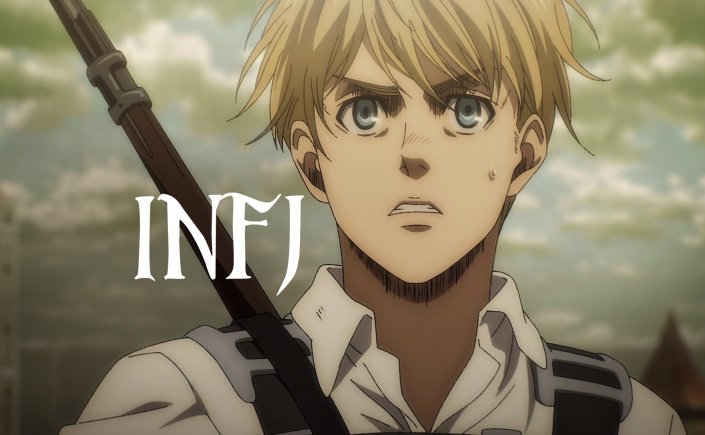
Armin Arlert: INFJ

Official typing by Arvid Walton

Attack on Titan

Dominant Introverted Intuition (Ni): Armin is always looking to the future. The most obvious manifestation of this is his perpetual excitement about life beyond the wall. However, even as a civilian child, he accurately predicted the Titan attack moments before it happened. After joining the military, Armin hones his predictive abilities in the service of protecting his friends. He intuitively understands other people, including Titans, and uses this knack to get out of hairy situations more than once. In battle situations, Armin is good at strategically utilising the individual strengths of others, which makes him a great tactician. Armin is at his best when he is sure of his predictive abilities. However, he is tentative and has a hard time making decisions without feeling confident in the outcome.

Continue reading

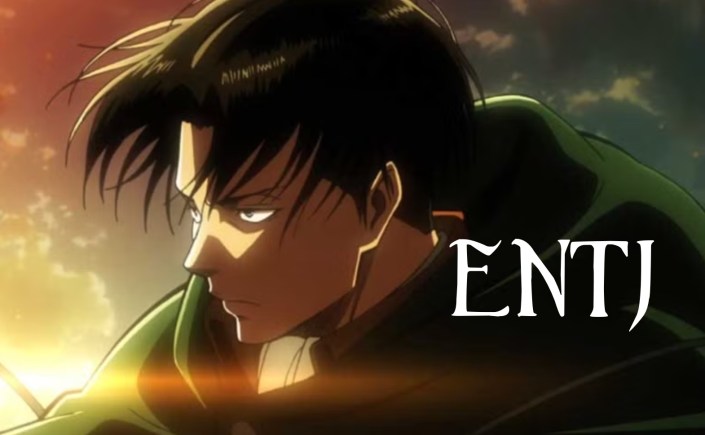
Levi Ackerman: ENTJ

Official typing by Arvid Walton

Attack on Titan

Dominant Extraverted Thinking (Te): Levi is a non-nonsense person who cares about efficiency and reason. In addition to being fairly objective, Levi is comfortable laying out the facts of a situation when others aren’t willing to do so. Rather than becoming reactive in stressful situations, he simply says and does what needs to be said in order to move things forward. This also makes him a good director. When others become emotional, he talks them through situations level-headedly (for example, directing Eren to think carefully about his impulse to turn Titan during the boy’s first outing as a Scout). He is so dedicated to accepting facts that he gets annoyed when Eren doesn’t tell Armin the whole story about why Armin was saved instead of Erwin. Levi is adept at redirecting conversations in a productive direction, a skill he uses regularly to keep his subordinates on task. 

The INTJ’s Depression Battle Plan

H Janeway asked: “How does an INTJ know what she needs? I am a bit disconnected from my emotions because of depression, depression medication and being an INTJ. How do I know what I need so that I can make a plan/schedule and hopefully get better?”

I hope the best for you in your journey.

I have depression that’s heavily influenced by PTSD, I can speak to your experience of struggling to figure out what you need to do to heal.

Before I was fully aware that I had PTSD, I was very confused and very, very concerned with how I was supposed to figure out this “trap” that had caught me. At the time, many factors combined to make it so that I was not in a position to seek help. As a result, I had to figure things out on my own.

Here is what I have learned the hard way: Continue reading

Why You should Stop Saying you were “Traumatized” by a TV Show

Why you should Stop Saying you were Traumatised by a TV show...

Anon asked: “You’re the first MBTI expert I’ve come across who’s typed the characters from Unsere MĂ¼tter, Unsere Väter, and since you’re an INTJ, I must know. Were you emotionally traumatized the first time you watched it?”

Continue reading

How INTJs cope with Trauma

How INTJs cope with Trauma

There is no defined route traveled by every traumatized individual, and variations range so widely even within the INTJ realm that all we can really observe are the patterns. Continue reading

ENFPs and Trauma

Meredith asked: “I have a friend who’s was a total ENFP but then he went through a traumatic experience and now he doesn’t seem like an ENFP at all. Could he have changed to an introverted type?”

Probably not, although, yes, if the trauma you’re referring to was physical head trauma, a stroke or anything that could cause brain damage and literal personality changes. However, I’m going to assume that you’re talking about something that was psychologically traumatizing.

First of all, everyone (hopefully) undergoes Continue reading

Friedhelm Winter: INTJ

Generation War / Unsere MĂ¼tter, unsere Väter

Generation War Friedhelm INTJ MTBI

Dominant Introverted Intuition (Ni): Friedhelm has clever solutions to impossible problems that didn’t occur to anybody else. He looks at the war from an incredibly big-picture view, against it from the start and disillusioned with it by the end. He’s the ultimate idealist-cynic. Friedhelm is future-oriented, and accurately predicts the long-term Continue reading

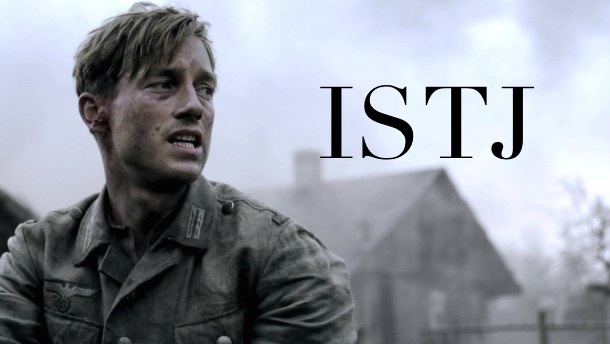
Wilhelm Winter: ISTJ

Generation War / Unsere MĂ¼tter, Unsere Väter

Generation War Wilhelm ISTJ MBTI

Si: Commitments are important to Wilhelm, and he frequently judges others against socially accepted standards. Until late into the war, his pragmatism comes before ideals. He prefers to take approaches that he is familiar with, and is uncomfortable when he realizes that experience isn’t going to help him in this war. He cares about Continue reading