Anna – Frozen: ESFP

Guest Post by E.J., INTJ

Frozen
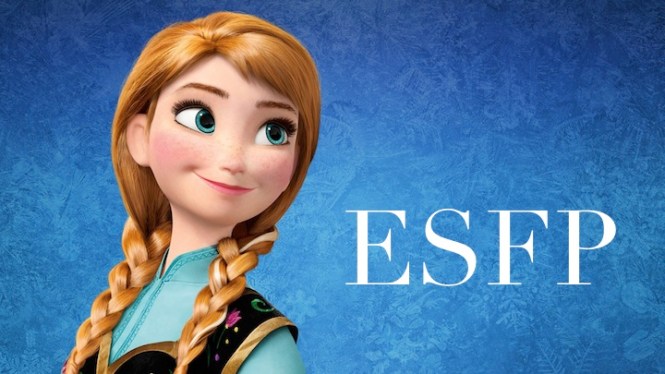
Anna ESFP | Frozen #MBTI #ESFP

Dominant Se: Ana loves to be active. As a small child, her way of bonding with her sister was shared activity time. When Elsa is no longer allowed to engage in physical play with Ana, their relationship suffers. Ana misses her sister on an emotional level, but she expresses her feelings by complaining about how bored she is and wishing that they could do something together (“Do you wanna build a snowman?/ Or ride our bikes around the halls…”). Ana looks forward to her sister’s coronation because of the party involved. Excitement makes her move physically–she runs and dances around throughout the movie. Ana’s Se gives her boldness in some situations that would terrify others: she has enough confidence in her physical abilities that she is willing to climb into the mountains alone. Throughout the movie, Ana helps to connect her sister to the real, physical world–running interference for Elsa early on as Elsa grieves, and, eventually, encouraging Elsa to use her gift to delight their people. Continue reading

Edmund Pevensie: ENTJ

Guest Post by E.J., INTJ

The Chronicles of Narnia, C.S. Lewis

edmundblue2

Dominant Te: Edmund takes a logical approach to life, and he hates it when others try to control him. At the beginning of the series, he uses his combination of NiTe to manipulate other people, including his older siblings. He sometimes misses social cues in his effort to analyze the evidence: for instance, in the Beavers’ house, he asks whether the Witch could turn Aslan to stone, which shocks and offends the others present. In joining the Witch’s side, Continue reading

Katza – Graceling: ISTP

Graceling

Ti: Katsa’s survival skills are enhanced by her studies and knowledgeability. Katsa’s nature is serious, but her worldview and logic aren’t based on the same logic as the rest of the world’s. She doesn’t always catch on to people’s jokes and tends to take things too seriously. She isn’t afraid to voice uncomfortable questions, as she tends to be rather detached. She doesn’t talk about her thoughts where she doesn’t have to and doesn’t really enjoy social settings.

Se: Katsa tests her body to the limits, and even studies it to understand it better. Katsa is built to survive, be it through the awareness of her physical world or through her physical abilities. She’s impulsive and doesn’t always plan out her actions before she carries them out. She likes new physical experiences and lets himself get carried away with Po.

Ni: She knows perfectly well that she’s capable of killing people by reflex, and to avoid this, she tries to predict her opponents moves. She’s reluctant to trust people at first, and tends to be a bit judgmental. She’s good at pinpointing problems with plans and can visualize what she needs to do to get to where she wants to be.

Fe: She tends to jump to assumptions about people based on stereotypes. She doesn’t want to hurt people, and has to come to terms with her abilities. She tends to repress her emotions and doesn’t really understand them. Instead of facing them, she engages in various physical activities to get her mind off of them.

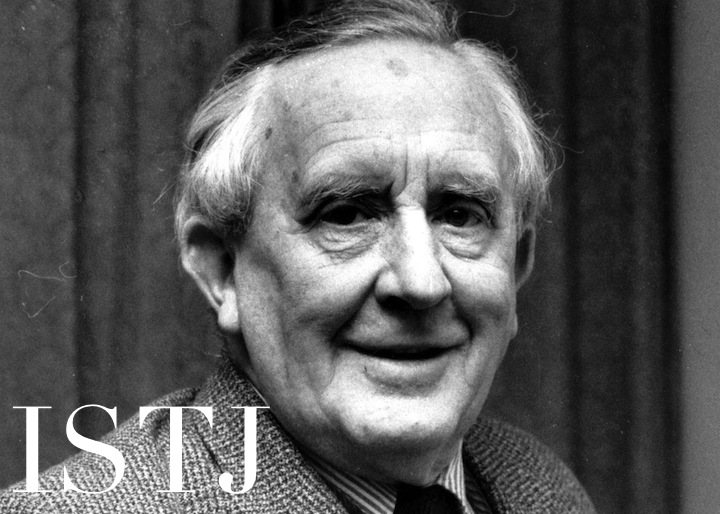
J.R.R Tolkien: ISTJ

Guest post by E.J., INTJ

J.R.R. Tolkien ISTJ | The Book Addict's Guide to MBTI #ISTJ

Introverted Sensing (Si): Tolkien’s mother died when he was eight years old, and his memory of her motivated him throughout his adult life. Since her family had abandoned her after her conversion to Catholicism, and her health had subsequently deteriorated, Tolkien considered her a martyr. Her memory was part of the reason why Tolkien became such a staunch Catholic. Continue reading

C.S. Lewis: INTJ

Guest post by E. J., INTJ

C.S. Lewis INTJ | The Book Addict's Guide to MBTI

Dominant Ni: C. S. Lewis had a relatively narrow set of interests, primarily focusing on academic topics and especially medieval and Renaissance literature. A high school tutor told Lewis’s father that Lewis could become a scholar, but little else. Symbolism was important to Lewis: his favorite genres of literature (epic poetry, fantasy, and science fiction) were filled with it. He infused a great deal of very blunt symbolism (NiTe) into his own fictional works, especially the Chronicles of Narnia. Many of his other works are philosophical in nature, and C.S. Lewis was fond of discussing ideas with the Mastermind group that he engineered as a college student (the organisation part of this would be Te). Continue reading

Tracey Sketchit: ISFP

Guest post by Andrew, ENTJ

Pokémon Anime Franchise

Tracey Sketchit ISFP | Pokemon #MBTI #ISFP

Introverted Feeling (Fi): Tracey lives life his own way.  When he meets Ash and Misty, he is following his passion of watching and drawing wild Pokemon.  He is very emotional and caring toward those he cares about, but is often oblivious of others’ emotions; he once made an indiscreet comment suggesting that Ash and Misty were in love, provoking an angry response from both of them.  He cares very much about Professor Oak’s opinion of his work, owing to the respect he has for the veteran researcher; he cannot contain his nerves when the famed Pokemon Professor reviews his drawings for the first time. Continue reading

Sheldon Cooper: ISTJ

Guest post by, “you only live once but living once means living many times ,as a series of similar but technically different people who know each other in one direction but who can help each other but only in the other direction,” ENTP

The Big Bang Theory

Sheldon Cooper ISTJ | The Big Bang Theory #MBTI #ISTJ

Introverted Sensing (Si): Introverted Sensing deals primarily with recalling facts and details of past events. Sheldon has an eidetic memory. Introverted Sensing is very tradition and ritual oriented. Sheldon holds on to these traditions very closely. In the series often Leonard and Howard often convince him to do many things just by saying its a ‘social custom’. He tends to know all the facts and enjoys system and order.He says that he does not like change and thinks that change never good,this is mostly where I believe that he is not an NT and more of an SJ. Sheldon sometimes become stubborn and refuses to try new experiences. Continue reading

xNTP vs xNTJ Writing

Morally Relative Midnight asked: As someone who engages in creative writing frequently, how would you differentiate between INTJ and INTP writing styles? How would an INTJ’s tertiary Fi and an INTP’s tertiary Fe manifest themselves in a creative writing assignment or just any writing project in general?

Now that’s what I call a question.

Best examples of INTJ writing I can think of off the top of my head are Ayn Rand, Jane Austen, Flannery O’Connor and Ralph Waldo Emerson. Some good examples of INTP writing include Edgar Allan Poe, Terry Pratchett and Douglas Adams. Continue reading

Johnny Cade: INTJ

Guest post by Andrew, ENTJ

The Outsiders, S. E. Hinton

Johnny Cade INTJ | The Outsiders #MBTI #INTJ

Introverted Intuition (Ni): Johnny needs a realistic vision of a better life for himself for his life to have purpose.  Unfortunately for him, at the beginning of the book, he lives in poverty with abusive parents; there is no exit strategy, no glimmer of hope for a brighter future.  It is only after breaking his back, lying in a hospital bed facing his own death, that Johnny’s will to lives starts to show.  Even after bowing to the inevitable, Johnny makes a last-ditch effort to make things better: for his best friend, Ponyboy, Continue reading

Meowth: ENTP

Guest Post by Andrew, ENTJ

Pokémon Anime Franchise

Meowth ENTP | Pokemon #MBTI #ENTP

Extroverted Intuition (Ne): Meowth is always bursting with ideas: practical, impractical, and everywhere in between.  He always has some new scheme to catch Pikachu or another valuable Pokemon.  Some of these are more outrageous than others, and all of them tend to fail.  Meowth seldom or never revisits old ideas for catching Pikachu, preferring to devise new ones instead.  Especially in the Advanced Generation Continue reading

Dr. Eric Foreman: ISTJ

House MD

House MD Foreman ISTJ MBTI

Si: Foreman is practical and detail oriented. He trusts conventional protocols because they have worked in the past (therefore, we don’t need to find new methods). He has a hard time understanding and dealing with House’s lack of care about conventions and protocols. He’s connected to his past, though he doesn’t much enjoy talking about it with others. He’s quite serious, and doesn’t like House’s sarcasm at all. Foreman jumps to assumptions based on generalizations and social stereotypes. Continue reading