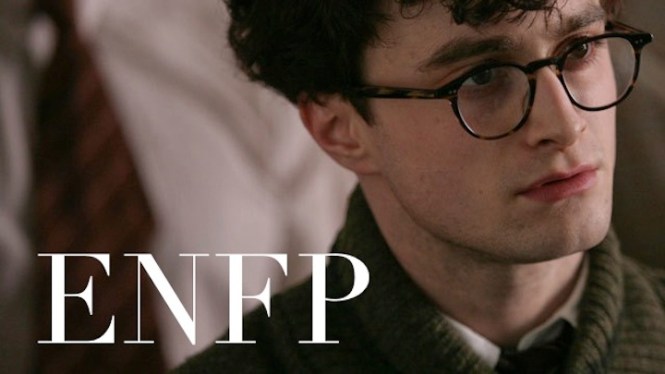
Allan Ginsberg: ENFP

Kill Your Darlings

Allan Ginsberg ENFP | Kill Your Darlings #MBTI #ENFP

Extraverted Intuition (Ne): Ginsberg was all about taking ordinary situations and making them new. Because he was full of ideas, he wrote prolifically, cranking out a large quantity of very long poems in short amounts of time. Even up to the last decade of his life, Ginsberg was putting out quick, vast amounts of poetry. Ginsberg was an open-minded, energetic individual who embraced tolerance and genuinely inspired others to do likewise, not only through his poetry, but through his energetic involvement in counter-cultures. In fact, Ginsberg is attributed to have coined the infamous “flower power” phrase of the 1960s Vietnam era as he encouraged war protestors to engage in peaceful rejection of violence.  Continue reading

Shikamaru Nara: INTP

Guest post by whatisfreethen, INTP

Naruto

Shikamaru Nara INTP | Naruto #MBTI #INTP

Ti: Shikamaru was a logical thinker who’s most popular characteristic was his ability to stay cool headed in crisis situations and conceive a winning strategy. Shikamaru’s fighting style indicated a dominant Ti, in which he first engaged an opponent, then tried to bring them at an impasse, to analyst their moves and devise a plan of action. He was also often shown to have an affinity to intellectual puzzles and strategic games, like shogi. He disliked physical work and would rather lie down and think. Continue reading

Ron Weasley: ESFP

Guest Post by Andrew, ENTJ

Harry Potter, J. K. Rowling

Ron Weasley ESFP | Harry Potter #MBTI #ESFP

Extroverted Sensing (Se): Ron likes to have fun, and lives for the thrills of the moment.  He often neglects to study for important exams, as he cannot handle the tedium of prolonged studying.  He has the most prominent sense of humor in his inner circle of friends, and is much more likely to crack a joke than Harry or Hermione is.  Ron likes physical activity, and has a natural ability for Quidditch.  Ron usually doesn’t think before acting, and at times, this has landed him in trouble (blasting himself with his own malfunctioning wand, flying his parents’ car to Hogwarts), but it also allows him to escape from sticky situations (talking his way out of an encounter with a group of “snatchers”).  Ron becomes impatient when Harry admits that he has no plan to find all of Vordemort’s horcruxes, and he makes an impulsive decision to bail out of hunt for them. Continue reading

Anna – Frozen: ESFP

Guest Post by E.J., INTJ

Frozen

Anna ESFP | Frozen #MBTI #ESFP

Dominant Se: Ana loves to be active. As a small child, her way of bonding with her sister was shared activity time. When Elsa is no longer allowed to engage in physical play with Ana, their relationship suffers. Ana misses her sister on an emotional level, but she expresses her feelings by complaining about how bored she is and wishing that they could do something together (“Do you wanna build a snowman?/ Or ride our bikes around the halls…”). Ana looks forward to her sister’s coronation because of the party involved. Excitement makes her move physically–she runs and dances around throughout the movie. Ana’s Se gives her boldness in some situations that would terrify others: she has enough confidence in her physical abilities that she is willing to climb into the mountains alone. Throughout the movie, Ana helps to connect her sister to the real, physical world–running interference for Elsa early on as Elsa grieves, and, eventually, encouraging Elsa to use her gift to delight their people. Continue reading

Edmund Pevensie: ENTJ

Guest Post by E.J., INTJ

The Chronicles of Narnia, C.S. Lewis

edmundblue2

Dominant Te: Edmund takes a logical approach to life, and he hates it when others try to control him. At the beginning of the series, he uses his combination of NiTe to manipulate other people, including his older siblings. He sometimes misses social cues in his effort to analyze the evidence: for instance, in the Beavers’ house, he asks whether the Witch could turn Aslan to stone, which shocks and offends the others present. In joining the Witch’s side, Continue reading

Katza – Graceling: ISTP

Graceling

Ti: Katsa’s survival skills are enhanced by her studies and knowledgeability. Katsa’s nature is serious, but her worldview and logic aren’t based on the same logic as the rest of the world’s. She doesn’t always catch on to people’s jokes and tends to take things too seriously. She isn’t afraid to voice uncomfortable questions, as she tends to be rather detached. She doesn’t talk about her thoughts where she doesn’t have to and doesn’t really enjoy social settings.

Se: Katsa tests her body to the limits, and even studies it to understand it better. Katsa is built to survive, be it through the awareness of her physical world or through her physical abilities. She’s impulsive and doesn’t always plan out her actions before she carries them out. She likes new physical experiences and lets himself get carried away with Po.

Ni: She knows perfectly well that she’s capable of killing people by reflex, and to avoid this, she tries to predict her opponents moves. She’s reluctant to trust people at first, and tends to be a bit judgmental. She’s good at pinpointing problems with plans and can visualize what she needs to do to get to where she wants to be.

Fe: She tends to jump to assumptions about people based on stereotypes. She doesn’t want to hurt people, and has to come to terms with her abilities. She tends to repress her emotions and doesn’t really understand them. Instead of facing them, she engages in various physical activities to get her mind off of them.

INTJs: How to develop your Se function

Bryony asked: I am an INTJ with an unhealthy Se function. Out of curiosity, is it possible to change this?

Yes it is.

I had a very unhealthy Se function at one point in my life –so unhealthy in fact, that I wasn’t using it at all (I’ll let your imagination fill in the connotations of that happenstance). Here are some tips for developing an unhealthy Se function. Continue reading

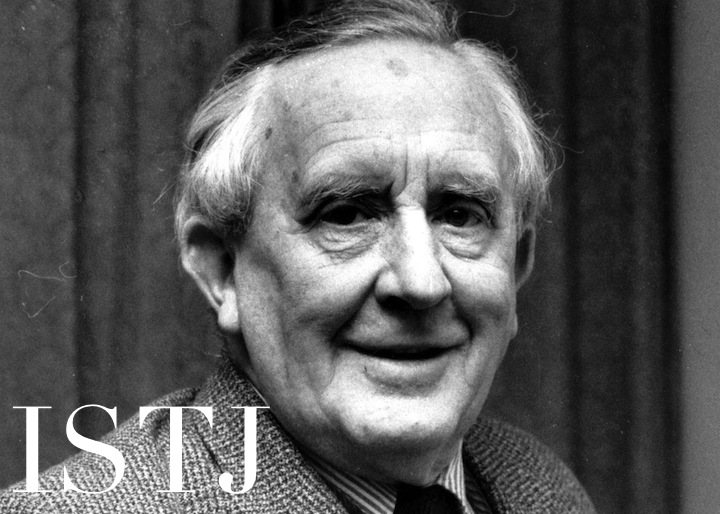
J.R.R Tolkien: ISTJ

Guest post by E.J., INTJ

J.R.R. Tolkien ISTJ | The Book Addict's Guide to MBTI #ISTJ

Introverted Sensing (Si): Tolkien’s mother died when he was eight years old, and his memory of her motivated him throughout his adult life. Since her family had abandoned her after her conversion to Catholicism, and her health had subsequently deteriorated, Tolkien considered her a martyr. Her memory was part of the reason why Tolkien became such a staunch Catholic. Continue reading

More INTP vs INTJ

Ameya Ravindra Nadkarni asked: How to tell apart between an INTP and INTJ?

I have always been a analytical person, who can see a particular job done in a better way . But always procrastinate it due to even a minor flaw in the plan or method. Though I learn new things to be used for practical purposes, I may never use that knowledge unless I gain complete understanding and mastery over that subject. I have been given sometimes INTP as a result  of my personality tests and been given quite times INTJ as result with a slight preference of judging over perceiving. I am confused and hoping for your advice. Sorry for violating the rule for asking a personal question and for my grammatically improper English but I really need some advice.

If you haven’t yet, review my other INTP vs INTJ post. It’s much more detailed than this one.

I think, for the most part I understand your question –if I translated wrong, don’t hesitate to correct me. Fortunately for you, this isn’t the type of personal question that’s against the rules.

There is a strong possibility that you’re prone to locking into your shadow functions. In terms of how to tell which type you are, these are the questions you need to be asking.

Am I goal-oriented? When I set out to accomplish a goal, do I plan out all the steps and pursue them intricately (NiTe)? Or do I go about it through improv and plan steps as they come (NeTi)? Do I focus on my dreams as fixed realities that I am responsible for making happen (NiTe)? Or do I look at my dreams as grand possibilities that I could, and would like to make happen (NeTi)?

Am I efficient in practice or in theory (Te vs Ti)? When I see something that could be improved, do I ask myself whether its necessary before setting out to change it (Te)? Are my improvements more innovative (NeTi), or are they more practical (NiTe)? Do I tend to theorise about improving things without ever doing anything to fulfil those visions (Ti)?

Do I procrastinate because my plan must be over-perfect before I proceed? Or because I literally don’t know where to start with carrying it out (Ti)? (Be objective when you ask yourself this).

Also, I would suggest taking a look at my INTP vs INTJ post. (The search bar is there for a reason).

C.S. Lewis: INTJ

Guest post by E. J., INTJ

C.S. Lewis INTJ | The Book Addict's Guide to MBTI

Dominant Ni: C. S. Lewis had a relatively narrow set of interests, primarily focusing on academic topics and especially medieval and Renaissance literature. A high school tutor told Lewis’s father that Lewis could become a scholar, but little else. Symbolism was important to Lewis: his favorite genres of literature (epic poetry, fantasy, and science fiction) were filled with it. He infused a great deal of very blunt symbolism (NiTe) into his own fictional works, especially the Chronicles of Narnia. Many of his other works are philosophical in nature, and C.S. Lewis was fond of discussing ideas with the Mastermind group that he engineered as a college student (the organisation part of this would be Te). Continue reading

Tracey Sketchit: ISFP

Guest post by Andrew, ENTJ

Pokémon Anime Franchise

Tracey Sketchit ISFP | Pokemon #MBTI #ISFP

Introverted Feeling (Fi): Tracey lives life his own way.  When he meets Ash and Misty, he is following his passion of watching and drawing wild Pokemon.  He is very emotional and caring toward those he cares about, but is often oblivious of others’ emotions; he once made an indiscreet comment suggesting that Ash and Misty were in love, provoking an angry response from both of them.  He cares very much about Professor Oak’s opinion of his work, owing to the respect he has for the veteran researcher; he cannot contain his nerves when the famed Pokemon Professor reviews his drawings for the first time. Continue reading

xxTJ? Or when it’s Just Your OCD Talking

Laurie asked: I’ve always considered myself (and been described as) INTJ, but I also have OCD, and you said in a post that every person with OCD will score as a TJ. I know that you can’t just magically type me without knowing me, but I would really like to find out if I *really* am an INTJ, or it’s just my illness that makes me act in a certain way (though I always recognized my thought process as that of an INTJ, not my actions necessarily). How do you go about typing characters who have mental illness? I know you always try to “separate” the two things and recognize the real type that might be hidden by the illness – are there particular questions I might ask myself, or things I might notice in my actions/thoughts etc.?

I know I shouldn’t give to much importance to my type – I myself use it more as a very useful tool to write plausible fictional characters than anything else – but recognize who I really am might help me overcome things and thought processes that are not “mine” but come from my condition…in a way, I believe I simply don’t want to be defined by my OCD, but recognize who I truly am, in spite of everything else. Thank you!


I don’t know the exact nature of your OCD, so I’m going to do the best I can at a generic, but applicable response.

I would suggest trying to pay attention to what you’re like when you’re less affected by your OCD (if possible). The particular function that tends to be associated most heavily with OCD is the Si function, simply because it likes to pay attention to minute details that intuitive upper functions don’t. Continue reading

Sheldon Cooper: ISTJ

Guest post by, “you only live once but living once means living many times ,as a series of similar but technically different people who know each other in one direction but who can help each other but only in the other direction,” ENTP

The Big Bang Theory

Sheldon Cooper ISTJ | The Big Bang Theory #MBTI #ISTJ

Introverted Sensing (Si): Introverted Sensing deals primarily with recalling facts and details of past events. Sheldon has an eidetic memory. Introverted Sensing is very tradition and ritual oriented. Sheldon holds on to these traditions very closely. In the series often Leonard and Howard often convince him to do many things just by saying its a ‘social custom’. He tends to know all the facts and enjoys system and order.He says that he does not like change and thinks that change never good,this is mostly where I believe that he is not an NT and more of an SJ. Sheldon sometimes become stubborn and refuses to try new experiences. Continue reading

More Mind Palace Tips

Gabrielle Massman asked: You wrote a post on memory palaces, and I have since created my own and found it very useful– to a point. One of the main reasons why I created my mind palace was to remember Biblical Hebrew vocabulary, but I found my mind palace utterly useless in remembering any types of words or mathematical equations. I tried writing them in open books on tables, on the walls, and even in one word blood on my bathroom mirror, but nothing worked. When I walked through my mind palace, I could see that something was there, and I could remember a broad meaning of the word (for instance, if the word meant “to destroy entirely,” I would remember it had something to do with death.) However, I could not remember the word or exact definition. Moreover, in a practical sense, I wondering if I could fit (and be able to locate) 1,200 vocabulary words in a single or multiple mind palaces.

Do you have a technique to putting words into your mind palace? Or is a mind palace not the best memory technique for words and equations?

It’s not going to work if you try to write them on windows and mirrors. Period.

The reason for this is that the Mind Palace is a mnemonic system of memorisation that relies on making connections and establishing a very specified visual imagery. For tips on how to make your images work better, see this post it outlines how to use your mind palace imagery properly, including how to put large quantities of vocabulary words into it.

In terms of numbers and equations, my suggestion is that you find a way to mnemonically connect the numbers to your images, rather than simply writing them on the walls. I used the system to remember centuries worth of dates, terms, authors, literary works and royal genealogy for a test that I had one day to study for last week (the dates spanned from 3000 BCE to 1500 CE) and the memory palace served me faithfully.

If you have further questions after you finish reading my other post, please feel free to ask.