

Guest Post by Alyssa, INFP
I have always been a very self-aware individual. I know my strengths, weaknesses, emotions and thought processes extremely well, and I’m comfortable with who I am. I already KNOW that I’m a walking paradox. I’m a dreamer and yet I’m practical, I’m creative yet analytical, I love art and excel creatively, but I’m also a maths genius. I’m social yet shy, hard-working but a procrastinator, and organized but messy. There has never been a doubt that I am very much an INFP; however, these little contradictions between me and a stereotypical INFP used to concern me. This was before I realized that MBTI is about the way in which we think, not our personalities. Every person is going to have contradictions and conflicting qualities or tendencies, and that’s okay! That’s what makes us unique and human!
That being said, here are five ways in which I do NOT fit the INFP stereotype (in contrast to the many, many ways in which I do).
Laura Ingalls: ESTJ

Guest Post by Jessica Prescott, INFJ
Little House on The Prairie, Laura Ingalls Wilder
Dominant Extroverted Thinking (Te): Throughout the nine books in the Little House series, Laura Ingalls is distinguished above all by two main character traits: blunt speech and quick action. More than anyone else in her family, she believes in saying what needs to be said and doing what needs to be done. Laura sees little point in sugarcoating the truth to save others’ feelings. For example, at the beginning of These Happy Golden Years, she tells Almanzo Wilder point-blank that she’s not romantically interested in him and that his driving her home every week won’t make any difference in how she feels. Even as a young girl, Laura can pinpoint the most direct solution to any problem and organize others to help her implement that solution. In Banks of Plum Creek when Pa and Ma are gone and a blizzard comes up unexpectedly, Laura is the one to realize that there’s no firewood in the house and the one who rounds up her sisters to go and collect a supply from the woodpile outside (This, despite the fact that Ma had specifically told the girls to “stay inside if it storms”; unlike Mary, who insisted on following their parents’ rules, Laura can make her own rules to alleviate a potentially dangerous situation.) After a slightly rocky start, she can successfully discipline students older than herself when teaching her first school as a fifteen-year-old. Finally, she has a strong work ethic and sets high expectations for both herself and others.
Continue readingVinculus: ENTP

Guest Post by Kerissa, INFJ
Jonathan Strange & Mr. Norrell, Suzanna Clarke
Dominant Extraverted Intuition (Ne): Vinculus has no problem bouncing around from place to place, living on the run for over eight years. He can anticipate problems and come up with solutions to them easily, like cutting Norrell’s bell cord and selling Strange spells. He tends to speak metaphorically (“I am the Book” and “[Strange and Norrell] are the spell John Uskglass is doing”). He understands certain things immediately, like that Mr Norrell is a liar and why his skin changed. He sees his new skin as all it could be, and the possibilities thrill him. Who cares what it is, what could it be?
Continue readingGrell Sutcliff: ESFP
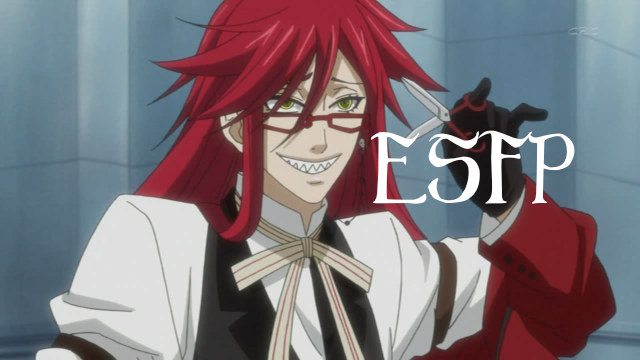
Guest Post by Andrea, INFJ
Black Butler / Kuroshitsuji
Dominant Extraverted Sensing (Se): Grell is greatly in tune with their senses, though this is not always acted on in an entirely healthy way, making the character seem somewhat insane.
They are fond of the colour red, explaining that it represents “flaming passion.”
Their affinity for the colour is displayed in their clothing and, more extremely, when they explain that they choose to commit murder so they can paint victims with red colour.
Fond of things they find physically attractive, they freely and flamboyantly display their lust towards Sebastian, in an often theatrical way. The sly Sebastian easily manipulates Grell into doing things for him by toying with this deep infatuation. Grell jumps into action immediately, overcome with thrill by Sebastian’s seductive promises.
Continue readingThe Relationship Between MBTI And Personality Disorders
Guest Post by E. J., INTJ
Identifying the MBTI type of someone with a mental illness, regardless of the kind, can be difficult. It is doubly so when the individual in question has a personality disorder.
A Basic Overview
Note: The personality disorder labels I will be using come from the DSM-5, the diagnostic manual currently used by American psychologists. I realize that other countries tend to use versions of the ICD-10, the World Health Organization’s diagnostic manual, more heavily than the United States does at present. I have tried to include alternate names where I think it is needed for clarity.
For those who are not familiar with personality disorders, there are 10 specific disorders (although the number has varied over time and will probably continue to be revised). They can be organized into three groups—personality disorders that result in odd behaviour, those that result in dramatic or erratic behaviour, and those that result in anxious behaviour. Occasionally someone may be diagnosed with an unclassified personality disorder or a mixture of personality disorders. Unlike most mental illnesses, personality disorders are consistent over time and in a variety of settings. People with the disorders do not experience them as illnesses—the disorders are simply part of the way they function. A person with this category of mental illness generally sees their behaviour as normal and does not want therapy unless they end up with a comorbid illness like depression (in some cases, brought on by others’ negative reactions to their behaviour).
As a result, most people with personality disorders do not usually get diagnosed, much less treated. Learning about the disorders can be a good idea—particularly if you know a “difficult” person and want to respond more effectively to their behaviour. You can’t diagnose them officially, but you can certainly use your research to decide what your strategy should be when you interact with them.
Call for Submissions!

Finally, the cavity in the space-time continuum that some of you have been patiently asking about has been opened. It’s been forever, yes, but I’m getting caught up on the backlog of typing posts in my inbox.
As a result, The Book Addict’s Guide to MBTI is once again accepting guest submissions for publication!
There have been a few changes to the rules, most notably, that submission doesn’t guarantee acceptance. This is mainly to prevent my having to publish mishaps like the (thankfully rare) case of plagiarism by one guest poster in the past and to potentially cut down on editing. I plan to keep the submission portal open until such a time as the space-time continuum should dictate otherwise.
Dr. Amelia Brand: INTJ


Subscribe to continue reading
Become a paid subscriber to get access to the rest of this post and other exclusive content.
Dave Strider: ISFP
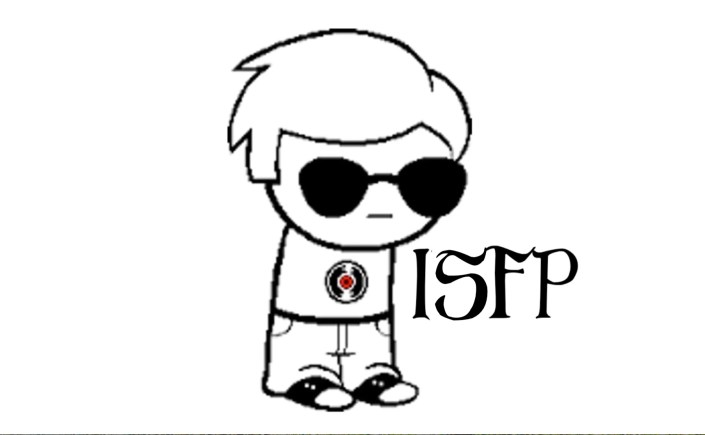
Guest Post by leirbag75, INTP
Homestuck
Dominant Introverted Feeling (Fi): Dave hides his emotions behind a poker face and his poker face behind a pair of shades. He saves shows of genuine, non-ironic emotion for special occasions, such as trying to convince John and Rose not to kill themselves, or greeting John on his birthday, or re(?)uniting with the post-scratch version of his deceased Bro. Even though he is disturbed at finding his own corpse from a doomed timeline, he doesn’t show it immediately. Hanging out with Rose and the Trolls on the meteor helps him realize how messed up his Bro’s way of raising him was, but he never says a word about this realization until he meets post-scratch Dirk face to face, at which point he can’t hold it in any longer. Maintaining harmony with the world at large isn’t very high on his priority list; he pays no heed whatsoever to Karkat’s warnings to stay away from Vriska and Terezi, nor does he feel any need to be polite when telling him off (just compare the way Dave treats Karkat with the way John and Jade do). He acts readily on his feelings; when he finds out about Terezi and Gamzee, he wastes no time in breaking up with Terezi quietly because he feels he’s been cheated on, even though he knows that from Terezi’s perspective, she’s done nothing wrong. He is acutely aware of his own faults and so doesn’t feel comfortable being cast in the role of hero, preferring to leave titles like that to John.
Continue readingDale Cooper: INFJ
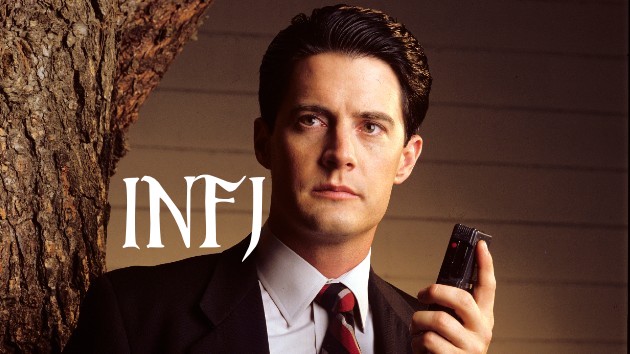
Guest Post by Anonymous, ENTP
Twin Peaks
Dominant Introverted Intuition (Ni): Dale is very single-minded and sees the world through a lens of symbolism. When solving the murder of Laura Palmer he uses odd and non-traditional methods to choose the guilty suspect and he uses a single dream he had to guide what he should do or find in the investigation. He is very good at making unseen connections. He intends to get things down to a single truth or get easy answers to hard questions as he would say.
Continue readingGaius Helen Mohiam: ESTJ
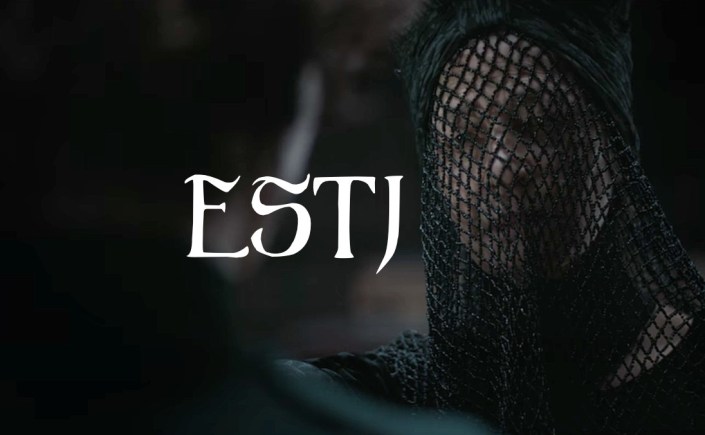
Subscribe to continue reading
Become a paid subscriber to get access to the rest of this post and other exclusive content.
Georgia – Pokémon: ENTJ

Guest Post by Andrew, ENTJ
Pokémon Anime Franchise
Dominant Extroverted Thinking (Te): Georgia is always ready for business. She knows what she wants to accomplish, and she goes after it using everything she has. Georgia also acts as if on a tight schedule (though none is ever mentioned), and she hates when people waste her time. Georgia wants Iris, her rival, to be a strong trainer so as to build credibility for the rivalry. She believes that a good trainer will have total control over his/her Pokemon in every battle, and she loses respect for Iris whenever one of the latter’s Pokemon disobeys her. Georgia’s strategy for beating Dragon-types is straightforward; she usually uses a powerful Ice-type.
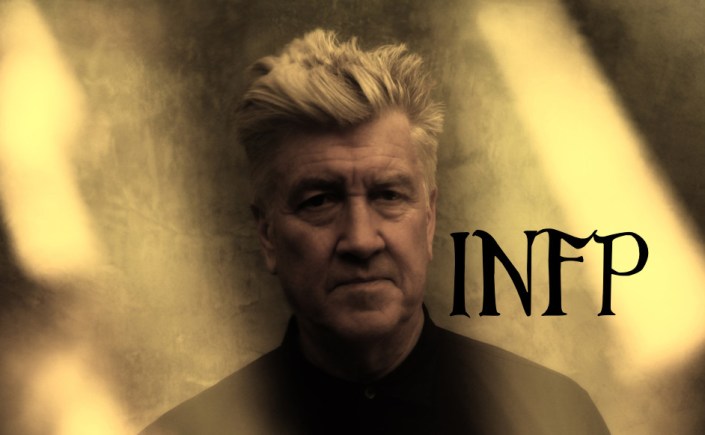
Continue readingDavid Lynch: INFP
Guest Post by Anonymous, ENTP
Dominant Introverted Feeling (Fi): Lynch talks a lot about his personal vision when making movies and he stands by this vision, if a film cannot be made in the way he wants it then he will leave production. Lynch was given the chance to direct the Return of the Jedi by George Lucas but turned it down as he said that the film would more Lucas’ vision than his own. Lynch seems to understand his emotions well because he is usually able to talk about feelings he has experienced as examples to audiences during question time. He also made the comic series The Angriest Dog in the World at a time when he was personally feeling great anger. Lynch enjoyed painting and arts when in school and once considered it as a career choice before turning to films. Lynch never tells the meaning of his films as he wants people to have their own interpretation of it [FiNe]. David Lynch’s characters are usually individualistic in most ways as they all have their own quirks and are typically idiosyncratic to the viewers making them not relatable on a universal level and this makes his films hard to watch for some.
Continue readingWanda Maximoff (Scarlet Witch): ISFP

Guest Post by Emily, INFP
Marvel Universe
Dominant Introverted Feeling (Fi): She chooses her side in Civil War based purely on emotions (she is angry at Vision for not telling her about being under house arrest). Wanda is angry about being put under house arrest largely because she doesn’t want to be controlled by other people, preferring to rule her own life. While escaping from house arrest, she uses her powers against Vision despite being friends with him. She and Pietro are very close, and when he dies, her powers explode and kill a bunch of Ultron’s robots. At this time, Wanda is driven by her emotions and seeks immediate revenge on Ultron for Pietro. After joining the Avengers, Wanda has close friendships with Vision and Clint instead of being friends with all of them. She withdraws when stressed. During the battle of Sokovia, she hides in a building at first and Clint has to talk her into fighting. She also strongly values privacy.
Continue readingQuentin Wilson: INTP

Guest Post by Jessica Prescott, INFJ
October Sky
Dominant Introverted Thinking (Ti): Quentin’s passion for science comes from his passion for analyzing and understanding the world and its systems. Whether it’s rocketry or car engines or just the internal machinations of the local science fair, Quentin knows exactly how it works and is happy to explain it, if asked. At the same time, however, Quentin’s thought process is mostly internal, and he has little need to verbalize it or share it with others. Before Homer recruited him to help with his rocketry project, Quentin was perfectly content to work out his own scientific explorations entirely on his own. As with all high Ti-users, precision in speech is important to Quentin, and he won’t hesitate to correct others—even adults—if he hears them using an inaccurate term.
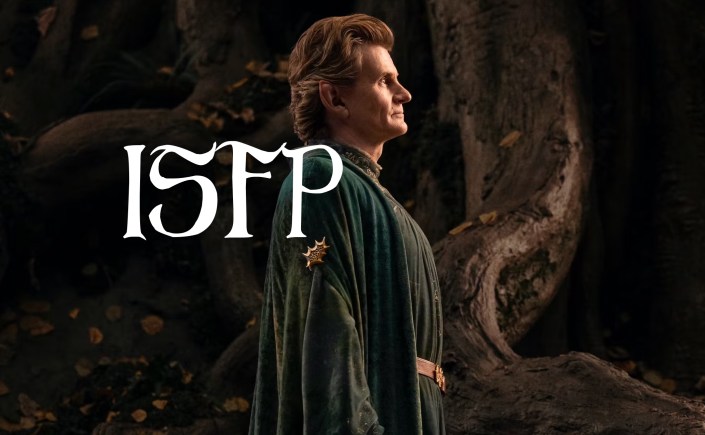
Continue readingFeanor: ISFP
Guest Post by Connor Headrick, ENTP
The Silmarillion, J.R.R. Tolkien
Dominant Introverted Feeling (Fi): Feanor’s fiery commitment to his own values and desires above all else is his single most defining characteristic. His name means “Spirit of Fire,” and he consistently displays this fiery spirit by showing blazing passion, arrogance, and wrath. Like typical ISFPs, Feanor is idealistic and unswerving from his inner moral compass. However, Feanor’s ideals are not altruistic; they are self-centred and prideful. This unhealthy Fi turns him into a wrathful, violent ISFP in order to get what he wants.
The Silmarillion says that few ever persuaded Feanor by reason, and none by force. Feanor consistently refuses to listen to good advice, instead following his own desires. When he feels that his power is threatened, Feanor draws his sword and threatens the life of his half-brother, committing the first assault in Aman (the equivalent of Paradise). He becomes obsessed with the Silmarils, the magical gems he crafted. He refuses to sacrifice these gems, even though using the light of the gems is the only way to restore the light of the dying Trees that illuminated the world. When the villain Morgoth steals the Silmarils, Feanor gives an impassioned speech and persuades the rest of the elves to rebel against the benevolent Valar and leave the Undying Lands to take revenge on Morgoth. Feanor then leads his seven sons in swearing a rash oath that calls down everlasting darkness upon them if they ever stop pursuing the Silmarils. When the Teleri, the Sea Elves, refuse to let Feanor take their ships to follow Morgoth to Middle Earth, Feanor attacks his kindred, slaughters them, and takes the ships. And when Feanor realizes there aren’t enough ships to carry all of his followers to Middle Earth, he abandons thousands of elves in the freezing Northern regions and sails away without them. To make matters even worse, Feanor burns the ships once he lands in Middle Earth. Finally, his wrath drives him to forge his way ahead of his army during his first great battle in Middle Earth, and he is isolated and killed by Balrogs. As his spirit departed from his body, it was so powerful that his body disintegrated into ash.
Continue reading The Book Addict's Guide to MBTI: