

Subscribe to continue reading
Subscribe to get access to the rest of this post and other subscriber-only content.

Subscribe to get access to the rest of this post and other subscriber-only content.

Guest post by Sylver, ISTP
In my project to make known the good and bad sides of every MBTI type, it’s been suggested that I start with ISTJs. A lot of people, even if they don’t say negative things outright, will ignore or turn up their noses at ISTJs online. Also, as it’s been pointed out, many ISTJs will take and retake the test until they get something other than ISTJ, just because of the stigmas attached to ISTJ-ness.
Part of this has to do with the (mis)conceptions about their type that I will debunk here. Please note, of course, that some of the things I will say may not ring true for every single ISTJ out there. Most are based on knowledge of their functions and personal experience. So do feel free to correct me if I’m wrong; most of this is just stuff that I have observed/experienced when dealing with ISTJs.
ISTJs (USUALLY) are:
ISTJs are NOT (usually):
So without further ado, let me expand on how ISTJs work function-wise. My personal favourite thing about them, for a start, is their rich and vivid memories. I experience life through my Ti and Se (Dom and aux respectively), and though I can often remember things I’ve learned for a long time afterwards I have great difficulty remembering the actual experience because I’m instinctively keyed into the present moment. Always moving on, as it were. As Si-doms, ISTJs often have incredible recall of past events. My Mother, for example, is most likely an ISTJ, and whenever I have trouble recalling an old event I’ll call her up and she’ll readily remind me about what happened.
Si-doms are typically great sources of do’s and don’ts, especially the older ones. Any artist/writer/screenwriter/painter should be able to appreciate the opportunities that come with all those memories and stories. Provided, of course, you’re respectful and the ISTJ in question is willing to chat about things that may or may not bring back intense memories.
The ISTJ’s auxiliary function is, of course, Te. This gives them a natural edge when it comes to managing and coordinating, which I appreciate a lot. When it comes to larger projects ISTJs are pro at making sure they (fairly) divvy up the workload. They also––sorry, Arvid––tend to have an advantage, even over INTJs, when it comes to making sure that no details get overlooked. That’s not to say that INTJs don’t also do everything they can to make sure that their project turns out just the way they visualize it. ISTJs are just more naturally detail-oriented.
Fi is a function that…well, it doesn’t seem to get the right type of love in the MBTI community. By that, I mean that people––especially on tumblr––tend to value/admire Fi for the rebelliousness that ALL Fi users exhibit. /sarcasm/
I really like mature Fi users, don’t get me wrong. They know what they’re feeling and, especially in the case of Fi users who also use Te, will do their best to communicate what they need. That’s a genuinely valuable ability. I always appreciate my Mom’s way of telling me things, for example. I’m not hugely touchy-feely, and she isn’t either, so when she needed alone time she would just say something along the lines of, ‘I’m getting a beer, then I’m going upstairs to read. You need anything?’
That right there is the heart of how an ISTJ cares for their people. Making sure they’re okay by doing what they need to do to help. As an action-oriented person I sure as hell appreciate that.
Finally, there’s that inferior Ne. It bears talking about, as does any other type’s inferior function. We all need to know our weaknesses or we’d all crumble from clay feet, a friend of mine once put it.
An ISTJ’s Ne isn’t going to be all that plain. As with INTJs and Se or ISTPs and Fe, it’ll sorta be in the background, still utilized but typically unnoticed. When it does come to the forefront (so to speak) due to stress, it often trips up the ISTJ in question. They begin to catastrophize and freak out about all the things that could happen; during times like these, they focus almost exclusively on the negative outcomes and need a helping hand/mind to get back on track.
Like any instance where an inferior function crops up in this way, an ISTJ’s inferior Ne can be extremely annoying for both them and for others. Part of the package, though.
Besides, a healthy and mature ISTJ can make the most of their Ne’s idiosyncrasies. My dear friend, for example, will usually be the first person to get on my tuchus about things I’ve been unable to get to (read: procrastinated), yet she’ll also be perfectly willing to tag along with me to get lunch out or go to Half-Price Books together. Provided we’ve got ourselves in order, of course.
Overall, ISTJs can be a little stubborn, but they can also be the wisest, fairest, and most trustworthy people you’ve ever met. They may not be the most popular or ‘romantic’ or ‘trendsetting’ of the MBTI types, yet that’s nothing to be ashamed of. If the entire human race were daredevil ISTPs like me, we wouldn’t have survived till now, I guarantee it.
Joking, of course. I’d like to think that ISTPs do have some modicum of self-control! :P

Guest Post by Key Lime Pi, INFP
A while ago, I read Help! My INTJ Is Crying! and it caused me to think more about how different types have different approaches to crying, much less any sort of emotion. As an INFP, one of the popular stereotypes I find most irritating is that INFPs are always crying. Some INFPs (especially female ones) might cry more frequently than less dominantly emotional types, but that does not mean we are fragile butterflies whose wings will instantly crumple when touched. To set the record straight for all of you who are less dominated by emotion, here is a brief guide to help you understand your emotion-oriented INFP friends.
Continue readingCatgyrl asked: ENFP here! I feel guilty for judging other people and it seems like INTJs don’t feel that way. You probably have some long thought process about this and I’d love to hear it. Sorry if that’s not really a question :)
First of all, judgement is a necessary action for those of us who have any of intentions of helping or getting to know our friends. It also serves to protect us against people who would hurt or use us, but judgement is more than people make it out to be. The type of judgement that popular culture and religious organizations encourage us to refrain from is what I would like to call unrighteous judgement. And it’s true that type of judgement can be extremely hurtful, so it’s not only wise but important for our ethical well-being.
Judgement is not so narrow a field, however, that it does not also include a spectrum of righteous judgement, and as someone with an INTJ personality, this just so happens to be somewhat of a strong point for me. I shall endeavour my best to explain the concept in such a way as to make it understandable and doable. Continue reading
Grahamcracker asked: How would you identify when someone is unhealthy for their personality type?
The tell-tale sign of an unhealthy type is that they will embody the stereotypes.
Well-developed thinking types will make decisions based on both logic and emotion and vice versa for feeling types. A healthy individual is well balanced between their four functions, relying on all of them interacting between one another to live their life.
Another classic tell is whether or not the person manipulates people. Unhealthy thinking types often disregard other people’s feelings and use “logic” or “just being honest” as an excuse for bad behaviour. Unfortunately, this means that thinking types can also be extremely good at gaslighting. Meanwhile, unhealthy feeling types often have a tendency to rely on emotional appeals such as guilting, projection, and triangulation, as a way to control other people’s behaviour. This is all stuff that any therapist will tell you is toxic (both for you and for other people).
Grahamcracker asked: And how would you know if someone was well-developed in all four?

Want to know how to find yourself a keeper? While I can’t guarantee you’ll cross paths or have success connecting with said keeper, I’ll offer a modicum of advice on how to identify healthy MBTI types.
First and foremost––this person does not manipulate people, especially not intentionally. Second, you’ll see them making decisions based on more than just logic, or emotion alone. They’ll use a balance of both. You see their better self, a healthy person who knows what is important, plays well with others, and is neither overly insecure or overly self-important. To be balanced, to make good decisions, and to be a good partner in a relationship, you need to be as emotionally healthy as possible, and that means using all your functions.
I’m tired so I will not go into these in-depth, but you can get the general gist by combining the cognitive functions that make up your type.
Healthy Fe-Ti: caring about other people’s feelings and preservation, while also being able to step back and analyze something objectively, to learn how it works so that you can improve your relationships.
Healthy Te-Fi: being motivated to organize things and adhere to logical principles, while being aware that politeness is a useful tool in life and that not everything needs to be said, while holding to a strong set of moral principles.
Healthy Ti-Fe: staying focused on logical objectives, but also softening one’s words to avoid hurting other people’s feelings or alienating others in attempt to work toward a greater purpose that benefits everyone.
Healthy Fi-Te: championing causes and inspiring others to follow your lead, while remaining true to your beliefs but also enabling others to have different values systems from your own, and organizing your time and space effectively to accomplish your goals.
Healthy Si-Ne: bring valuable information to the table through things you have learned and your own experiences, but accept that your memories are subjective interpretations of events and that considering new avenues of possibilities is not a threat to your usual routines.
Healthy Se-Ni: staying open to both participating in new experiences and helping others to see opportunities around them, while realizing that there is more to life than just this moment, and all actions in the present have future consequences.
Healthy Ne-Si: entertaining many possibilities but also remembering past experience, learning from the mistakes of others, and seeking out extensive details, so as to make wise decisions.
Healthy Ni-Se: visualizing goals and discerning how to reach them, while also being unafraid to take opportunities as they appear, thus avoiding staying too much inside the mind and seeing their ideas implemented in the real world.

Become a paid subscriber to get access to the rest of this post and other exclusive content.
Once upon a time, I was a seventeen-year-old, bored out of my mind, even in my college-level classes. This boredom morphed into a sort of cosmic angst, anger at the fact that I was sitting in a classroom memorizing facts when I could be problem-solving somewhere else.
One of my siblings tells me I looked like Sherlock pounding around the living room asking for a case.
Boredom is a very dangerous thing in immature INTJs because we’ll do pretty much anything to stop being bored (so long as it doesn’t violate our principles).
In 2014, @Ockham’s Chainsaw linked me to a post they’d written on the topic of intelligence, mentioning that NT types are often reluctant to say, “I can’t do it,” or “I don’t know,” when taking a test because they have firm confidence in their ability to figure the problem out, even if they don’t know the answer.
The following piece of writing consists of the notes I recorded while solving the Einstein Riddle to stop being bored when I was in high school, and it’s a perfect example of Ockham’s idea.
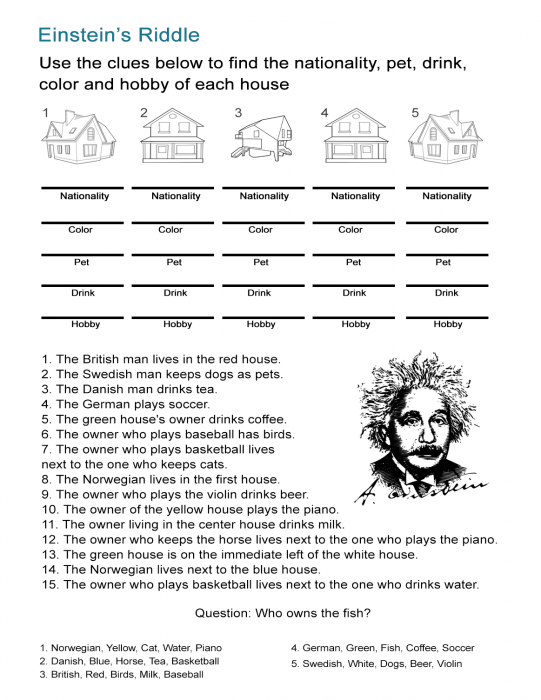
Actually, it is easy. You just have to believe it. The problem with the 98% of people who can’t solve this riddle is that they lack the patience and the solid logic necessary to tell themselves that they can do it. As it turns out, I fall into the 2% that can effectively solve this riddle without googling instructions (since that’s no fun for an INTJ).
Come on, people. If you think you can’t do it, you’ve been watching too much telly.
I started with what I knew for sure.
Next, using a graph, I decided to slowly decipher various details about each:
Next, I made a graph of what I knew (in order of houses):
| COLOUR | Yellow | Blue | Red | Green | White |
| Pet | Horse | ||||
| Cigar | Dunhill | ||||
| Drink | Milk | Coffee | |||
| Nationality | Norwegen | Brit |
I knew then that the water drinker could only belong at the yellow house because:
From this, I determined that the Blue house-owner smokes Blend (because Blend is neighbors with water).
Next, I looked specifically at one clue: the owner who drinks beer smokes Bluemaster
| COLOUR | Yellow | Blue | Red | Green | White |
| Pet | Horse | ||||
| Cigar | Dunhill | Blend | Bluemaster | ||
| Drink | Water | Milk | Coffee | Beer | |
| Nationality | Norwegen | Brit |
Well, there was one obvious hole there…looks like blue drinks tea and is a Dane….
I deduce that the German lives in the green house because:
Red must be the bird owner, because the bird owner smokes Paul Mall and all the other cigars are taken
Yellow owns the cat because blend has a neighbor who owns a cat (and we’ve now determined that it’s not red because red owns the bird)
| COLOUR | Yellow | Blue | Red | Green | White |
| Pet | Cat | horse | Bird | ||
| Cigar | Dunhill | Blend | Paul Mall | Prince | Bluemaster |
| Drink | Water | Milk | Coffee | Beer | |
| Nationality | Norwegen | Brit | German |
We can easily see from looking at the graph that the only place left for our tea-drinking Dane is Blue.
That leaves white to be the dog-owning Swede and the green to own the fish.
| COLOUR | Yellow | Blue | Red | Green | White |
| Pet | Cat | Horse | Bird | Fish | Dog |
| Cigar | Dunhill | Blend | Paul mall | Prince | Bluemaster |
| Drink | Water | Tea | Milk | Coffee | Beer |
| Nationality | Norwegien | Dane | Brit | German | Swede |
The German owns the fish!
H Janeway asked: “How does an INTJ know what she needs? I am a bit disconnected from my emotions because of depression, depression medication and being an INTJ. How do I know what I need so that I can make a plan/schedule and hopefully get better?”
I hope the best for you in your journey.
I have depression that’s heavily influenced by PTSD, I can speak to your experience of struggling to figure out what you need to do to heal.
Before I was fully aware that I had PTSD, I was very confused and very, very concerned with how I was supposed to figure out this “trap” that had caught me. At the time, many factors combined to make it so that I was not in a position to seek help. As a result, I had to figure things out on my own.
Here is what I have learned the hard way: Continue reading
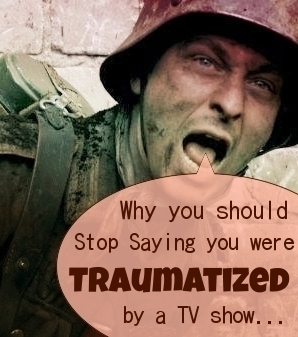
Anon asked: “You’re the first MBTI expert I’ve come across who’s typed the characters from Unsere Mütter, Unsere Väter, and since you’re an INTJ, I must know. Were you emotionally traumatized the first time you watched it?”
Amanda asked: I read your post on traumatized INTJ, which I most certainly have been. I feel I was dead inside until I developed my Fi to be a good mommy to my sweet baby boy (who is now working on his PhD). I have also endured Attention Deficit Disorder most of my life. I have read in an ADHD book “Scattered” (Gabor Mate MD) that ADD can be properly understood as a dissociative condition and ADHD as an attachment/anxiety condition. Basically, trauma responses. I took medication for ADD for a few years, recently. The beneficial effects on my life were profound, and some of them were permanent. I’ve only recently become more interested in MBTI, and I think ADD is pretty ironic in relationship to my being a J. I’m a J, but the part of my brain that can ‘do’ J, the prefrontal cortex, was more or less off-line, forcing me to live the life of a P! It’s as if ADD made me a failed INTJ. Not quite the shadow perhaps, as I’m a solid introvert. I was just curious if you’d ever thought of MBTI in relationship to this disorder, or perhaps any of the cluster B personality disorders. (Which I don’t have, but Cluster Bs were the origin of my trauma.)

Several semesters ago, I had an English professor who is an ENTJ with ADHD, and it was a thrill for me to be a part of her class. Here are my thoughts.
Being an xNTJ will likely determine how you think about things. ADD/ADHD will not necessarily change that thought process, but it will definitely interrupt it. What I typically observe happening as a result is that you will come to conclusions the same way that most other xNTJs would, but while you are coming to those conclusions, you will be distracted by other things that wouldn’t necessarily distract INTJs who don’t have ADD/ADHD.
As a result, your behaviour may be different than the behaviour of other INTJs, specifically with regards to your Te and Se functions. Your NiTe ability to focus will be different. You will always have your eyes on your Ni goal, but your Te may not necessarily keep you consistently working towards it. Your Se may be more easily distracted by things in your physical environment. etc. etc.
I know this was brief, but I hope it answered your question.
Guest post by Andrew, ENTJ

Extroverted Sensing (Se): Anakin shows a knack for piloting from a very young age. Whether he’s at the controls of a podracer, a starfighter, an airspeeder, or a heavily damaged enemy battle cruiser, Anakin can dodge obstacles and dart through firefights, and fire the kill shot to boot. He has an excellent aim whenever flying an armed vessel; he saves Obi-Wan’s life by blasting diminutive circuit-wrecking droids off his fighter in the middle of an attack run. Anakin tends to charge into fights without thinking, and once even abandons an assigned post to rescue his captured mother. He also has a strong taste for aesthetics, almost letting Obi-Wan die fighting a bounty hunter while he chooses just the right speeder to give chase. Anakin notices small things about his environment which tend to make a great deal of difference; he notices a speeder of which he’d lost the trail re-emerge many feet below him, as well as Qui-Gon’s lightsaber when the Jedi Master is in disguise. Anakin reacts quickly and effectively to sudden changes; when his podracer catches fire in the middle of a race, he stays cool, salvaging both the vehicle and the victory. Continue reading
shawna asked: Do you ever encounter existential depression? Also, your website is coherent and interesting.

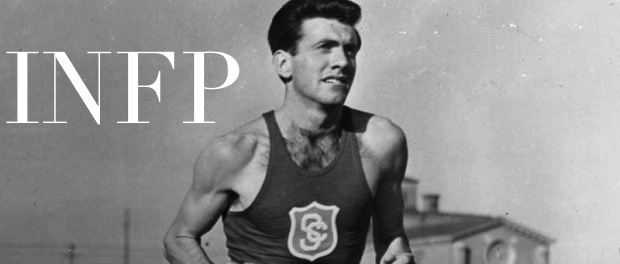
Fi: As a teenager, Zamperini isolated himself from his classmates and put up a tough front to hide the misery he felt inside. Running gave him a way to deal with his feelings and helped him to develop principles that came to define the rest of his legacy. He was always a bit rebellious and liked to define his own morality, rather than relying on Continue reading
Laurie asked: I’ve always considered myself (and been described as) INTJ, but I also have OCD, and you said in a post that every person with OCD will score as a TJ. I know that you can’t just magically type me without knowing me, but I would really like to find out if I *really* am an INTJ, or it’s just my illness that makes me act in a certain way (though I always recognized my thought process as that of an INTJ, not my actions necessarily). How do you go about typing characters who have mental illness? I know you always try to “separate” the two things and recognize the real type that might be hidden by the illness – are there particular questions I might ask myself, or things I might notice in my actions/thoughts etc.?
I know I shouldn’t give to much importance to my type – I myself use it more as a very useful tool to write plausible fictional characters than anything else – but recognize who I really am might help me overcome things and thought processes that are not “mine” but come from my condition…in a way, I believe I simply don’t want to be defined by my OCD, but recognize who I truly am, in spite of everything else. Thank you!

I don’t know the exact nature of your OCD, so I’m going to do the best I can at a generic, but applicable response.
I would suggest trying to pay attention to what you’re like when you’re less affected by your OCD (if possible). The particular function that tends to be associated most heavily with OCD is the Si function, simply because it likes to pay attention to minute details that intuitive upper functions don’t. Continue reading
stranger5 asked: “you’ve talked before about how Fe and Fi cry in movies for different reasons. Does function hierarchy also affect whether/why a person will cry in a movie. say, would T types be less likely to cry in movies than F types? Also, are F types more drawn to emotional movies than Ts?”

Or, I should say question[s]. Shall we work through them one by one?
Function hierarchy does have a certain degree of affect on whether someone will cry in a movie, but it isn’t necessarily consistent for everyone.
Quite frequently, you’ll have two Te doms in the same movie theatre –one will remain unaffected emotionally and the other will tear up and get embarrassed about it. Likewise, there are plenty of F types that cry relatively little in response to movies. Continue reading
 The Book Addict's Guide to MBTI: