Zuko: ISFP

Official typing by Arvid Walton

Avatar: The Last Airbender

Dominant Introverted Feeling (Fi): Zuko feels everything intensely, a trait that both makes him a force for good (when he can detach his own moral code from what his father expects of him) and causes him a great deal of suffering. When he forces himself to live by his father’s value system instead of his own, Zuko is plagued by inner dissonance and depression. From a young age, he has a strong sense of ethics and is happiest when he feels aligned with his moral code. His drive to do the right thing pushes him to speak against his father’s military plans, ultimately leading to his banishment from the Fire Nation. As much as he lashes out at people (Mai, his crew, Uncle Iroh), Zuko puts them first when they are in danger. When he makes a mistake, he accepts full responsibility for his actions and does everything in his power to correct the damage he’s caused. As Fire Lord, Zuko puts his life on the line to stand up for the misunderstood people of the Fire Nation colonies. However, when gaslighting and manipulation from his family members cause him to doubt his inner compass, Zuko is wracked with anxiety about whether he’s doing the right thing (to the point of being unable to sleep). When under intense stress, Zuko has the tendency to retreat inward, keeping his struggles to himself despite Mai’s urgings for him to talk openly. 

Continue reading

Eliza Hamilton: INTP

Guest Post by Alex, ENFP

Hamilton

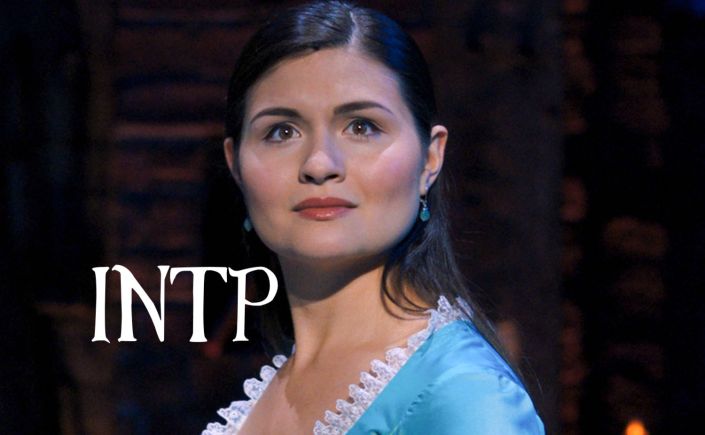
Dominant Introverted Thinking (Ti): Throughout the play, Eliza shows a clear preference for taking her time to think about things rather than leaping into the emotions of the situation. When falling in love with Hamilton, a much more energetic and spontaneous Se-dom, she feels “helpless,” and out of control, all though maybe in a good way. A lot of their courtship actually happens through letters, although “Helpless” focuses mostly on their in-person interactions. Written correspondence leaves more time for reaction and processing things, so it makes sense that this is where she was most comfortable. Later, in “Burn,” she says, “I’m re-reading the letters you wrote me/ I’m searching and scanning for answers/ In every line/ For some kind of sign.” Although this is at least partially retreating into Si, she’s also dealing with her intense emotional reaction through analysis, even though logically it probably won’t reveal anything about her husband’s motivations. Historically, she also remained very involved in politics after Alexander Hamilton’s death, co-founding the Orphan Asylum Society, organizing all of Alexander’s writings, raising funds for the Washington Monument, and defending Alexander to his critics, including, notably, President James Monroe. In “Who Lives, Who Dies, Who Tells Your Story,” she says before listing her accomplishments after Alexander’s death, “I stop wasting time on tears.” She prefers remaining emotionally detached, analyzing and working and getting things done, she just has gone through some very emotionally devastating experiences.

Continue reading

Avatar Aang: ENFP

Official typing by Arvid Walton

Avatar: The Last Airbender

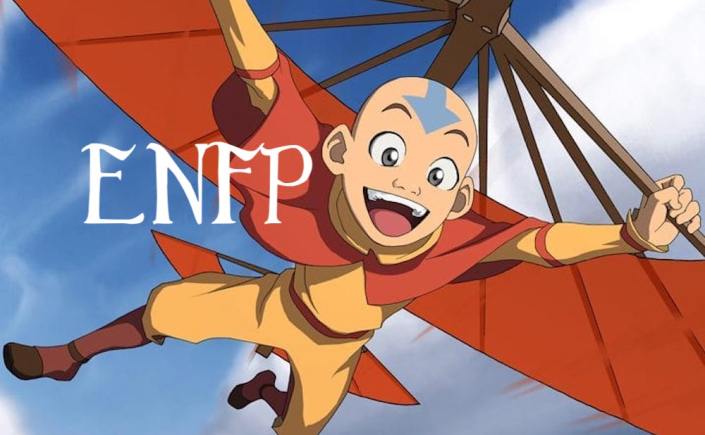
Dominant Extraverted Intuition (Ne): At his core, Aang is an exploratory person who values variety in his daily life. He actively pursues new experiences and friendships that are far more diverse than those of most other people in his world. He has friends from every nation, age group, and social circle, and manages to maintain contact with most of them. He is an open-minded person who likes to consider all sides of a story before judging people, even his enemies. This makes him good at resolving conflicts between complex cultures and people. It also means that he gives Zuko much more of a chance to be good than others. His desire to consider all possibilities often makes him indecisive, particularly when it comes to decisions that he feels immense responsibility over (such as whether to kill a close friend in the comics). Aang often struggles to stay focused on one task at a time and prefers to seek newness over routine, a tendency that causes him to diverge frequently from his long-term objectives (such as defeating Fire Lord Ozai). He is a chronic procrastinator but grows into his responsibilities over time. Aang is as creative in his approach to problem-solving as he is at having fun. He invents new airbending moves and finds alternative solutions that others don’t consider (even when it involves making up a story on the spot to convince two warring tribes to stop fighting). 

Continue reading

Armin Arlert: INFJ

Official typing by Arvid Walton

Attack on Titan

Dominant Introverted Intuition (Ni): Armin is always looking to the future. The most obvious manifestation of this is his perpetual excitement about life beyond the wall. However, even as a civilian child, he accurately predicted the Titan attack moments before it happened. After joining the military, Armin hones his predictive abilities in the service of protecting his friends. He intuitively understands other people, including Titans, and uses this knack to get out of hairy situations more than once. In battle situations, Armin is good at strategically utilising the individual strengths of others, which makes him a great tactician. Armin is at his best when he is sure of his predictive abilities. However, he is tentative and has a hard time making decisions without feeling confident in the outcome.

Continue reading

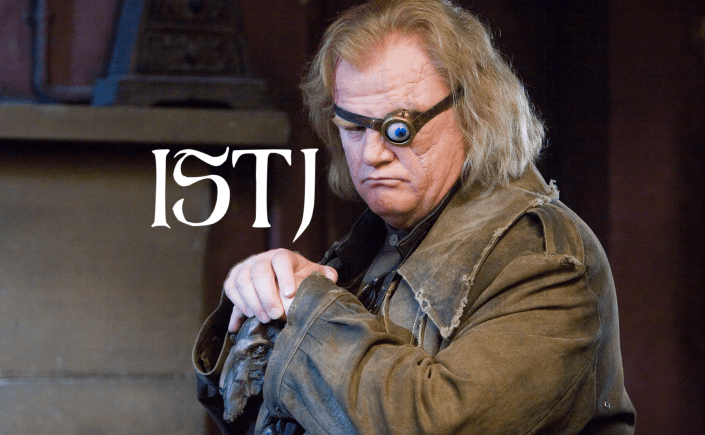
Violet Crawley: ISTJ

Guest Post by Alberto Belota, IxTJ

Downton Abbey

Dominant Introverted Sensing (Si): The Dowager Countess is uncomfortable with change and prefers to live by tradition. Her primary motivation in many episodes of Downton is the preservation of traditional, pre-WWI value systems, as well as social systems. She also has a difficult time seeing why other people may view things differently (and still be considered reasonable) when faced with change. Violet uses the past as a source of emotional security and validation, even when it’s perhaps not the most efficient or cost-effective way of life (such as opposing the installation of electricity in the Dower House).

Continue reading

Alex Drake – Ashes to Ashes: ESTJ

Guest Post by Debaparna Das, INFJ

Ashes to Ashes

Dominant Extraverted Thinking (Te): Alex wants to be in control over her environment, her body, and her fate, all the time. She is thoroughly methodical and goal-oriented, setting clear priorities, drawing up plans, and following precise steps to achieve those goals. If there’s something she’s put her mind to, nothing – except getting bound, gagged, and thrown into a freezer––can stop her from doing it. (She revives a woman from clinical death using CPR and sheer determination.) She gets impatient with the team’s incompetence and problematic attitudes and can be quite ruthless at times. She doesn’t believe in anything without hard evidence to prove it, and is a tireless worker, sometimes going without the recreational breaks that the rest of the team can’t give up on. She asserts her authority by adopting a blunt, somewhat aggressive persona, sometimes shocking the team with her behaviour. However, she can quickly change her attitude when needed, using her training in psychology and criminal behaviour to soothe, intimidate, lead, and manipulate people. As a result, by series 3, the team is following her instructions as promptly as DCI Gene Hunt’s, to the point that Gene feels threatened at times.

Continue reading

Light Yagami: ENTJ

Official typing by Arvid Walton

Death Note

Dominant Extraverted Thinking (Te): Light is an analytical person who values efficiency and order. He has a practical system for everything, from identifying whether someone’s been in his bedroom to ensuring he can still write names if he doesn’t have access to the death note. Light is generally very level-headed in stressful situations, and is really only liable to becoming anxious when things are outside his control. He is incredibly organized and runs a tight schedule in every domain, including academics, extracurriculars, and social life. As a detective, he’s good at taking charge of group plans and readily volunteers to do so (particularly when it will benefit him). Uninterested in theorizing just to theorize, Light prioritizes gaining access to actionable insights and keeping his plan moving forward.

Continue reading

Sirius Black: ESFP

Guest Post by Andrew, ENTJ

Harry Potter, J.K. Rowling

Dominant Extraverted Sensing (Se): Sirius always craves excitement. He got into a great deal of trouble in school because he took lots of risks for the sake of having fun, and often got himself caught. Sirius almost never thinks before acting, and his reactions to bad situations give even Harry (who has an impulsive streak himself) pause about telling him too much. Sirius is a visual person who decorated his bedroom with pinup pictures as a teenager and who treats Harry like his deceased father (Sirius’ best friend) based primarily on his appearance. After Voldemort’s return, Sirius is stuck inside his mother’s house, which irks him like nothing else. His eagerness to be out there doing something, especially when Harry and his friends are in danger, leads to him being killed in action, and according to Albus Dumbledore, that is his ideal way to die.

Personality Tests Aren’t Very Accurate––Use This Alternative

Guest Post by Kyle Farris, INTJ

I know––you’re shocked. But before I overcame my fear of scary-sounding terms like “cognitive functions” and “introverted intuition” my only resource for understanding MBTI types were generic descriptions on websites like 16personalities. Because of this, I, like many others, had a sort of MBTI identity crisis. How do you know your type when so many seem to describe aspects of your personality? At various points, I convinced myself I was an INTP (because of my philosophical interests), INFP (because of my career), or ENTP (because of how much I enjoyed expressing my insights).

Continue reading

Aurora Aksnes: ISFP

Official typing by Arvid Walton

Dominant Introverted Feeling (Fi):  Aurora doesn’t care what people think of her. She lives her life in the ways that make her the happiest and encourages other people to do the same. Her music is invested in the idea that people don’t need to try to be what society expects. She’s very open about her inner life and is obsessed with trying to understand and connect with other people better, a theme explored heavily in her discography. She is introverted and often feels drained by the end of a show. Though she loves her fans, she enjoys the creative process of writing music alone in her studio much more than interacting with strangers.