Dominant Introverted Sensing (Si): Before a fairy decided to ruin his life appreciate him, Stephen was excellent at managing the details of the household. He is the first to notice a lazy servant or a miscarried command. When met with an unfamiliar situation (there’s a new room and a man in the house!) he acts as he always does (I guess I should shave him). Even after two years of being under the Gentleman’s enchantment, he is extremely uncomfortable with people acting ‘against their nature’ (the overseer, the dog, and the mayor and aldermen).
Subscribe to get access
Read more of this content when you subscribe today.
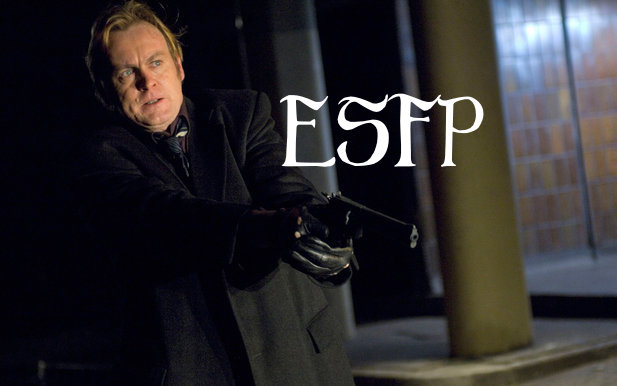
Dominant Extraverted Sensing (Se): Gene’s flamboyance marks him out more than anything else. He is committed to an aesthetic based on spaghetti westerns and film noir, made of fast cars, anti-heroic trench coats, bombastic statements, and gun-wielding antics––all the way down to queerphobia, racism, and misogyny. He is given to aggressive behaviour––smashing doors and furniture, beating the living daylights out of suspects (Gene with a forklift crane vs. Trevor Riley in a car being slowly turned to scrap metal, for instance), shouting down disobedient officers, drunkenly attacking a former convict, etc. He is agile despite his obese frame, is good at subterfuge as long as he can keep his temper in check, and can be oddly charming when necessary. He is aware of his team members’ and his own need for a sense of unity and fellowship and consistently promotes that through activities ranging from drinking and revelling on nights at the pub to chasing down criminals together. Although he’s observant in general, he tends to skate over detail and doesn’t have much patience for long-winded procedures. He hates thinking about his past so much that he forgets it almost completely, including the most important part of his duty.
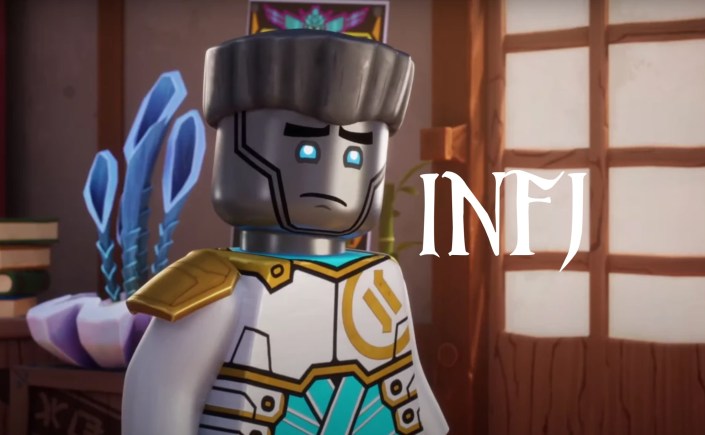
Dominant Introverted Intuition (Ni): Zane’s main cognitive function allows him to analyse and interpret his surroundings. He can come up with intelligent, out-of-the-box ideas that can surprise everyone. Although he seems ignorant of human nature, he understands each and every one of the ninjas in more ways than they could ever imagine. Zane also has a narrow mindset that allows him to focus intently on his goal of becoming a great ninja. However, his relentless focus on improving himself and helping people makes him forget himself, and can often lead to putting himself in danger.
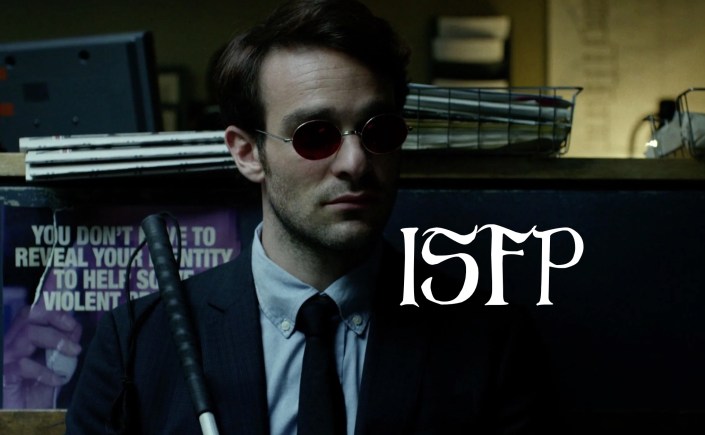
Dominant Introverted Feeling (Fi): Matt has solid morals based on what he thinks is right rather than laws. He doesn’t want to defend people if he doesn’t think they are innocent, and after he defended someone he didn’t want to, he beat up the guy in the alley after the court hearing was over. He is a devout Catholic but questions “why God put the devil inside him.” He wants to do good rather than work at Lehman and Zack. Despite believing that “sometimes the law isn’t enough” while going after Fisk, Matt never kills people and has Fisk arrested instead. He is emotional, but is usually private about his emotions and can hide them well. He also hides his identity by not saying anything rather than lying.
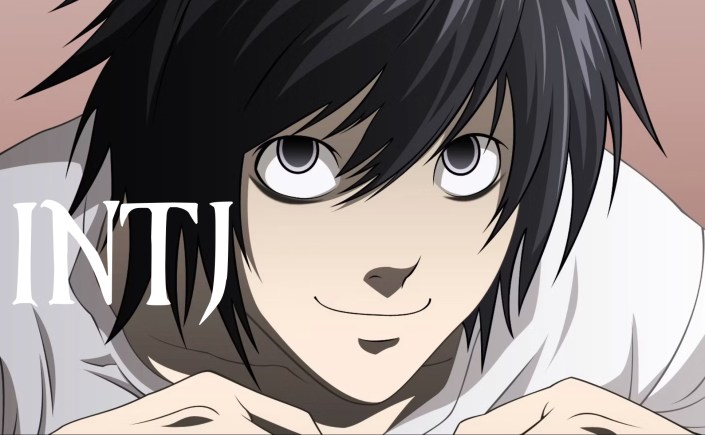
Dominant Introverted Intuition (Ni): As the number one detective in the world, L uses his Introverted Intuition first and foremost to solve a case, intuitively coming to a conclusion near the outset and afterwards spending time and effort to prove his impressively accurate hunches. In a ploy to determine Kira’s whereabouts, a ploy L is prepared to use worldwide, one zone at a time. L succeeds on his first try. When L states that he is 5% sure that Light is the real Kira, he is actually 100% sure (Ohba, Tsugumi (2008). Death Note 13: How to Read) but he lacks the proof to convince others. In spite of proof to the contrary, L continues to suspect Light when everyone else has moved on. L has a single-minded determination to catch Kira, putting other cases aside and going to extreme lengths to catch him, to the point that he has an entire skyscraper built to serve this single case. In general, his lifestyle is built around solving cases, and his surroundings are often Spartan despite his affluence. He tends to ignore his appearance, as well as the general perception people have of him, but he typically has an explanation for his odd behaviour (he claims his habit of crouching increases his mental faculties, and he continues in that posture even though Japanese culture highly values proper posture).
Dominant Extraverted Intuition(Ne): Tony works for the future of mankind. He is not just focused on one narrow goal but has multiple ambitions for it. For example, he has the idea of being Iron Man and builds machines like B.A.R.F which are completely unrelated to his idea of being Iron Man.
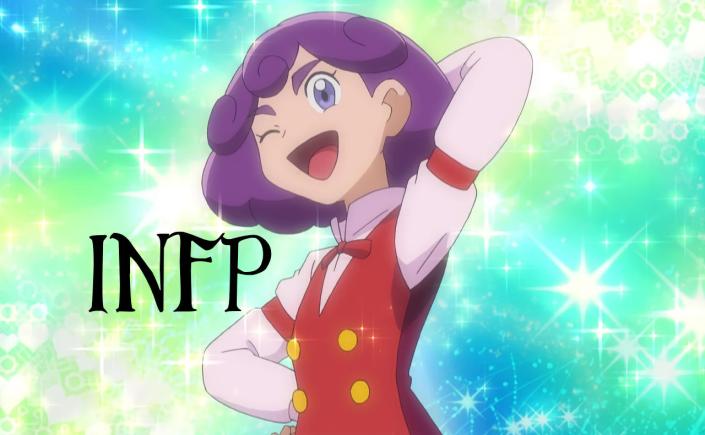
Dominant Introverted Feeling (Fi): Burgundy can take criticism way too personally. Her entire motivation for starting a rivalry with Cilan stems from a single honest assessment he made on her relationship with one of her Pokémon – which she found less than flattering – when she was still very young. Even as an adult, she hates seeing Cilan achieve success in his endeavours, and she sulks on the sidelines when her nemesis wins battles and tournaments. Burgundy bases her opinions almost entirely on personal impressions rather than factual evidence, such as when she states that Ash is incompatible with all of his Pokémon. Notwithstanding her childish exterior, however, Burgundy cares deeply about every one of her Pokémon. She also has a friend in Iris’ rival, Georgia, even though the two of them are prone to bickering with each other.
Dominant Extraverted Feeling (Fe): Inara is an expert at saying things she doesn’t truly feel in order to keep the peace (“I’m glad you slept with her”). Her own emotions are secondary to her (like how she feels about Mal), but she’s easily aggravated by the crew members. It annoys her when she can’t make The Operative angry in Serenity. She’s great at putting her clients at ease (“Jaynestown”), and she was the one to listen to Zoe and Mal tell stories about Tracy when they thought he was dead.
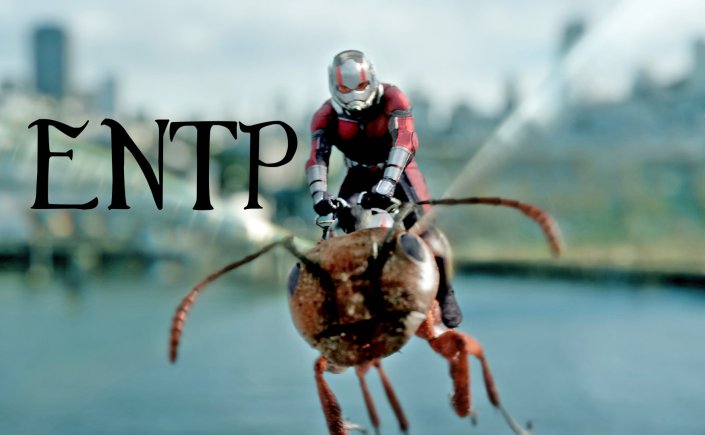
Dominant Extraverted Intuition (Ne): When Scott first takes the Ant-Man suit back to his apartment after stealing it, he puts it on and presses the button that causes him to shrink purely out of curiosity. He uses obvious humour during the fight at the airport when he tells Tony that he’s his conscience and that they don’t talk much these days, and when he asks if anyone brought any orange slices. When he meets Steve, he acts kind of hyper about meeting Captain America. He is creative about breaking into places, like when he freezes the safe door.
I have always been a very self-aware individual. I know my strengths, weaknesses, emotions and thought processes extremely well, and I’m comfortable with who I am. I already KNOW that I’m a walking paradox. I’m a dreamer and yet I’m practical, I’m creative yet analytical, I love art and excel creatively, but I’m also a maths genius. I’m social yet shy, hard-working but a procrastinator, and organized but messy. There has never been a doubt that I am very much an INFP; however, these little contradictions between me and a stereotypical INFP used to concern me. This was before I realized that MBTI is about the way in which we think, not our personalities. Every person is going to have contradictions and conflicting qualities or tendencies, and that’s okay! That’s what makes us unique and human!
That being said, here are five ways in which I do NOT fit the INFP stereotype (in contrast to the many, many ways in which I do).
Dominant Extroverted Thinking (Te): Throughout the nine books in the Little House series, Laura Ingalls is distinguished above all by two main character traits: blunt speech and quick action. More than anyone else in her family, she believes in saying what needs to be said and doing what needs to be done. Laura sees little point in sugarcoating the truth to save others’ feelings. For example, at the beginning of These Happy Golden Years, she tells Almanzo Wilder point-blank that she’s not romantically interested in him and that his driving her home every week won’t make any difference in how she feels. Even as a young girl, Laura can pinpoint the most direct solution to any problem and organize others to help her implement that solution. In Banks of Plum Creek when Pa and Ma are gone and a blizzard comes up unexpectedly, Laura is the one to realize that there’s no firewood in the house and the one who rounds up her sisters to go and collect a supply from the woodpile outside (This, despite the fact that Ma had specifically told the girls to “stay inside if it storms”; unlike Mary, who insisted on following their parents’ rules, Laura can make her own rules to alleviate a potentially dangerous situation.) After a slightly rocky start, she can successfully discipline students older than herself when teaching her first school as a fifteen-year-old. Finally, she has a strong work ethic and sets high expectations for both herself and others.
Dominant Extraverted Intuition (Ne): Vinculus has no problem bouncing around from place to place, living on the run for over eight years. He can anticipate problems and come up with solutions to them easily, like cutting Norrell’s bell cord and selling Strange spells. He tends to speak metaphorically (“I am the Book” and “[Strange and Norrell] are the spell John Uskglass is doing”). He understands certain things immediately, like that Mr Norrell is a liar and why his skin changed. He sees his new skin as all it could be, and the possibilities thrill him. Who cares what it is, what could it be?
Dominant Extraverted Sensing (Se): Grell is greatly in tune with their senses, though this is not always acted on in an entirely healthy way, making the character seem somewhat insane. They are fond of the colour red, explaining that it represents “flaming passion.” Their affinity for the colour is displayed in their clothing and, more extremely, when they explain that they choose to commit murder so they can paint victims with red colour.
Fond of things they find physically attractive, they freely and flamboyantly display their lust towards Sebastian, in an often theatrical way. The sly Sebastian easily manipulates Grell into doing things for him by toying with this deep infatuation. Grell jumps into action immediately, overcome with thrill by Sebastian’s seductive promises.
Identifying the MBTI type of someone with a mental illness, regardless of the kind, can be difficult. It is doubly so when the individual in question has a personality disorder.
A Basic Overview
Note: The personality disorder labels I will be using come from the DSM-5, the diagnostic manual currently used by American psychologists. I realize that other countries tend to use versions of the ICD-10, the World Health Organization’s diagnostic manual, more heavily than the United States does at present. I have tried to include alternate names where I think it is needed for clarity.
For those who are not familiar with personality disorders, there are 10 specific disorders (although the number has varied over time and will probably continue to be revised). They can be organized into three groups—personality disorders that result in odd behaviour, those that result in dramatic or erratic behaviour, and those that result in anxious behaviour. Occasionally someone may be diagnosed with an unclassified personality disorder or a mixture of personality disorders. Unlike most mental illnesses, personality disorders are consistent over time and in a variety of settings. People with the disorders do not experience them as illnesses—the disorders are simply part of the way they function. A person with this category of mental illness generally sees their behaviour as normal and does not want therapy unless they end up with a comorbid illness like depression (in some cases, brought on by others’ negative reactions to their behaviour).
As a result, most people with personality disorders do not usually get diagnosed, much less treated. Learning about the disorders can be a good idea—particularly if you know a “difficult” person and want to respond more effectively to their behaviour. You can’t diagnose them officially, but you can certainly use your research to decide what your strategy should be when you interact with them.










 The Book Addict's Guide to MBTI: