
Guest Post by E. J., INTJ
Jane Eyre, Charlotte Brontë
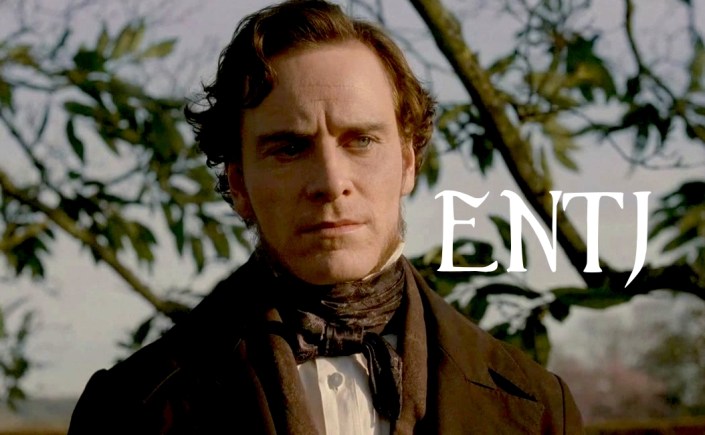
Dominant Extroverted Thinking (Te): Rochester is strong-willed and a natural leader, often to the point of behaving in a domineering manner. Even equally wealthy people tend to obey him instinctively, despite his unattractive appearance and frequent neglect of social conventions. Rochester tends to be very direct, to the point that it catches most people off guard. His focus, however, is practicality. This utilitarian viewpoint leads him to hide Bertha’s identity from most people in England. In Rochester’s mind, if making Bertha’s existence publicly known will not benefit either of them, then there is no reason for him to do so.
Auxiliary Introverted Intuition (Ni): Rochester’s rash and disastrous first marriage hinders his ability to plan his life out as he would have preferred. He can, however, be quite intentional—most people would probably say manipulative—in order to get what he wants. His campaign for Jane’s attention is quite calculated. If he has to fake an interest in Blanche Ingram and dress up as an old gypsy woman in order to make Jane notice him, Rochester doesn’t mind. He intuits Jane’s basic character accurately enough to predict that she will not be irrevocably turned off by his behaviour, as some women might be. Rochester is intellectually curious, and his interest in Jane is more mental than physical. They can have intellectual conversations that would never have been possible in most of his previous relationships. He also finds Jane fascinating because she reminds Rochester of a character in a fairy tale, and his pet names for her tend to come from the names of imaginary creatures.
Tertiary Extroverted Sensing (Se): Most of Rochester’s problems come from the fact that he tends to neglect his Ni while giving his Se free rein. Recklessness and passion may be attractive to the women he romances, but these qualities tend to hurt Rochester in the long run. In particular, his physical attraction to his first wife keeps him from looking too deeply into her character. After her infidelity and insanity destroy their relationship, he searches for a replacement companion. His relationships with his mistresses, however, inevitably fail. His interest in these women seems to be more physical than intellectual: Celine Varens, for instance, was beautiful, but not bright (or loyal). Unfortunately for Rochester, his money is far more attractive than his appearance, and he needs a more stable mental and emotional connection with someone to create a lasting relationship. Eventually, of course, he finds that connection with Jane.
Inferior Introverted Feeling (Fi): Rochester is more attuned to his own feelings than to those of others, and by the time Jane comes to know him, he is fairly good at understanding his emotional life. Unfortunately, while his emotional insights have improved over time, his sense of ethics has not developed very well. Rochester believes that Bertha’s unfaithfulness to him before her permanent breakdown absolves him from any real responsibility to her. He considers his dishonesty about Bertha’s existence justified, and it does not seem to occur to him that leading Jane into a bigamous marriage without her knowledge would be unfair to her. He also does not feel guilty about his calculated treatment of Blanche Ingram, believing that her disingenuous behaviour—in this case, a poorly disguised interest in his money—justifies his own. Jane’s refusal to live an inauthentic life as Rochester’s mistress seems to make Rochester recognize the shallowness of his own ethical system. Her influence is likely the motivation behind Rochester’s first self-sacrificial act in the entire book—his attempt to save Bertha’s life. His adoption of Jane’s principles, despite an easy chance to be permanently rid of Bertha, is what makes his eventual marriage with Jane possible.
 The Book Addict's Guide to MBTI: