
Guest Post by Connor Headrick, ENTP
The Silmarillion, J.R.R. Tolkien
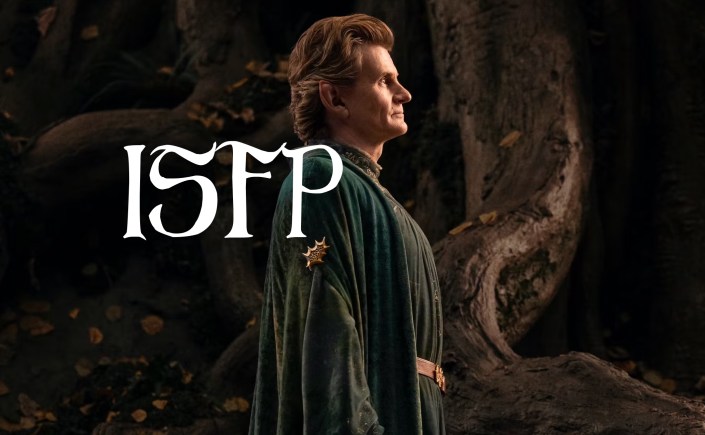
Dominant Introverted Feeling (Fi): Feanor’s fiery commitment to his own values and desires above all else is his single most defining characteristic. His name means “Spirit of Fire,” and he consistently displays this fiery spirit by showing blazing passion, arrogance, and wrath. Like typical ISFPs, Feanor is idealistic and unswerving from his inner moral compass. However, Feanor’s ideals are not altruistic; they are self-centred and prideful. This unhealthy Fi turns him into a wrathful, violent ISFP in order to get what he wants.
The Silmarillion says that few ever persuaded Feanor by reason, and none by force. Feanor consistently refuses to listen to good advice, instead following his own desires. When he feels that his power is threatened, Feanor draws his sword and threatens the life of his half-brother, committing the first assault in Aman (the equivalent of Paradise). He becomes obsessed with the Silmarils, the magical gems he crafted. He refuses to sacrifice these gems, even though using the light of the gems is the only way to restore the light of the dying Trees that illuminated the world. When the villain Morgoth steals the Silmarils, Feanor gives an impassioned speech and persuades the rest of the elves to rebel against the benevolent Valar and leave the Undying Lands to take revenge on Morgoth. Feanor then leads his seven sons in swearing a rash oath that calls down everlasting darkness upon them if they ever stop pursuing the Silmarils. When the Teleri, the Sea Elves, refuse to let Feanor take their ships to follow Morgoth to Middle Earth, Feanor attacks his kindred, slaughters them, and takes the ships. And when Feanor realizes there aren’t enough ships to carry all of his followers to Middle Earth, he abandons thousands of elves in the freezing Northern regions and sails away without them. To make matters even worse, Feanor burns the ships once he lands in Middle Earth. Finally, his wrath drives him to forge his way ahead of his army during his first great battle in Middle Earth, and he is isolated and killed by Balrogs. As his spirit departed from his body, it was so powerful that his body disintegrated into ash.
Continue reading
 The Book Addict's Guide to MBTI: